

What You Should Know: The Reality About 5 ml Lip Filler
It does not matter whether you are new to cosmetic treatments or have explored aesthetic procedures before — questions around...
Lip Filler Aftercare: While achieving the lips of your dreams is an exciting step, proper aftercare is crucial to help the lip fillers settle and heal smoothly.
Whether you are a first-time cosmetic patient or an experienced beauty patient, knowing how to care for your lips maximises the results while minimising the side effects.
In this lip filler aftercare guide, we will walk you through every aspect of lip filler aftercare, focusing on how well-hydrated, healthy, and stunning your lips can be.
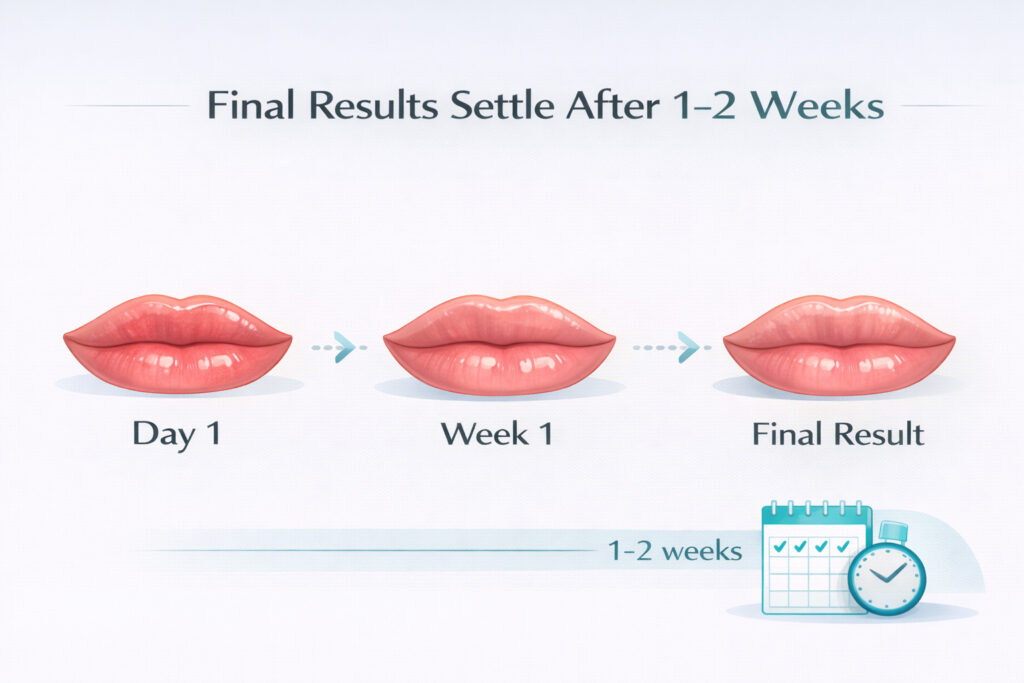
Lip filler aftercare focuses on reducing swelling, protecting filler placement, and supporting natural healing during the first 1–2 weeks after treatment. Mild swelling, tenderness, and bruising are common during early recovery, while most results gradually settle as inflammation subsides. Careful hygiene, avoiding pressure, and following professional aftercare advice help minimise complications and support smooth, natural-looking results.
This guide is particularly helpful for:
Your first 48 hours post-procedure is pivotal in minimising bruising, swelling, and discomfort. Here is what you need to keep in mind:
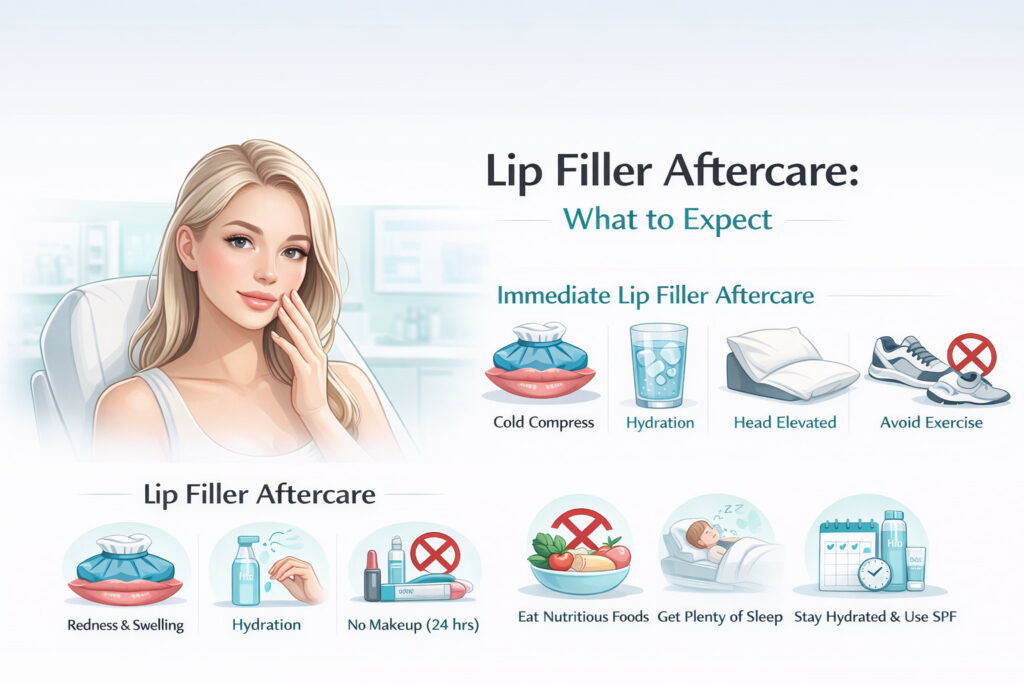
After your lip filler treatment, it is completely normal to experience tenderness, swelling, and some minor bruising. These effects typically subside within a few days, but small swellings can persist for up to a week. Do not panic if your lips seem larger than expected at first; this is merely temporary swelling.
Swelling and tenderness can be alleviated with a cold compress or an ice pack wrapped in a cloth. A cold compress can be applied gently for no more than 15 minutes every few hours throughout the day.
Your water intake needs to increase, as proper hydration supports recovery of the body and skin. Avoid using straws due to the suction pressure, which can disrupt filler lip placements.
Elevating your head allows fluid retention to reduce during sleep, helping to minimise swelling. You may want to try adding one or two extra pillows to prop yourself up.
Refrain from going to the gym or performing any high energy activity such as heavy lifting or cardio for 24-48 hours. An elevated heart rate may worsen swelling and bruising.
The few days after your procedure are crucial in protecting your lips while ensuring they heal properly.
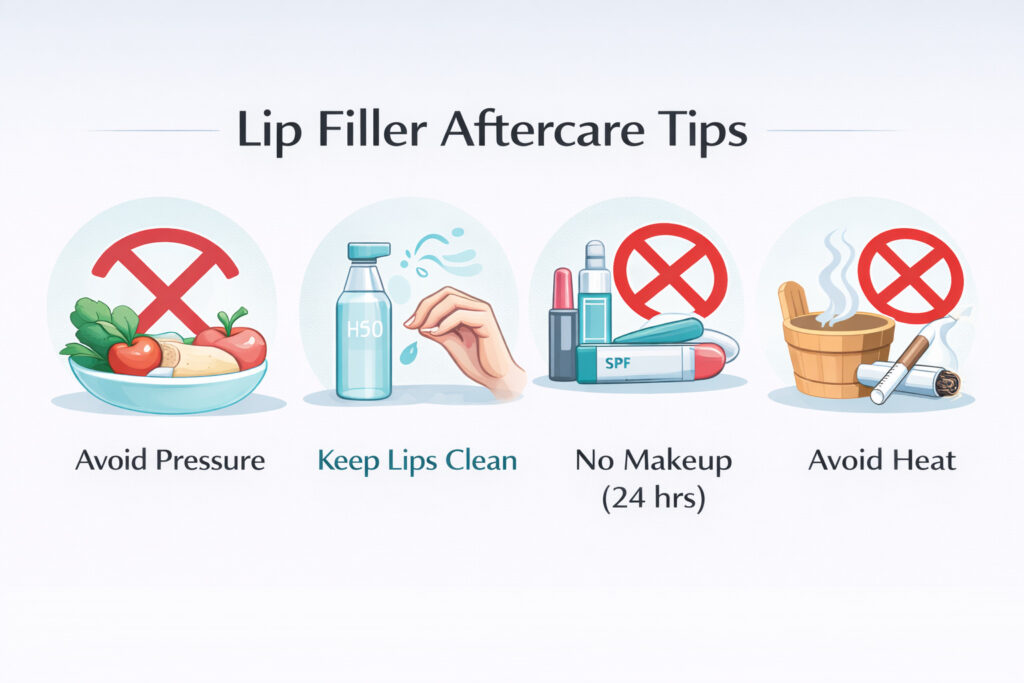
While this might sound disappointing, avoid kissing or putting pressure on your lips for the next 48 hours. This allows the filler to settle properly and protects the treated area during early healing.
Try to avoid touching your lips as much as possible. If you need to touch them, make sure your hands are clean. Keeping the area clean helps reduce the risk of infection during the healing process.
If you wear lipstick or gloss, avoid using them for at least 24 hours. This reduces irritation and exposure to bacteria while allowing the skin to settle.
Too much heat from hot showers, saunas, or steam rooms can increase swelling. To avoid this, skip these for at least 48 hours after treatment.
Smoking may restrict blood flow and slow healing, while alcohol can worsen swelling and bruising. It is best to avoid both for 48 hours.
Your daily habits have a significant impact on healing and maintaining lip filler results.
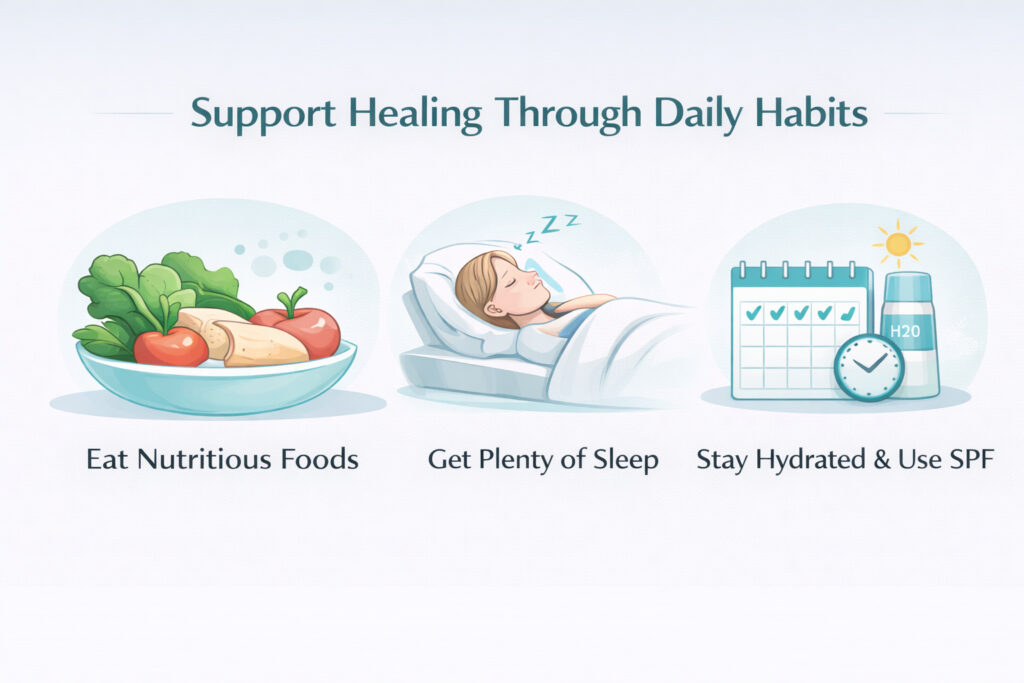
To support your body’s healing process, eat plenty of fruits, vegetables, and lean proteins. Avoid very salty foods during early recovery, as excess sodium may contribute to swelling.
Rest is essential for healing. Aim for adequate sleep and avoid sleeping on your stomach or side to prevent pressure on the lips.
Some habits require ongoing attention to maintain lip filler results.
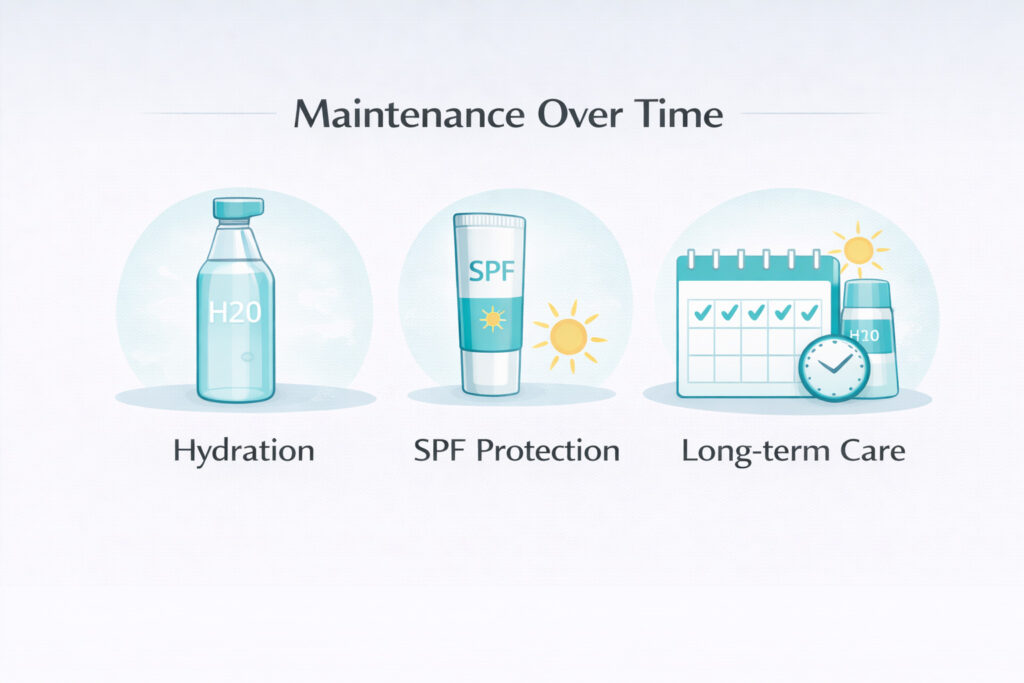
Moisturising lip balms and staying hydrated help maintain lip condition. Using SPF lip products may also help protect the delicate lip area from sun exposure and environmental damage.
Flights are sometimes avoided within a week of treatment due to pressure changes. Similarly, dental work or treatments around the mouth are often postponed for 2–3 weeks to avoid disrupting filler placement.
While swelling, tenderness, and bruising are expected after treatment, certain measures can help reduce discomfort.
During healing, swelling, numbness, and temporary lumpiness may occur. Cold compresses often help manage these early symptoms.
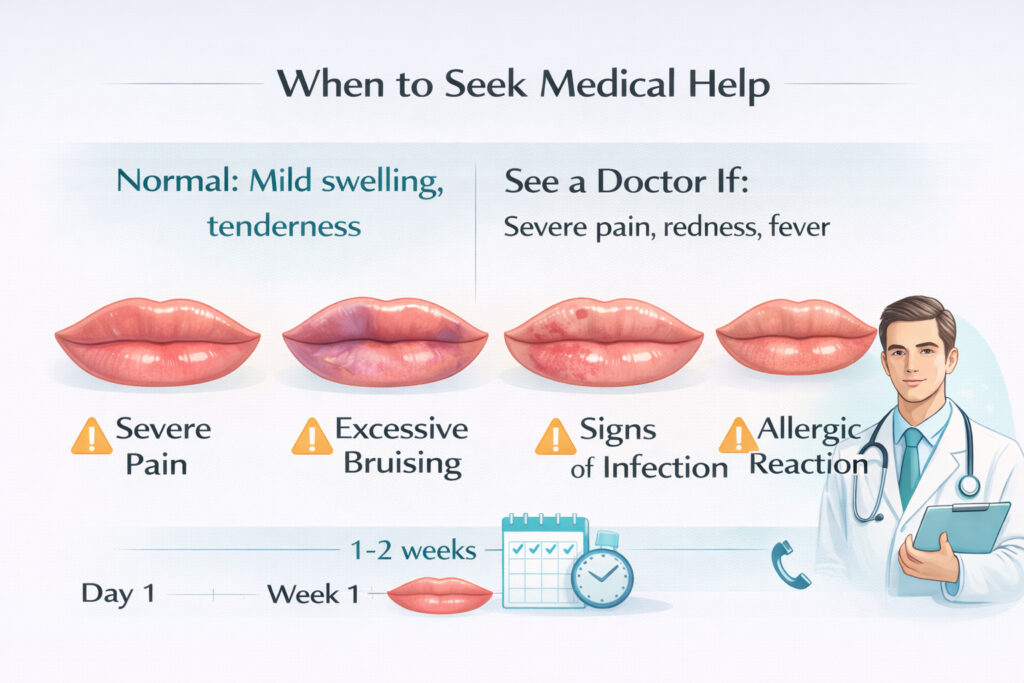
Contact your doctor immediately if you experience any of the following:
When in doubt, early professional review is safer than waiting.
Understanding the healing process helps set realistic expectations. Recovery is rarely linear, and it is common for lips to look larger or uneven before settling.
Immediately after treatment, lips may feel numb due to anaesthetic. As this wears off, mild tenderness or throbbing may occur. Swelling is expected, and the lips may appear larger than the final result. Small needle marks or minor bleeding can also occur.
Swelling often peaks during this stage due to the body’s natural inflammatory response. Bruising may appear or darken. Temporary asymmetry is common and usually related to swelling rather than filler placement.
By the end of the first week, swelling usually begins to reduce. Small lumps or firmness may be felt as filler integrates with tissue. Lips may feel dry or peel slightly as swelling subsides.
Most visible healing occurs by two weeks. Bruising fades, lips soften, and filler begins integrating fully with surrounding tissue.
At around one month, healing is typically complete. Residual swelling resolves and lips feel natural. Any review or adjustments are usually considered after this stage.
Lip filler aftercare should always follow the specific guidance provided at the time of treatment. While general aftercare advice is helpful, individual recovery can vary depending on the filler used, injection technique, and personal healing response. Conservative aftercare, avoiding unnecessary manipulation, and timely professional review are key principles supported by UK aesthetic best-practice guidance.
While lip fillers are widely available, they remain medical aesthetic procedures. General safety guidance on cosmetic treatments can be found in NHS guidance on cosmetic procedures:
If complications occur, prompt professional assessment is essential. Emergency medications such as hyaluronidase are prescription-only in the UK, which is why access to a qualified prescriber matters.
If you have ongoing concerns during recovery or questions about your results, seeking advice from a qualified aesthetic practitioner is always recommended. Individual aftercare guidance should be followed to ensure safe healing and appropriate outcomes.
To achieve your desired look, discuss any future touch-ups only after the lips have fully healed and settled.
Good aftercare following lip filler treatment is essential to support healing and protect results. By following appropriate aftercare guidance, monitoring changes, and seeking professional advice when needed, you can support a smoother recovery and more predictable outcome.

It does not matter whether you are new to cosmetic treatments or have explored aesthetic procedures before — questions around...
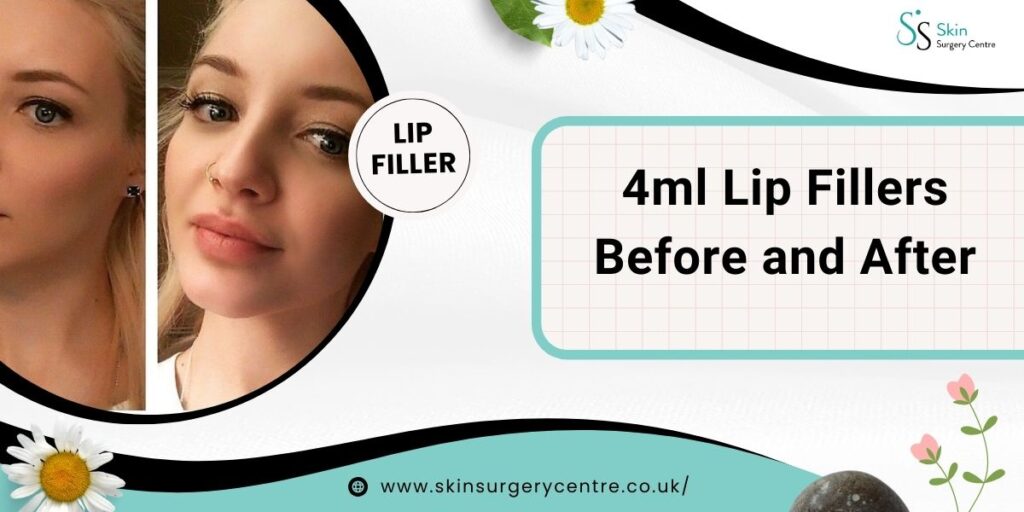
Have you considered fillers for lip enhancement but come across the term 4ml lip filler before and after results? Lip...
Are you considering fillers and questioning whether 3ml is the right volumetric choice for you? Be it your first encounter...
Everyone desires fuller and more appealing lips these days, and getting lip fillers is one of the most popular cosmetic...
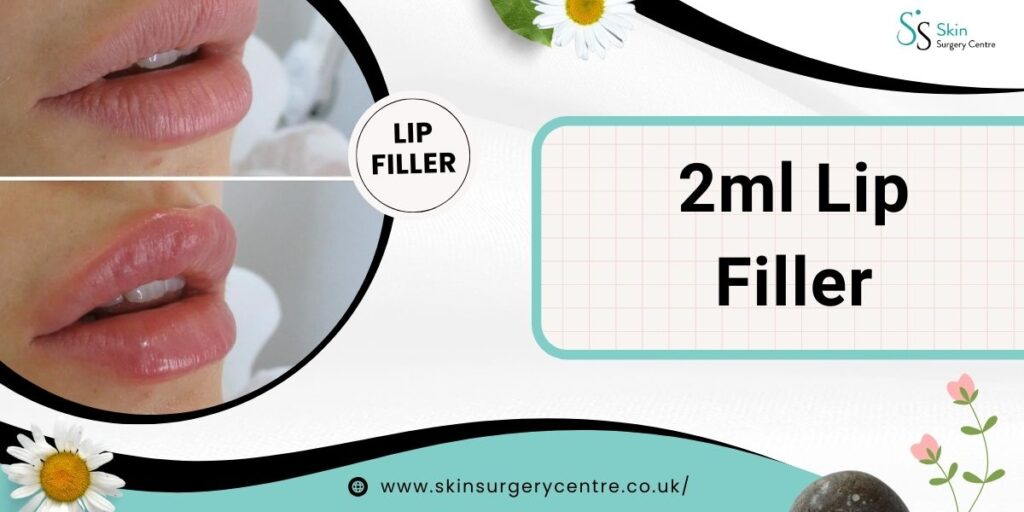
With increasing demand in the beauty industry, lip fillers are widely used to enhance volume, symmetry, and definition. However, one...