

What You Should Know: The Reality About 5 ml Lip Filler
It does not matter whether you are new to cosmetic treatments or have explored aesthetic procedures before — questions around...
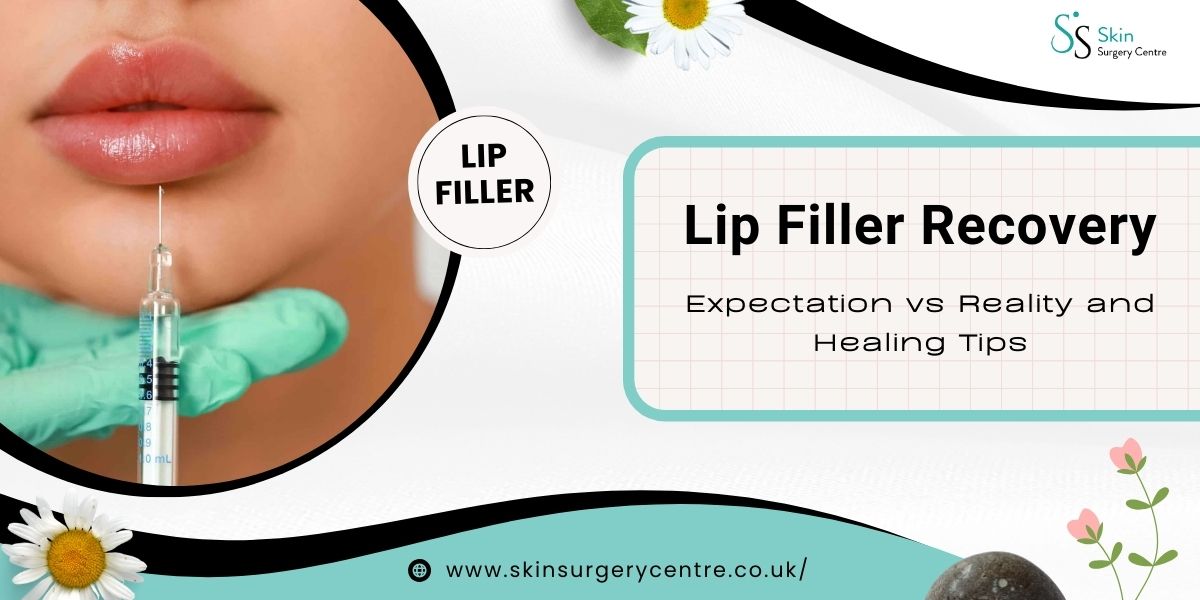
Lip filler recovery is an important part of achieving natural, balanced results after treatment. Temporary swelling, tenderness, and bruising are common during the healing period, and understanding what is normal can help reduce unnecessary worry.
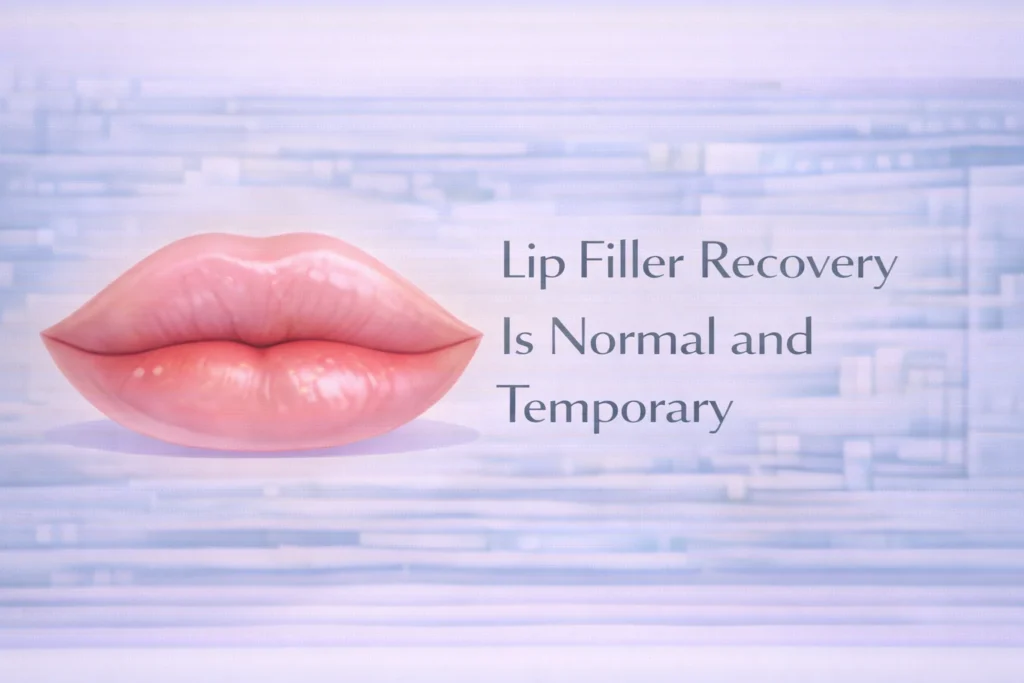
Most people experience noticeable changes in the first few days after treatment, with gradual improvement over the following one to two weeks as the filler settles and the lips recover. Knowing what to expect during recovery — and when professional review may be needed — helps ensure a safe and reassuring healing process.
Recovery from lip fillers follows a rough timeline. Having an idea of what to expect will help in managing side effects and ensuring the lips settle naturally.
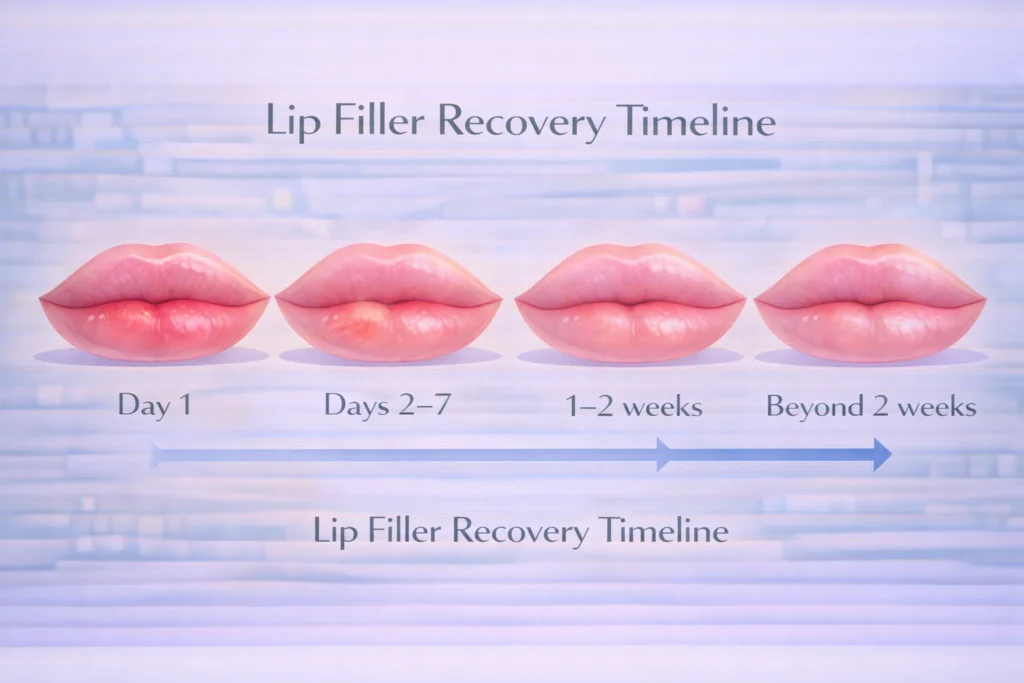
Redness and bruising may peak within 24 hours after the procedure. There’s a chance the swelling might be slightly above your expectations due to the lip fillers, and that is perfectly fine. In this case, cold compresses can help reduce swelling and improve comfort in the early stages of recovery.
Recommended Action Plan:
Early recovery is usually straightforward and focuses on allowing the lips to settle naturally. Gentle cooling with a clean wrapped ice pack during the first 24 hours can help reduce swelling and improve comfort. Heavy exercise and excessive heat are best avoided initially, as increased circulation may prolong swelling.
Most people find that staying hydrated, resting, and allowing the lips to settle without excessive touching supports smoother healing. Light mineral make-up can usually be applied after 24 hours if bruising needs to be concealed, although heavy pressure on the lips should still be avoided.
During this period of recovery, the swelling will start to subside while the bruising will gradually fade. In addition, the lip filler will start incorporating with your lips more naturally.
Most swelling and bruising usually improve significantly by around two weeks. However, subtle softening and final settling can continue for several more weeks depending on individual healing and treatment technique.
The lips usually begin to appear more settled and balanced as swelling reduces.
As swelling reduces, the lips usually begin to feel softer and appear more balanced. Subtle internal healing can continue for several weeks as the filler integrates fully with surrounding tissue.
In clinical practice, it is common for lips to feel firmer or more swollen than expected in the first few days after treatment. Most experienced UK practitioners advise allowing at least two weeks for swelling to settle before assessing final results, unless concerning symptoms develop earlier.
In the UK, reputable practitioners follow strict hygiene, product safety, and aftercare standards to minimise complications and support safe recovery.
Experienced UK practitioners typically assess lip filler results only after swelling has fully settled, as early appearance can be misleading during the healing phase.
Many people see significant improvement by two weeks, but complete settling can take longer. Ongoing softening and refinement are normal, and gradual improvement is often more meaningful than a fixed timeline.
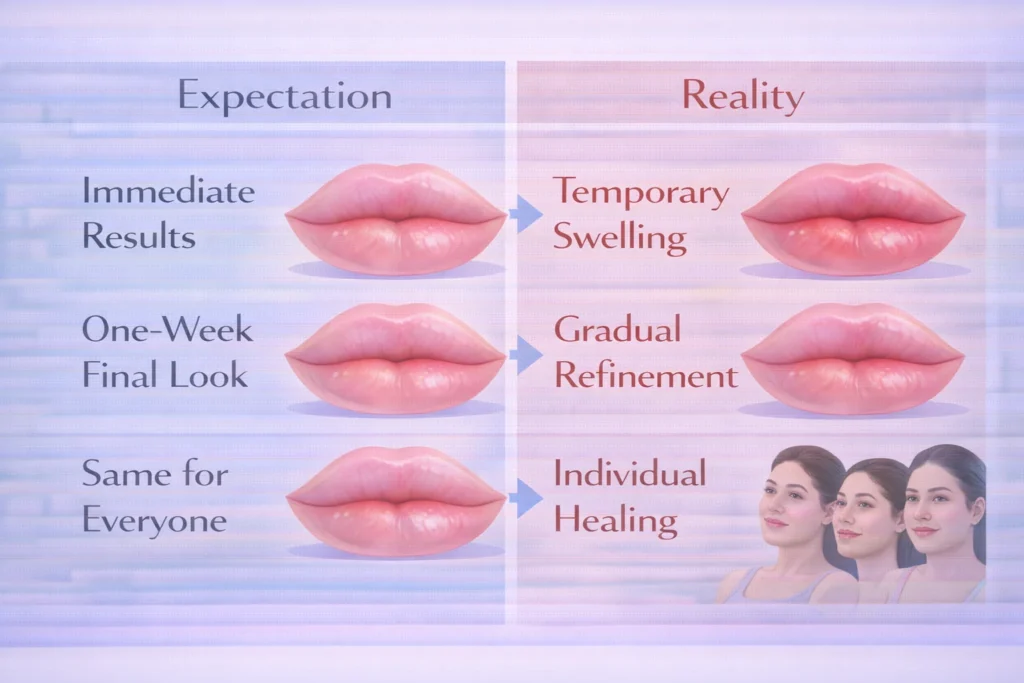
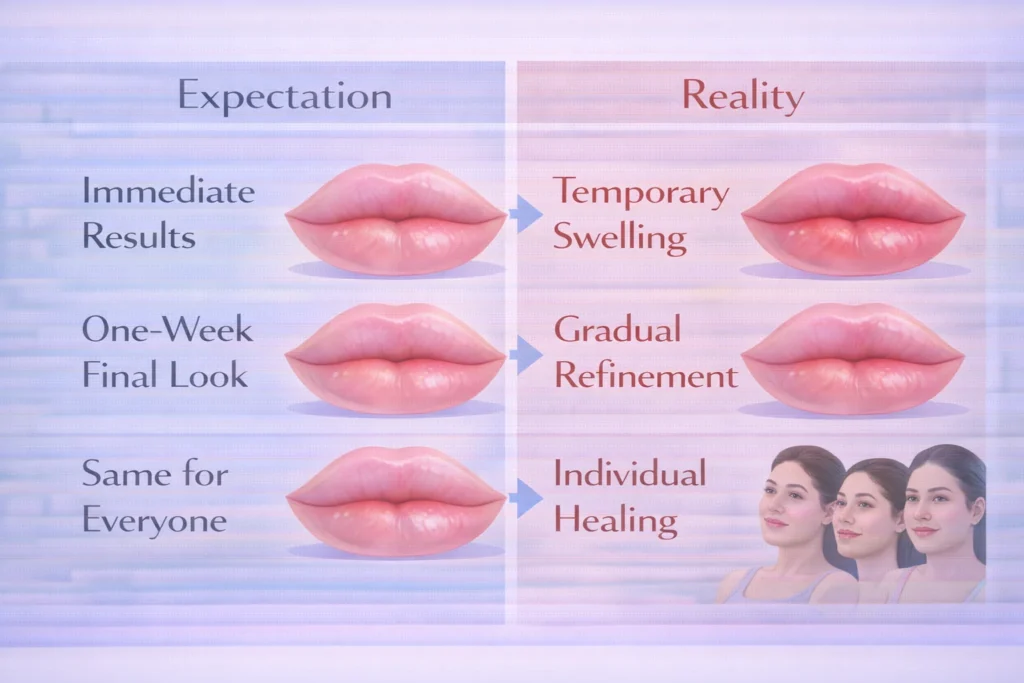
Expectation: Lips look smooth and settled immediately
Reality: Swelling and unevenness are common in the first few days
Expectation: Results are final by one week
Reality: Lips often continue to soften and refine over several weeks
Expectation: Everyone heals the same way
Reality: Recovery varies based on filler type, technique, and individual response
Following appropriate aftercare advice can help minimise swelling, reduce bruising, and support smooth healing after lip filler treatment. Most practitioners provide individual aftercare guidance based on the technique used and your medical history.
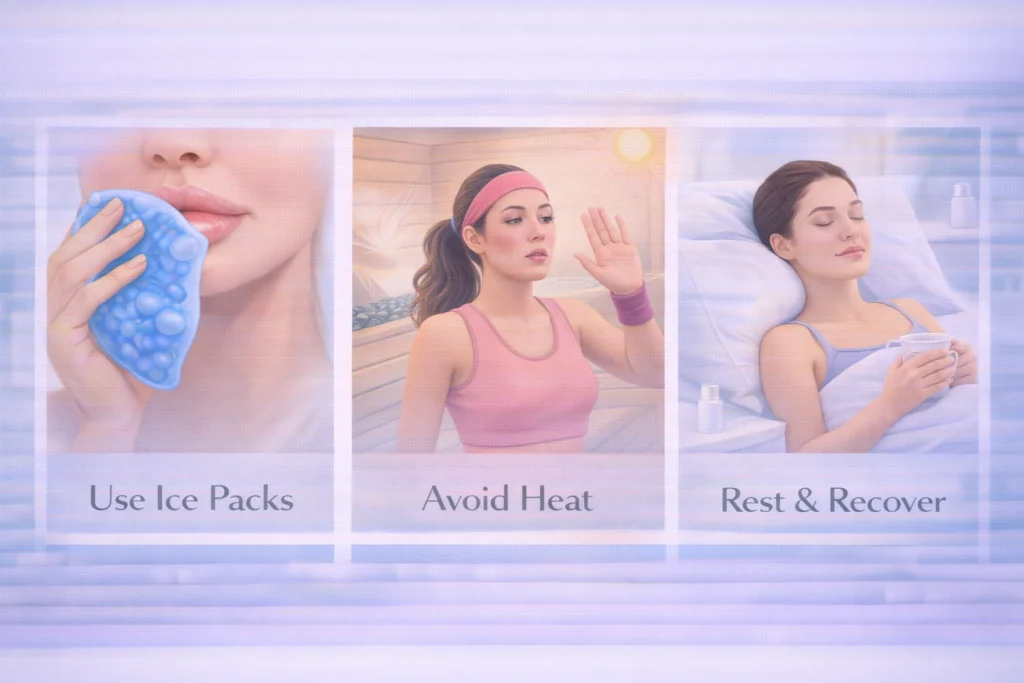
Ice packs are good for pain after treatment, as they help reduce inflammation and ease pain. This is especially important right after treatment. Just make sure to cover the ice in some light fabric so your skin doesn’t have direct contact with the cold ice.
Any major activity is not recommended, as it will make swelling increase.
Try to remain as straight as you can to decrease blood flow to the lips.
In case bruising is a problem, arnica tablets may be helpful as they assist in reducing bruising. Additionally, after a procedure, make-up can be used to cover the bruise after 24 hours.
During the recovery period, refrain from taking hot baths, saunas, or going to the steam room. Anything hot serves to swell the treated area, so stay away from heat in general.
Most people recover without complications, although healing time varies depending on individual response, filler type, and injection technique.
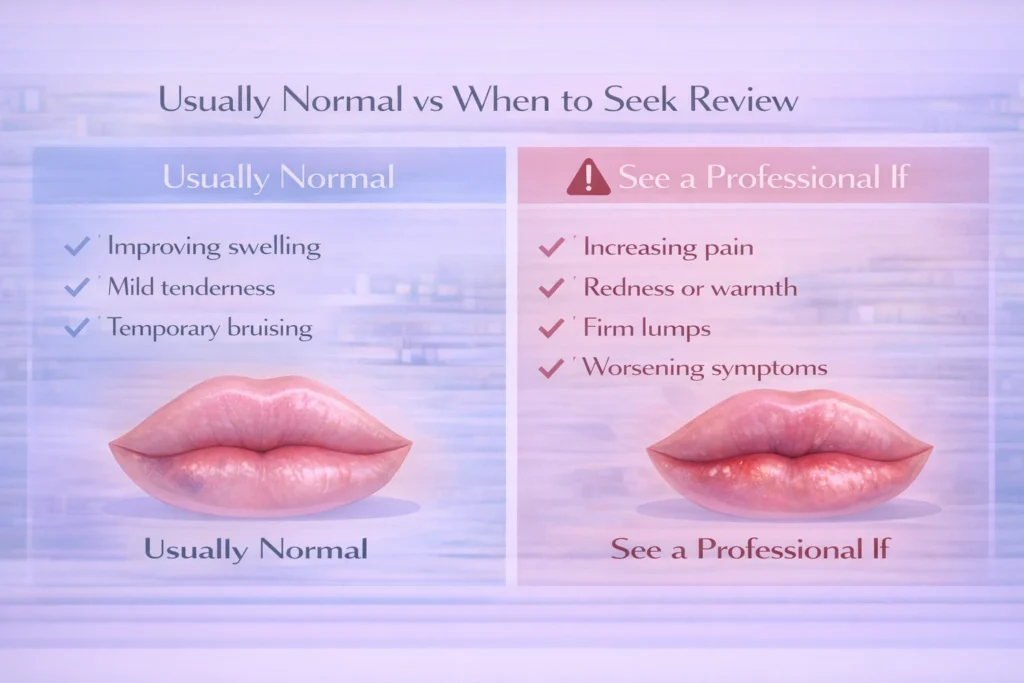
Recovery can be problematic for some people. During this time, acetaminophen is always a good bet as it is an over-the-counter option for mild pain. Try to stay away from NSAIDs like ibuprofen or aspirin as they can make the bruising worse.
Bruises are quite normal. If they look like they’re going to be visible marks, experience them while covering with make-up, or you can keep using a cold compress.
When unsure, early professional advice is safer than waiting.
The result you wish to achieve relates closely to the specialist performing the procedure. Choosing a suitably trained and experienced practitioner helps reduce risks and supports safer outcomes.

Choosing a suitably trained and experienced practitioner is important for both safety and outcomes. Always check professional credentials, experience with lip fillers, and aftercare support before treatment.
Providers usually have portfolios of their work including before and after pictures, which will help you assess their capabilities and experience.
Your provider must have experience with the type of filler you wish to use.
Lip fillers are quite safe, as long as a trained professional administers them. Besides, if for any reason you wish to reverse the procedure, hyaluronic acid fillers can easily be undone with a substance known as hyaluronidase, reverting your lips to their original state.
In the UK, choosing a medically trained and experienced aesthetic practitioner helps reduce risks and ensures appropriate aftercare if concerns arise during recovery.
| Stage | What You May Notice | Is This Normal? |
|---|---|---|
| First 24–48 hours | Peak swelling, tenderness, fullness | Yes |
| Days 3–7 | Swelling reducing, lips still firm | Yes |
| Week 2 | More settled shape, less bruising | Yes |
| Weeks 3–4 | Softening and refinement | Yes |
| Beyond 4 weeks | Persistent firmness or swelling | Review advised |
Lip filler recovery timelines vary significantly between individuals. Factors such as metabolism, injection technique, filler type, and natural tissue response all influence how quickly swelling and tenderness settle.
Some people notice rapid improvement within a few days, while others may experience mild firmness or unevenness for several weeks. This variation is normal and does not necessarily indicate a problem.
Monitoring gradual improvement rather than focusing on daily changes is usually the most reliable way to assess healing progress.
Lip filler recovery does not always follow an identical timeline. While many people notice significant improvement within two weeks, some degree of firmness, swelling, or uneven texture can persist for longer as the filler integrates with surrounding tissue.
Slower settling does not necessarily indicate a complication. Factors such as individual healing response, injection technique, product type, and previous filler treatments can all influence recovery speed.
Gradual improvement over time is usually a reassuring sign. However, symptoms that worsen rather than improve — particularly increasing pain, colour change, or persistent firmness — should always be assessed by a qualified practitioner.
In the UK, dermal fillers are classified as medical aesthetic treatments and should always be performed by a trained and qualified practitioner. According to the NHS and UK aesthetic safety guidance, patients should receive a full consultation, understand risks and aftercare, and know when to seek medical review if symptoms feel unusual.
Choosing a medically trained practitioner and attending follow-up if concerns arise helps ensure safe recovery and appropriate management of any complications.
Lip filler recovery is usually straightforward and improves gradually as swelling settles and the filler integrates with surrounding tissue. Most temporary side effects resolve within the first one to two weeks, although individual healing can vary.
If recovery feels unusually painful, symptoms worsen rather than improve, or changes such as skin colour variation or persistent lumps occur, professional assessment is recommended. When in doubt, seeking advice from a qualified practitioner helps ensure safe and appropriate care.
A: Most visible swelling and bruising improve within one to two weeks, although subtle settling can continue for several weeks depending on individual healing and treatment technique.
A: Mild uneven swelling is common in early healing. Lips often appear fuller or asymmetrical initially but usually balance out as swelling reduces.
A: Many people see significant improvement by two weeks, but final softening and integration can continue beyond this period.
A: Massage should only be done if specifically advised by your practitioner. Incorrect massage can worsen swelling or move filler unevenly.
A: Increasing pain, significant colour change, persistent lumps, or swelling that worsens rather than improves should always be reviewed by a qualified practitioner.

It does not matter whether you are new to cosmetic treatments or have explored aesthetic procedures before — questions around...
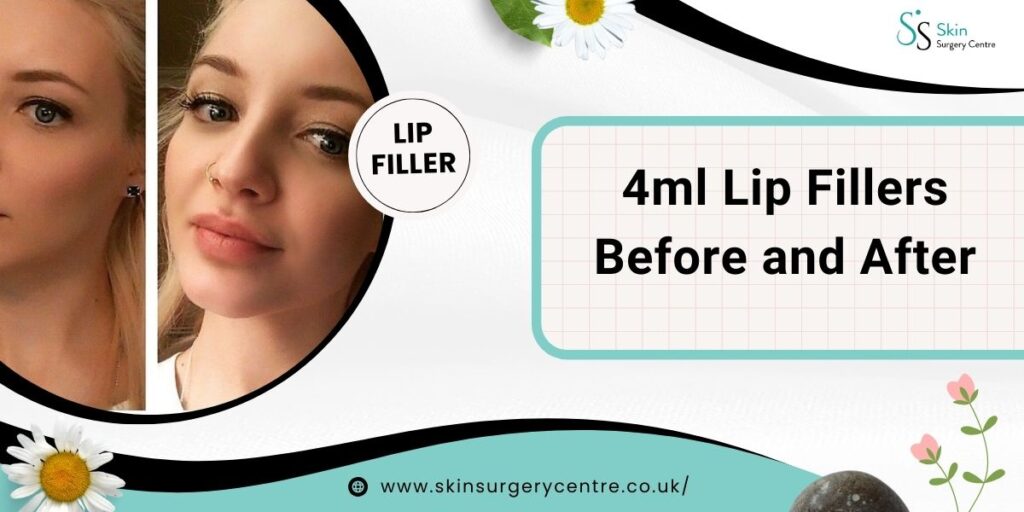
Have you considered fillers for lip enhancement but come across the term 4ml lip filler before and after results? Lip...
Are you considering fillers and questioning whether 3ml is the right volumetric choice for you? Be it your first encounter...
Everyone desires fuller and more appealing lips these days, and getting lip fillers is one of the most popular cosmetic...
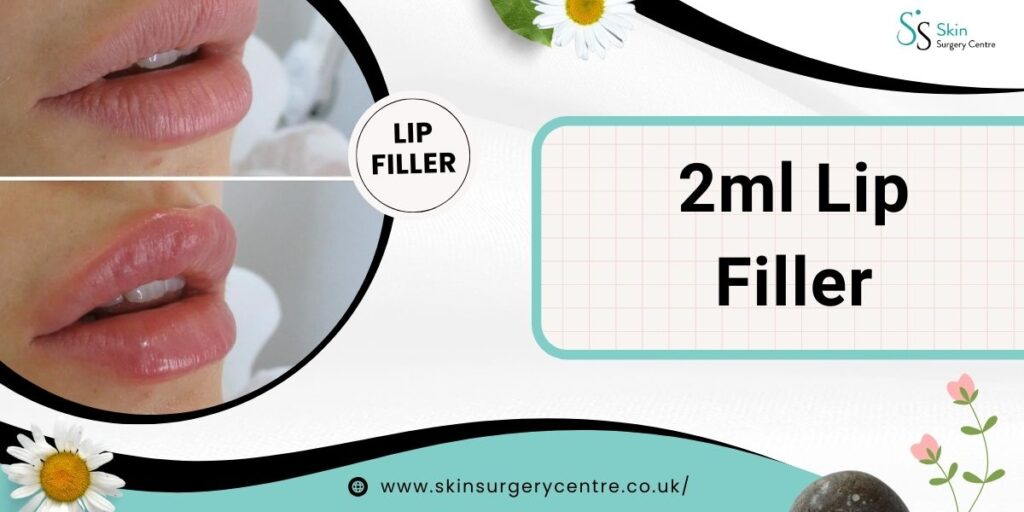
With increasing demand in the beauty industry, lip fillers are widely used to enhance volume, symmetry, and definition. However, one...