



What You Should Know: The Reality About 5 ml Lip Filler
It does not matter whether you are new to cosmetic treatments or have explored aesthetic procedures before — questions around...
Lip filler allergic reactions are uncommon but can occur in some individuals after treatment. Most modern lip fillers used in UK aesthetic practice are designed to be biocompatible and low risk, but sensitivity or inflammatory responses may occasionally develop.

Understanding the difference between normal post-treatment swelling and a true allergic or inflammatory reaction helps ensure early recognition and appropriate professional care if symptoms arise.

While not common, lip filler allergic reactions are possible and may relate to sensitivity to filler ingredients, additives, or the body’s inflammatory response to injection. Potential triggers include:

Hyaluronic acid, or HA, is the most commonly used ingredient in lip fillers because it is naturally found in the human body. True allergy to hyaluronic acid itself is extremely rare, although sensitivity to filler components or additives may occasionally occur that can lead to post-injection symptoms such as visible redness, swelling, or itchiness at the injection site.
Lidocaine is often added to some fillers as a numbing agent. Lidocaine, added into the fillers, helps reduce discomfort during the procedure. True allergic reactions to lidocaine are rare, but in sensitive individuals symptoms such as hives, swelling, or itching may occur. Severe reactions are extremely uncommon but require urgent medical attention.
True allergic reactions to lidocaine are rare. Symptoms such as swelling or hives are more commonly mild sensitivities rather than severe allergy. Any breathing difficulty or systemic symptoms require immediate medical attention.
Allergies can develop from fillers coming from bovine (cow) or human collagen, with bovine sources being more prone compared to human. Individuals with a history of allergies to animal-derived collagen tend to have a higher risk.
To increase durability, many filler brands use cross-linking agents and stabilisers. In rare cases, sensitivity to these additives may contribute to irritation or inflammatory reactions.
Improper hygiene during injection can lead to bacterial contamination or biofilm, which can lead to infections or granuloma, which is a specific type of inflammatory lump. If the procedure is performed in an aseptic clinical setting, these risks can be lowered.
The signs of a problematic reaction can differ based on severity and type. Look for the following symptoms:

The site of injection may experience swelling, tenderness, and redness, along with the region surrounding it bruising or itching.
Your body may show some rashes or hives. In some severe cases of allergic reactions, such as anaphylaxis, light-headedness, breathing problems, or wheezing may occur.
Some people may show symptoms a couple of weeks to even years after the procedure has been done. These may include granulomas, persistent lumps, or chronic inflammation, and swelling (Persistent Intermittent Delayed Swelling or PIDS). Always inform your clinician if there are any unusual symptoms emerging well after treatment.
In UK clinical practice, true allergic reactions to modern hyaluronic acid fillers are considered rare. Most post-treatment swelling or redness is part of the normal inflammatory healing response rather than a true allergy.
However, persistent swelling, itching, or systemic symptoms should always be assessed by a qualified medical practitioner to rule out delayed hypersensitivity or infection. UK practitioners typically follow MHRA safety guidance and established complication management protocols when assessing suspected reactions.
Serious allergic reactions to modern hyaluronic acid fillers are considered extremely rare in UK clinical practice, but all reputable clinics maintain emergency protocols and complication management training to ensure patient safety if reactions occur.
There are allergic and adverse reactions, and all can appear in different ways with different features and timing.
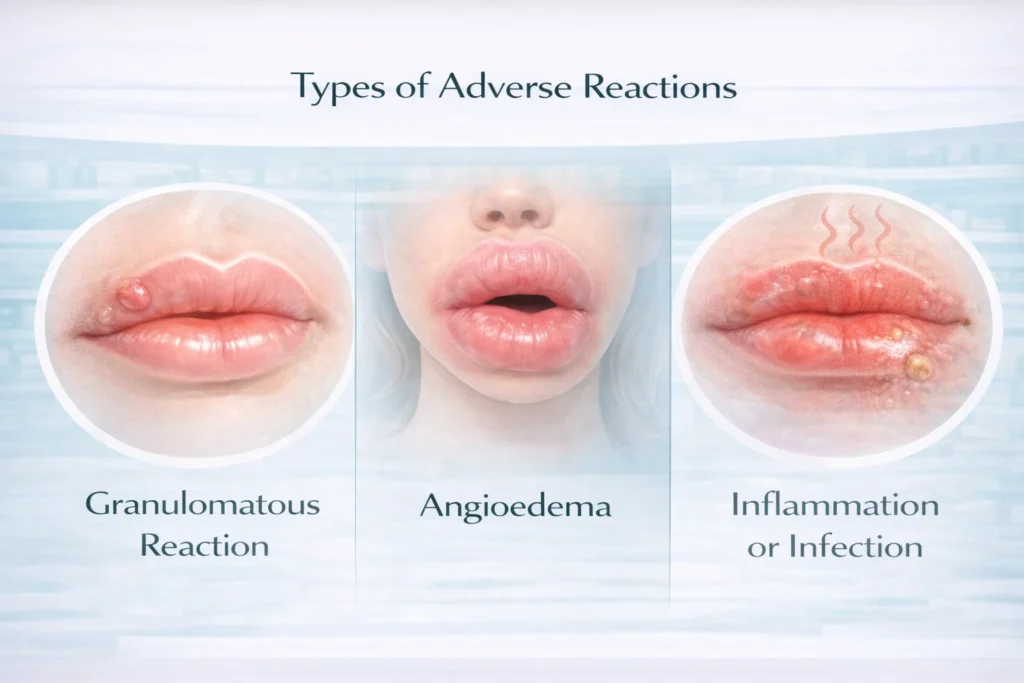
A filler material is considered to be a foreign body and stimulates an inflammatory immune response reaction weeks, months, or years after treatment. This is one of the most commonly reported delayed complications.
Granulomatous reactions to modern hyaluronic acid fillers are uncommon. When they occur, they are usually delayed inflammatory responses rather than true allergies and should be assessed by a trained medical professional.
Angioedema is an allergy that results in rapid swelling and enlargement of tissues located on deeper layers of the skin. This may be very severe, especially when it involves swelling of the lips and upper airways.
Lipogranulomas are uncommon inflammatory nodules that may occur after filler treatment and should always be assessed by an experienced medical professional.
Although rare, not observing proper hygiene and care during or after the procedure can lead to infection. Look for pain, extra warmth, and excessive swelling at the spot as these symptoms mark an infection.
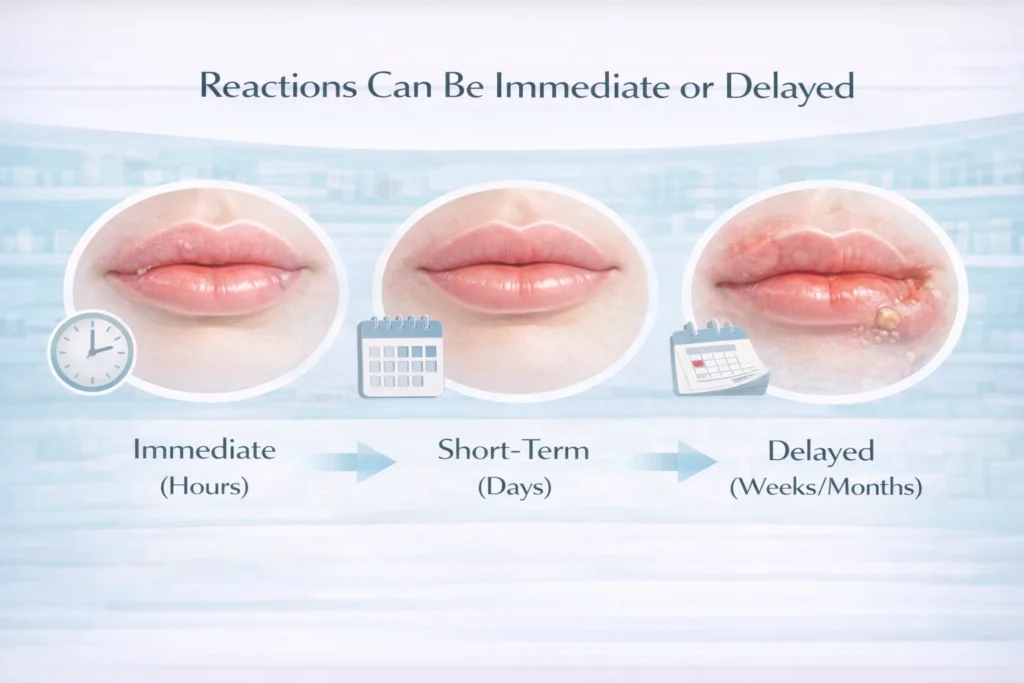
The types of reactions will determine how severe the reactions will be, as well as the delays that occur. Angioedema and other hypersensitivity reactions are immediate reactions that happen within minutes to a few hours after treatment.
Delayed Reactions: Granulomas, PIDS, and signs of chronic inflammation may take weeks, months, or even years to manifest. For example, Delayed inflammatory nodules may appear months or years after treatment in rare cases and should always be professionally assessed.
Persistent Intermittent Delayed Swelling (PIDS) is rare and does not occur in the majority of patients receiving lip fillers.
Careful product selection, medical history review, and appropriate aftercare guidance all help reduce the risk of inflammatory or allergic reactions after lip filler treatment.

Management of suspected allergic or inflammatory reactions should always be directed by a qualified medical professional. Self-medication or delayed assessment can worsen outcomes, particularly in moderate or severe reactions.
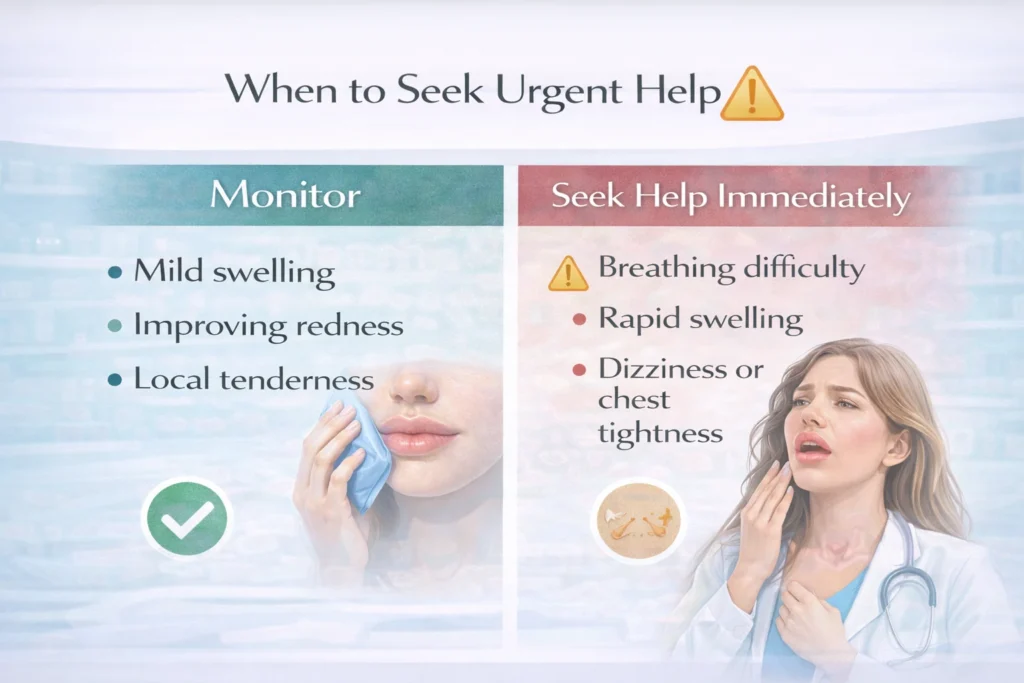
Seek immediate medical help if you experience:
Read More: Lip Filler Swelling: When to Worry About Lip Filler Swelling
| Feature | Normal Post-Treatment Swelling | Possible Allergic or Inflammatory Reaction |
|---|---|---|
| Timing | Within first 24–48 hours | Immediate or days to weeks later |
| Swelling Pattern | Gradually improves | Worsens, persists, or returns |
| Itching / Rash | Uncommon | May be present |
| Systemic Symptoms | Absent | Breathing difficulty, hives, dizziness (urgent) |
| Action | Monitor and follow aftercare advice | Seek professional medical review |
Most swelling, redness, or tenderness after lip filler treatment is part of the normal inflammatory healing response rather than a true allergic reaction. True allergy to modern hyaluronic acid fillers is considered rare in UK clinical practice.
Symptoms that gradually improve are usually reassuring, whereas persistent swelling, itching, or systemic symptoms should always be reviewed by a qualified medical practitioner to rule out delayed hypersensitivity or infection.
In UK aesthetic practice, true allergic reactions to modern hyaluronic acid lip fillers are considered rare. Most post-treatment swelling or irritation is temporary and part of the normal healing response. However, persistent swelling, itching, or systemic symptoms should always be assessed by a qualified medical professional. Reputable UK clinics follow MHRA safety guidance and maintain emergency protocols to manage any suspected allergic or inflammatory reactions safely.
A: No, allergic reactions are rare but can happen.
A: Swelling, redness, itchiness, or lumps, either immediately or weeks later.
A: Yes, especially HA-based fillers can be dissolved using hyaluronidase.
A: Delayed inflammatory reactions are rare but can occur months or years later. Any new swelling or lumps should be assessed by a qualified practitioner.
Read More: Lip Filler FAQs, Myths & Public Interest

Allergic reactions to lip fillers are very uncommon, but when they do occur, it is essential to be informed and seek assessment from a suitably qualified and experienced medical practitioner for these procedures. Implementing measures to understand potential risks, recognising signs, and following best preventative practices greatly decreases complications.
In case there are any symptoms, mild or intense, pay them some attention, and contact your clinician for a review and treatment as soon as possible.
If you experience symptoms that feel unusual, worsen rather than improve, or cause concern, seeking advice from a qualified and experienced aesthetic practitioner helps ensure safe assessment and appropriate management. Early review provides reassurance in most cases and allows prompt treatment if required.

It does not matter whether you are new to cosmetic treatments or have explored aesthetic procedures before — questions around...
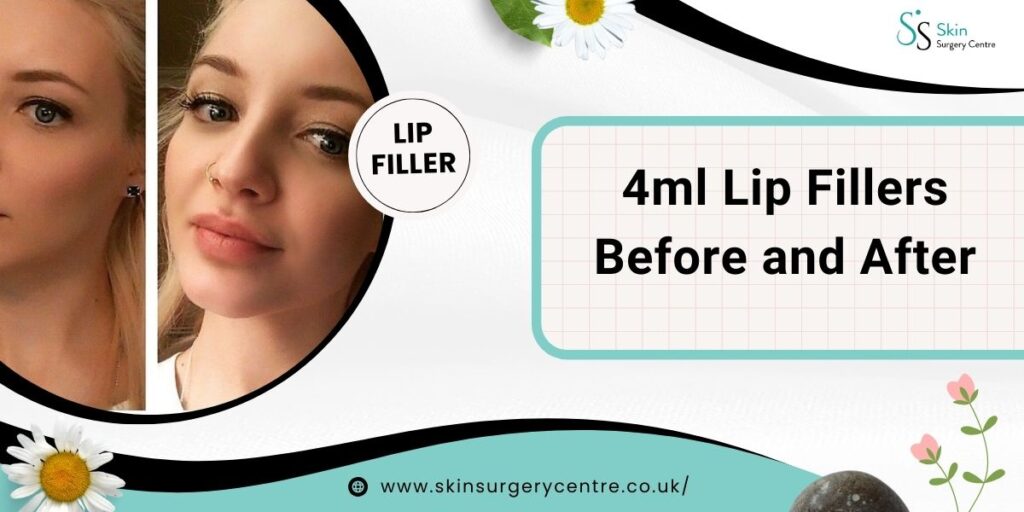
Have you considered fillers for lip enhancement but come across the term 4ml lip filler before and after results? Lip...
Are you considering fillers and questioning whether 3ml is the right volumetric choice for you? Be it your first encounter...
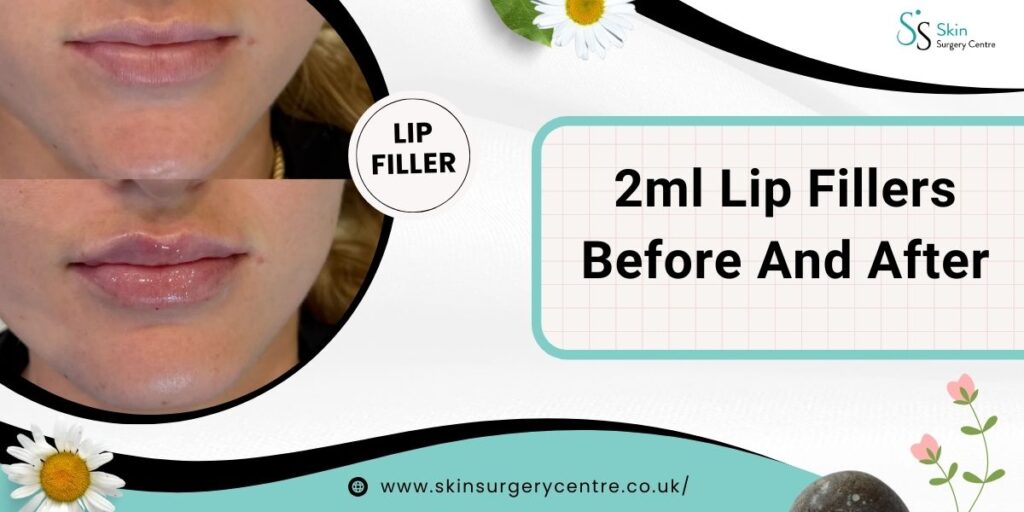
Everyone desires fuller and more appealing lips these days, and getting lip fillers is one of the most popular cosmetic...
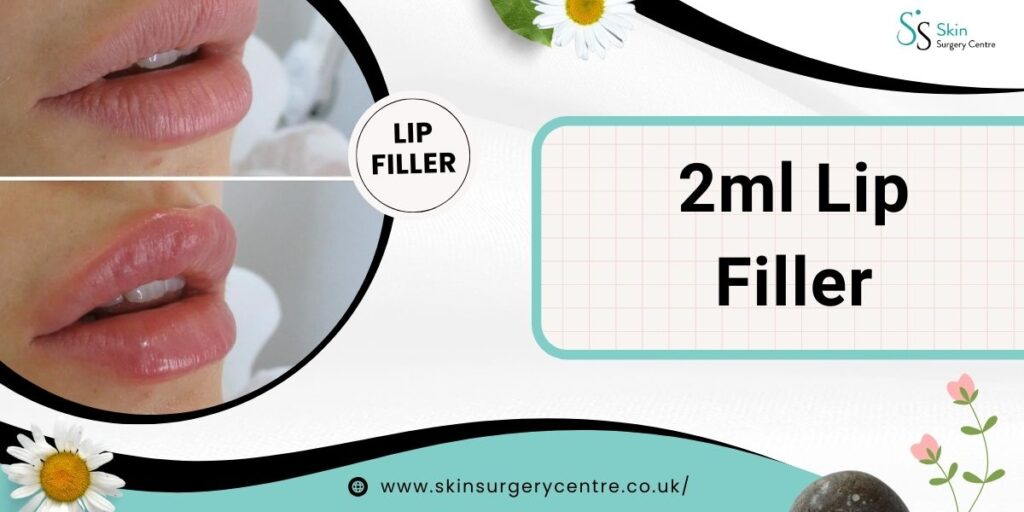
With increasing demand in the beauty industry, lip fillers are widely used to enhance volume, symmetry, and definition. However, one...