



What You Should Know: The Reality About 5 ml Lip Filler
It does not matter whether you are new to cosmetic treatments or have explored aesthetic procedures before — questions around...
Fuller, more defined lips have become a symbol of modern beauty — and lip fillers are the most popular non-surgical solution available today. But do you know what lip filler ingredients actually are, and what goes into those injections?
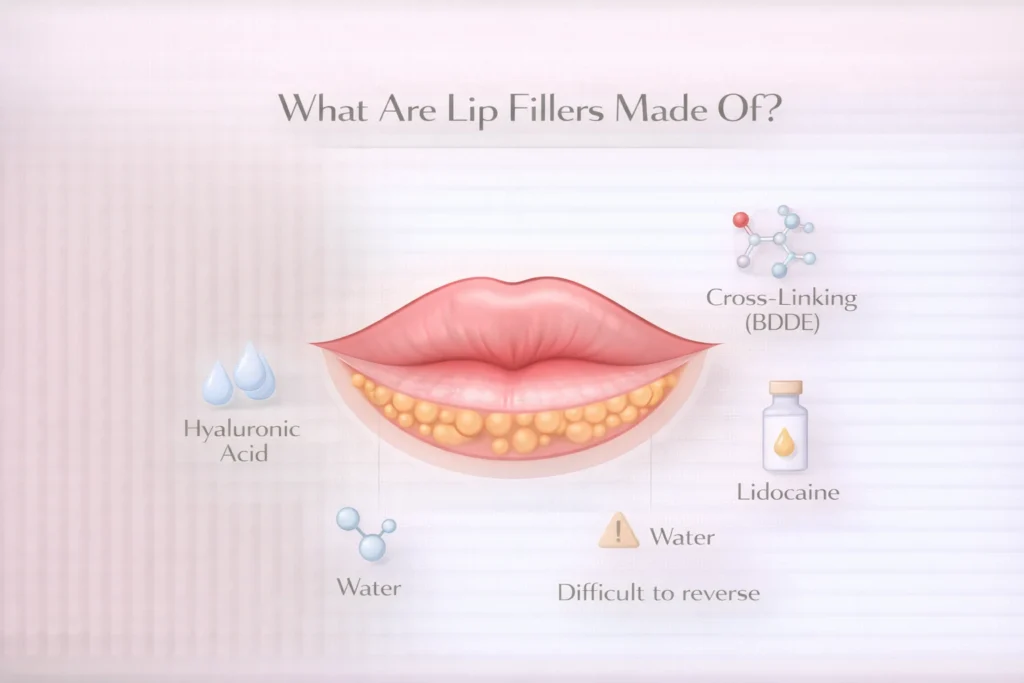
In this guide, we break down the full science behind lip filler ingredients, from hyaluronic acid and cross-linking agents to G prime values, alternative filler materials, and what ingredients to avoid. Whether you are considering treatment for the first time or simply want to make a more informed decision, this is everything you need to know before booking a consultation in the UK.
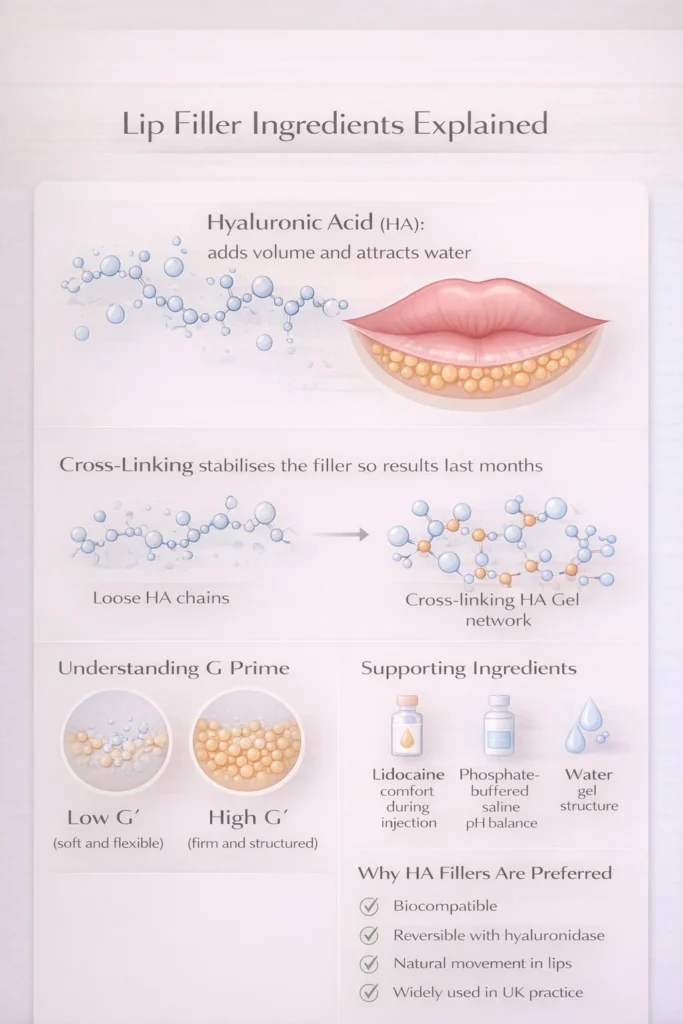
Lip fillers are injectable cosmetic treatments used to add volume, improve definition, and restore symmetry to the lips. The vast majority of lip fillers used in UK clinical practice are based on hyaluronic acid — a naturally occurring sugar molecule found in the skin, connective tissues, and joints.
Because HA is already present in the body, it is highly biocompatible, meaning the risk of allergic reaction is low compared to synthetic or animal-derived materials. This biocompatibility, combined with the ability to reverse results using hyaluronidase, has made HA the preferred choice among UK aesthetic practitioners for lip enhancement.
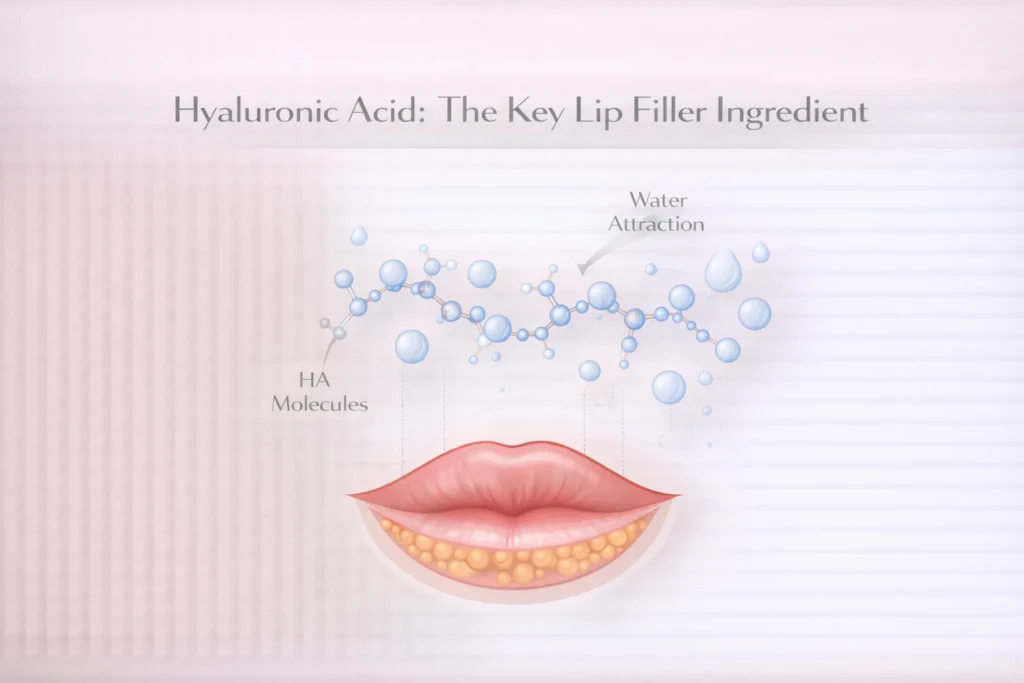
The primary active ingredient in most modern lip fillers is hyaluronic acid. It is a naturally occurring polysaccharide — a long-chain sugar molecule — produced by the body and found in the skin, eyes, and synovial fluid of the joints.
Hyaluronic acid used in cosmetic fillers is not derived from human or animal sources. It is produced through bacterial fermentation — typically using Streptococcus equi — under controlled laboratory conditions. This manufacturing process ensures consistency, purity, and a significantly lower risk of adverse reaction compared to earlier filler materials.
HA has an extraordinary capacity to attract and retain water. A single gram of hyaluronic acid can hold approximately six litres of water — which is what gives HA fillers their volumising and hydrating effect when injected into the lips.
When hyaluronic acid gel is injected into lip tissue, it draws in surrounding water molecules, expanding the gel and adding visible volume. It integrates with the tissue structure, allowing the lips to move naturally when speaking, smiling, or eating.
Results are visible almost immediately, though final shape and symmetry are best assessed at the two-week mark once any initial swelling has fully resolved.
“Outcomes depend on formulation choice, injection depth, and practitioner technique rather than brand alone.”
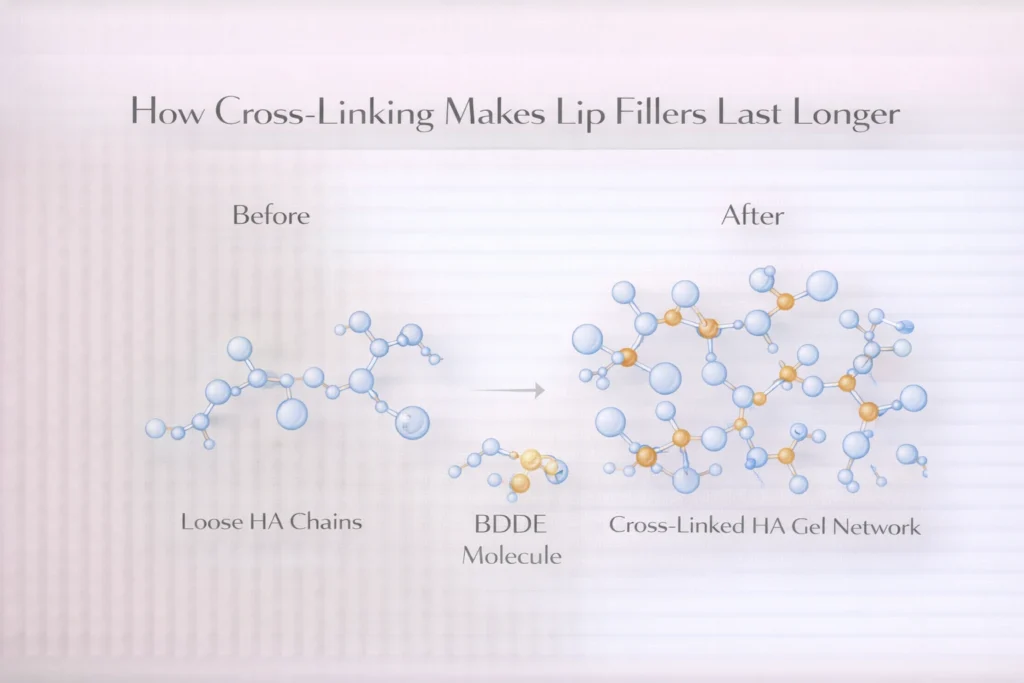
Pure, unmodified hyaluronic acid would be broken down by the body within hours of injection. To make HA fillers durable enough to last months, manufacturers use a process called cross-linking.
Cross-linking is the chemical bonding of HA chains using a linking agent. The most commonly used cross-linking agent in modern HA fillers is BDDE (1,4-butanediol diglycidyl ether). This creates a stable three-dimensional gel network that resists enzymatic breakdown while retaining the softness and flexibility needed for use in the lips.
The degree of cross-linking significantly affects how a filler behaves:
| Cross-Linking Level | Gel Characteristics | Best Suited For |
|---|---|---|
| Low cross-linking | Soft, spreadable, pliable | Lips — natural movement essential |
| Medium cross-linking | Balanced firmness and flexibility | Nasolabial folds, under-eye area |
| High cross-linking | Firm, structured, less flexible | Cheeks, jawline, chin — deep lift |
For lip treatments, low to medium cross-linking is preferred. A filler that is too firm will not move naturally with facial expressions and can create an unnatural, stiff appearance.
G prime (G’) is a scientific measure of a filler’s elasticity and firmness. It is one of the most important technical properties that determines how a filler behaves inside the lip and whether results look natural or overdone.
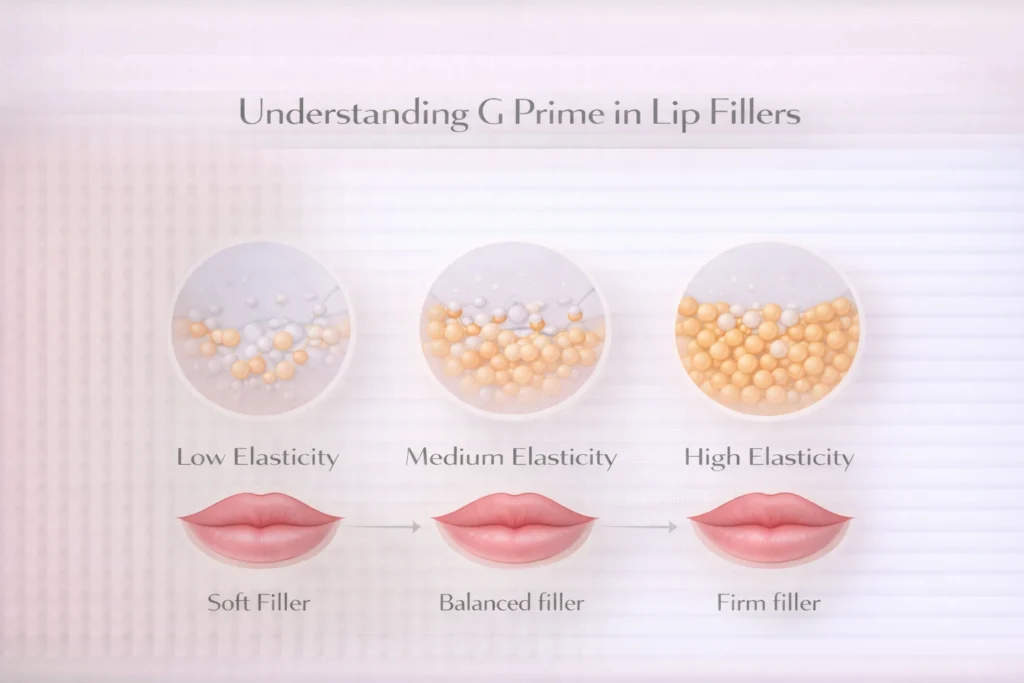
The table below shows G prime values for lip filler products commonly available in the UK:
| Product | G’ Value (approx.) | Best Lip Application |
|---|---|---|
| JUVÉDERM Volbella | ~50–100 Pa | Subtle definition and hydration |
| Restylane Kysse | ~180–250 Pa | Natural volume with movement |
| JUVÉDERM Ultra XC | ~200–300 Pa | Fuller lips with softness |
| Belotero Balance | ~25–50 Pa | Fine line softening, natural integration |
| Teosyal RHA 2 | ~70–200 Pa | Contour and shape with flexibility |
| Stylage Special Lips | ~100–150 Pa | Soft, moderate volume |
A knowledgeable UK practitioner will select a product based on G prime in relation to your existing lip structure, tissue quality, and the result you are seeking — not simply based on brand recognition alone.
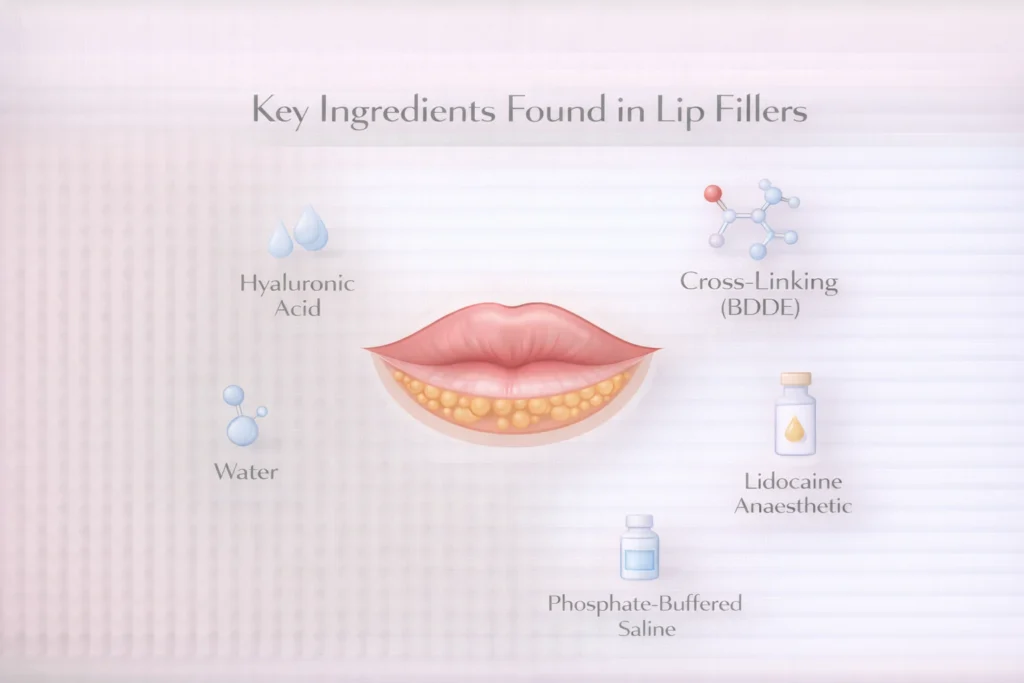
The primary volumising ingredient. Biocompatible, water-attracting, and reversible using hyaluronidase. Produced synthetically via bacterial fermentation.
1,4-butanediol diglycidyl ether — the chemical agent used to bind HA chains together and create a stable, longer-lasting gel. The degree of BDDE cross-linking determines filler firmness and longevity.
Many lip filler formulations include lidocaine pre-mixed into the gel to reduce discomfort during injection. Products such as JUVÉDERM Ultra XC and Restylane-L contain lidocaine as a standard component.
Patients with a known allergy or sensitivity to amide-type local anaesthetics should inform their practitioner before treatment, as lidocaine belongs to this drug class. Lidocaine-free formulations are available if required.
Most HA fillers are suspended in a phosphate-buffered saline solution that stabilises the product’s pH and ensures compatibility with surrounding tissue upon injection.
HA gel formulations contain a controlled proportion of water as part of the gel matrix. This contributes to the smooth, hydrated quality of results immediately post-treatment.
No. While most lip fillers share hyaluronic acid as their base ingredient, formulations differ considerably in concentration, cross-linking density, G prime value, particle size, and the presence or absence of lidocaine.
These differences affect how soft the filler feels, how naturally it moves with facial expressions, how long results last, and how the product integrates with surrounding tissue. This is why product selection should always be a clinical decision made by an experienced practitioner — not a choice driven by brand marketing alone.
While hyaluronic acid dominates modern lip filler practice, it is worth understanding why other materials are rarely — or never — used in the lips:
Calcium Hydroxylapatite (CaHA) A mineral compound that stimulates collagen production. It is longer-lasting and firmer than HA but is not suitable for lips due to its density and lack of flexibility. Products such as Radiesse fall into this category and should not be used in the lip area.
Poly-L-Lactic Acid (PLLA) A collagen-stimulating biostimulator that rebuilds volume gradually over several months. It is not suitable for lips because it lacks immediate softness, cannot be reversed, and carries a risk of nodule formation if placed superficially.
Polymethyl Methacrylate (PMMA) A permanent synthetic filler consisting of microspheres in a collagen carrier. Rarely used today due to a higher complication profile and the impossibility of reversal. Permanent fillers of any kind are generally discouraged in the UK aesthetic community for lip use.
The key takeaway: Hyaluronic acid remains the safest, most clinically supported choice for lip enhancement — precisely because it is soft, flexible, biocompatible, and fully reversible.
There are several common misconceptions about lip filler ingredients. Modern, regulated HA lip fillers do not contain:
If a practitioner cannot tell you the exact product being used in your treatment, that is a significant warning sign.
| Brand | Product | Longevity | Key Feature |
|---|---|---|---|
| JUVÉDERM | Ultra XC | 9–12 months | Contains lidocaine; smooth, soft volume |
| JUVÉDERM | Volbella | Up to 12 months | Subtle definition; very low G prime |
| Restylane | Kysse | 6–9 months | Formulated for natural lip movement |
| Restylane | Silk | ~6 months | Fine-line softening; light volume |
| Belotero | Balance | 6–9 months | Natural tissue integration; fine lines |
| Teosyal | RHA 2 | 6–9 months | Dynamic movement; CE-marked |
“Longevity varies between individuals and depends on metabolism, injection technique, lifestyle factors, and the volume injected.”
In the UK, lip fillers are regulated as medical devices by the MHRA. Products must hold appropriate UKCA or CE marking to be considered compliant for use in the UK market. Patients are advised to confirm this with their practitioner before treatment.
HA fillers offer a combination of clinical safety and aesthetic flexibility that has made them the most widely used option in UK cosmetic practice.
Treatment takes between 15 and 45 minutes. Most patients can return to normal activities the same day, with mild swelling or bruising typically resolving within 24 to 72 hours.
Volume and shape changes are visible almost immediately. Final results settle at the two-week mark as any swelling fully resolves.
Volume can be tailored to individual anatomy and patient preference. If results are unsatisfactory or a complication occurs, hyaluronidase can dissolve the filler quickly and safely — a critical safety advantage that no permanent filler can offer.
When chosen and placed correctly, HA fillers move naturally with facial expressions and produce soft, proportionate results rather than an overfilled appearance.
Because HA occurs naturally in the body, the risk of immune reaction or rejection is significantly lower than with synthetic permanent materials.
Not everyone is a suitable candidate for lip filler treatment. A qualified UK practitioner will conduct a thorough medical history review before proceeding. Lip fillers are generally not recommended for:
As the body’s natural enzymes gradually break down the hyaluronic acid gel, filler results diminish over time. Understanding this process helps patients plan for maintenance treatments.
| Product | Approximate Duration | Notes |
|---|---|---|
| JUVÉDERM Ultra XC | 9–12 months | Higher cross-linking; longer lasting |
| JUVÉDERM Volbella | Up to 12 months | Light, subtle volume |
| Restylane Kysse | 6–9 months | Movement-optimised formula |
| Restylane Silk | ~6 months | Fine enhancement; shorter duration |
| Belotero Balance | 6–9 months | Soft integration |
Factors that accelerate filler breakdown include high-intensity exercise, significant UV exposure, a faster individual metabolism, and a high volume of filler placed in a single session.
Some post-treatment reactions are expected and resolve without intervention. Others require prompt attention. Always follow your specific practitioner’s aftercare advice.
| Reaction | Typically Normal? | When to Seek Advice |
|---|---|---|
| Swelling for 24–72 hours | Yes | If severe or worsening after 72 hours |
| Mild bruising at injection sites | Yes | If spreading significantly |
| Tenderness around the lips | Yes | If accompanied by skin colour changes or warmth |
| Uneven appearance immediately after | Often yes — swelling is rarely symmetrical | If asymmetry persists beyond 2 weeks |
| White patches (blanching) during injection | No — requires immediate attention | Possible vascular occlusion — seek urgent care |
| Severe pain, darkening skin, or vision changes | No | Seek emergency medical assistance immediately |
Vascular occlusion — where filler inadvertently compresses or enters a blood vessel — is rare but serious. Choosing a practitioner trained in complication recognition and emergency management is one of the most important decisions a patient can make.
Hyaluronic acid fillers have a well-established safety profile backed by decades of clinical use and peer-reviewed research. However, the safety of any lip filler treatment is determined not only by the ingredients but by the qualifications of the person injecting them, the clinical environment, and the regulatory status of the product being used.
In England, regulations governing cosmetic injectables are strengthening. From 2025, it is a legal requirement for practitioners administering botulinum toxin to hold a prescribing licence or work under a prescriber’s supervision. While dermal fillers are not yet subject to the same mandatory licensing requirement, the General Medical Council (GMC), Nursing and Midwifery Council (NMC), and British Association of Aesthetic Plastic Surgeons (BAAPS) all strongly advise patients to seek treatment only from medically trained practitioners.
The MHRA classifies dermal fillers as Class III medical devices in the UK — the highest risk classification for medical devices. This means the product itself must meet rigorous safety and quality standards, but it does not automatically mean the person injecting it is medically qualified. This distinction is important for UK patients to understand.
There is currently no single mandatory register for all aesthetic injectors in the UK. This places greater responsibility on patients to verify practitioner qualifications before treatment.
What to look for when selecting a UK lip filler practitioner:
Avoid any practitioner who offers same-day treatment without consultation, who cannot confirm the product being used, or who is unable to explain how complications would be managed.
Lip filler ingredients in modern UK practice centre on cross-linked hyaluronic acid — a biocompatible sugar molecule produced synthetically via bacterial fermentation. The cross-linking agent BDDE stabilises the gel for longevity, while lidocaine is added to many formulations for patient comfort. G prime values determine filler firmness and suitability for the lips. Results are reversible using hyaluronidase. Safety depends on ingredient quality, product regulation, and the clinical expertise of the injecting practitioner. UK patients should always verify practitioner qualifications before treatment.
A: Most modern lip fillers are made from cross-linked hyaluronic acid (HA) — a naturally occurring sugar molecule produced synthetically via bacterial fermentation. Supporting ingredients include BDDE as the cross-linking stabiliser, lidocaine as a local anaesthetic in many formulations, and phosphate-buffered saline as the suspending solution. Together, these ingredients create a soft, biocompatible gel that integrates with lip tissue to add volume, hydration, and definition.
A: BDDE (1,4-butanediol diglycidyl ether) is the chemical cross-linking agent used to bind hyaluronic acid chains together into a stable gel structure. Without cross-linking, HA would be broken down by the body within hours. BDDE cross-linking allows the filler to last months while retaining the softness needed for natural lip movement.
A: Yes. Hyaluronic acid fillers can be dissolved using hyaluronidase — an enzyme that breaks down HA gel. This is one of the key safety advantages of HA fillers over permanent or semi-permanent alternatives, and an important reason why HA is the preferred ingredient in reputable UK lip filler practice.
A: Results typically last between 6 and 12 months depending on the specific formulation, the volume injected, and individual metabolic factors. Products with higher cross-linking density generally last longer. Lifestyle factors such as high-intensity exercise and UV exposure can accelerate breakdown.
A: No. Modern HA lip fillers do not contain silicone, animal-derived collagen, or synthetic polymers. These materials were used in earlier filler generations but have been entirely replaced by bioengineered hyaluronic acid in current UK clinical practice. If you are unsure what a product contains, always ask your practitioner before treatment.
A: Allergic reactions to HA fillers are rare due to the biocompatible nature of hyaluronic acid. However, patients with a known sensitivity to lidocaine or amide-type local anaesthetics should inform their practitioner, as many products — including JUVÉDERM Ultra XC and Restylane-L — contain lidocaine. A lidocaine-free alternative can be selected if required.
A: G prime (G’) measures a filler’s firmness and elasticity. For lip treatments, a low G prime product is preferred — typically under 200 Pa — because soft, pliable fillers integrate naturally with lip tissue and move comfortably with facial expressions. High G prime fillers are too dense for lips and can produce a stiff, unnatural result.
Lip filler ingredients have evolved considerably over the past two decades. Today’s treatments centre on cross-linked hyaluronic acid — a biocompatible, reversible, and clinically well-supported material that delivers natural-looking results when used correctly.
Understanding what is in your filler, how the cross-linking process works, why G prime matters, and what to look for in a qualified UK practitioner puts you in the strongest possible position to make an informed, safe decision.
Always discuss ingredient choice, product selection, and your personal suitability with a medically trained aesthetic practitioner before proceeding with treatment.
Funt D, Pavicic T. Lip Filler Rheology and Application in Aesthetic Practice. Dermatol Surg. 2021.
MHRA — Dermal Fillers as Medical Devices
GMC — Guidance on Cosmetic Procedures
BAAPS — British Association of Aesthetic Plastic Surgeons
NMC — Nursing and Midwifery Council
San Miguel Moragas J, et al. Systematic review of filling procedures for lip augmentation. J Craniomaxillofac Surg. 2015;43(6):883–906.
Goodman GJ, et al. Safety and Efficacy of Hyaluronic Acid Dermal Fillers. Aesthet Surg J. 2023.
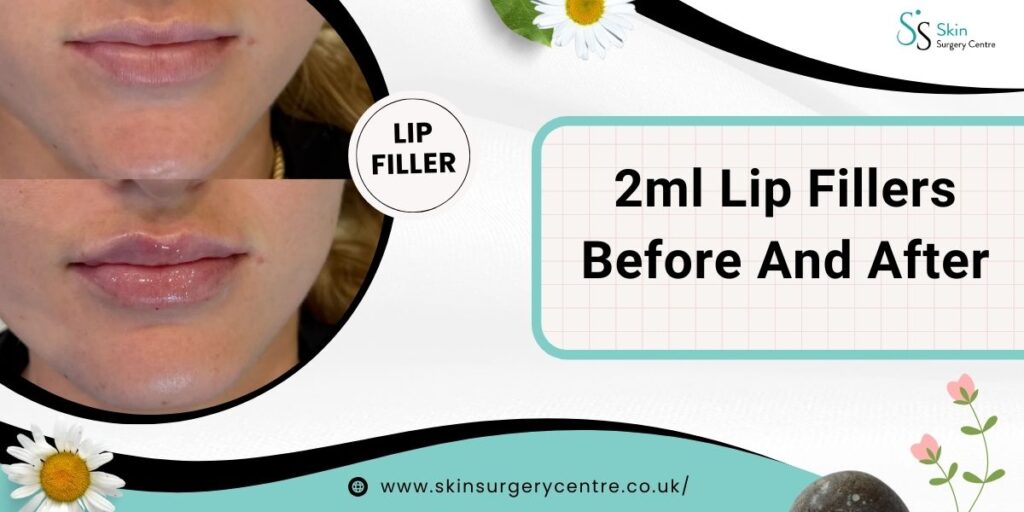

It does not matter whether you are new to cosmetic treatments or have explored aesthetic procedures before — questions around...
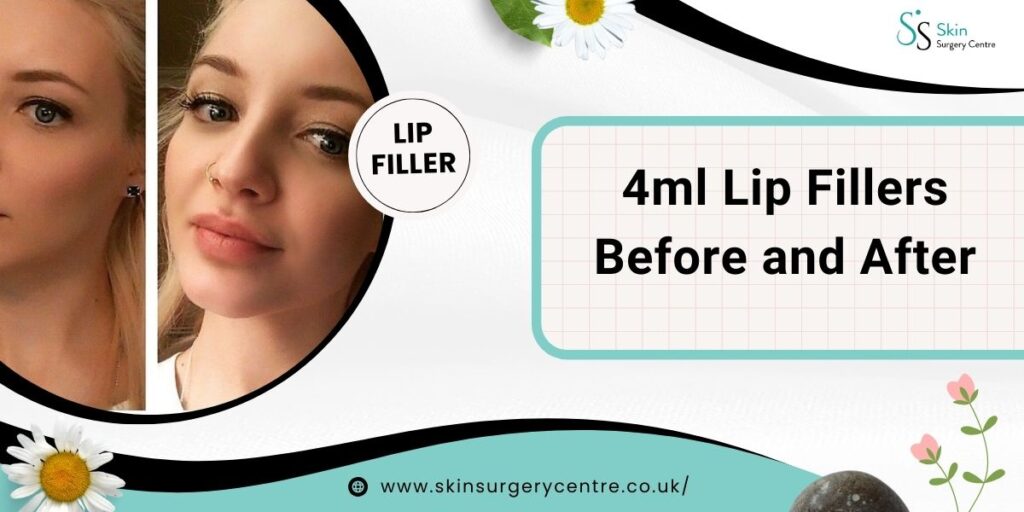
Have you considered fillers for lip enhancement but come across the term 4ml lip filler before and after results? Lip...
Are you considering fillers and questioning whether 3ml is the right volumetric choice for you? Be it your first encounter...
Everyone desires fuller and more appealing lips these days, and getting lip fillers is one of the most popular cosmetic...
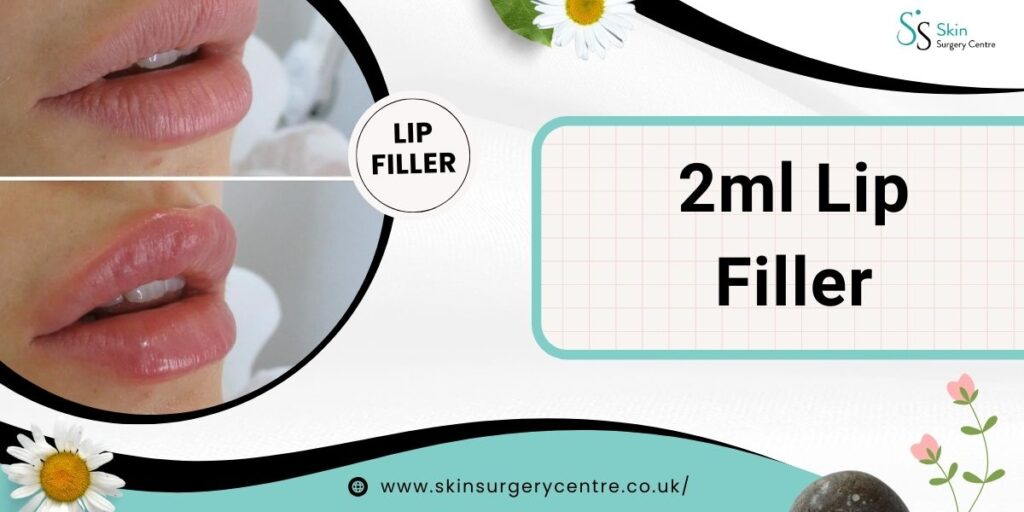
With increasing demand in the beauty industry, lip fillers are widely used to enhance volume, symmetry, and definition. However, one...