


1.1 ml Lip Filler Before and After: What Results To Observe
Lip fillers have become one of the most sought-after non-surgical cosmetic enhancements due to their efficiency, customisability, and minimal downtime....
Antihistamines may help itching or histamine-related swelling in some cases after lip filler treatment, but they do not prevent normal post-injection swelling. Most swelling after lip fillers is part of the natural inflammatory healing response and settles within several days without medication.
Antihistamines should only be used if recommended by a qualified practitioner, particularly where itching or mild hypersensitivity is present rather than routine swelling.
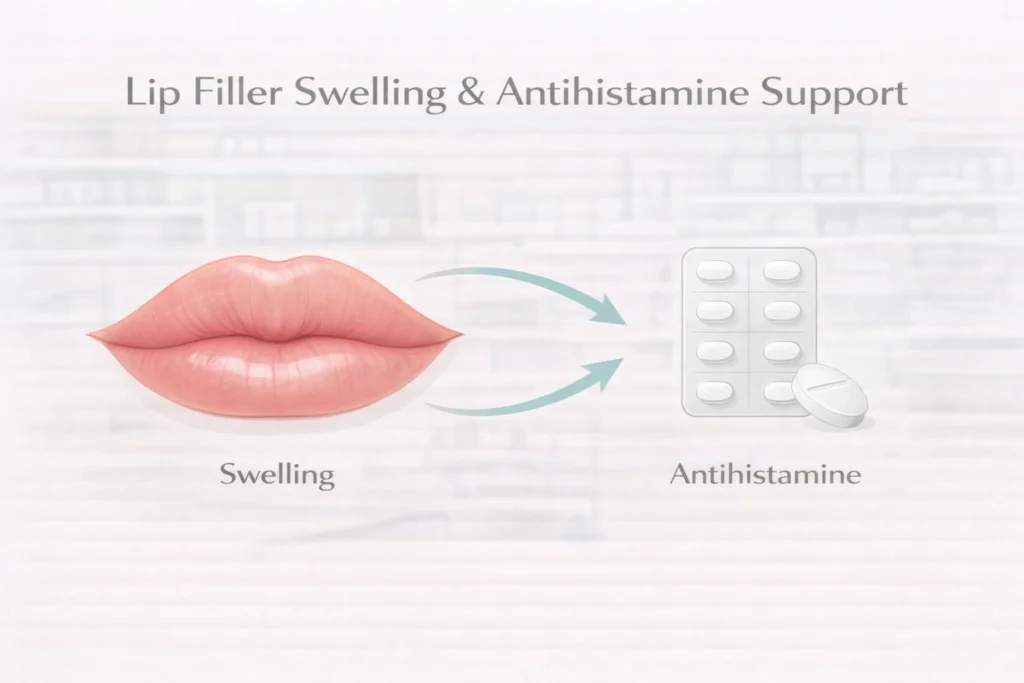
The scientific reasoning behind swelling, how antihistamines can assist in minimizing it, as well as other helpful recovery suggestions are included in this article to support recovery and reduce post-treatment swelling following lip filler injection.
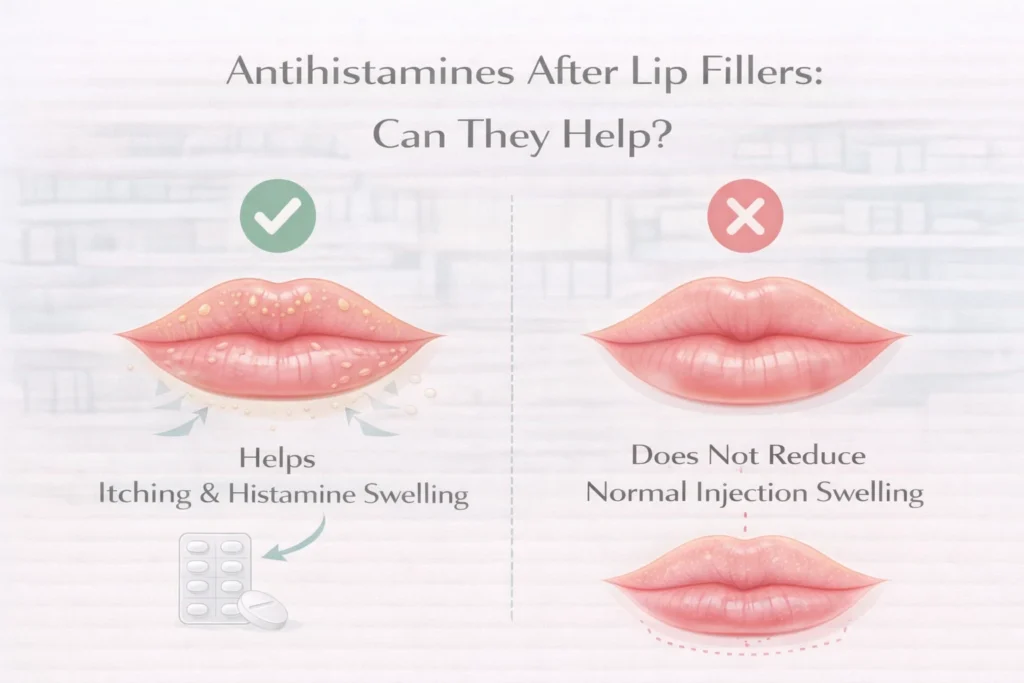
Antihistamines may help reduce itching or histamine-related swelling in some patients after lip filler treatment. However, they do not prevent normal post-injection swelling, which is part of the body’s natural healing response. Most swelling settles within several days without medication, and antihistamines should only be used if recommended by a qualified practitioner.
Antihistamines will not reduce swelling caused by injection trauma, filler volume expansion, vascular compromise, or infection. These require clinical assessment rather than medication alone.
In UK aesthetic practice, antihistamines are not routinely required after lip filler treatment. Most swelling is part of the normal inflammatory healing response and usually settles within several days without medication.
A non-drowsy antihistamine may occasionally be suggested where itching or histamine-related swelling occurs. This should always be based on individual assessment and professional advice rather than self-medication.
UK practitioners typically follow safety guidance aligned with the MHRA and GMC when advising on post-filler swelling or medication use. Most swelling after lip fillers is inflammatory rather than allergic, meaning antihistamines will not prevent normal post-treatment swelling.
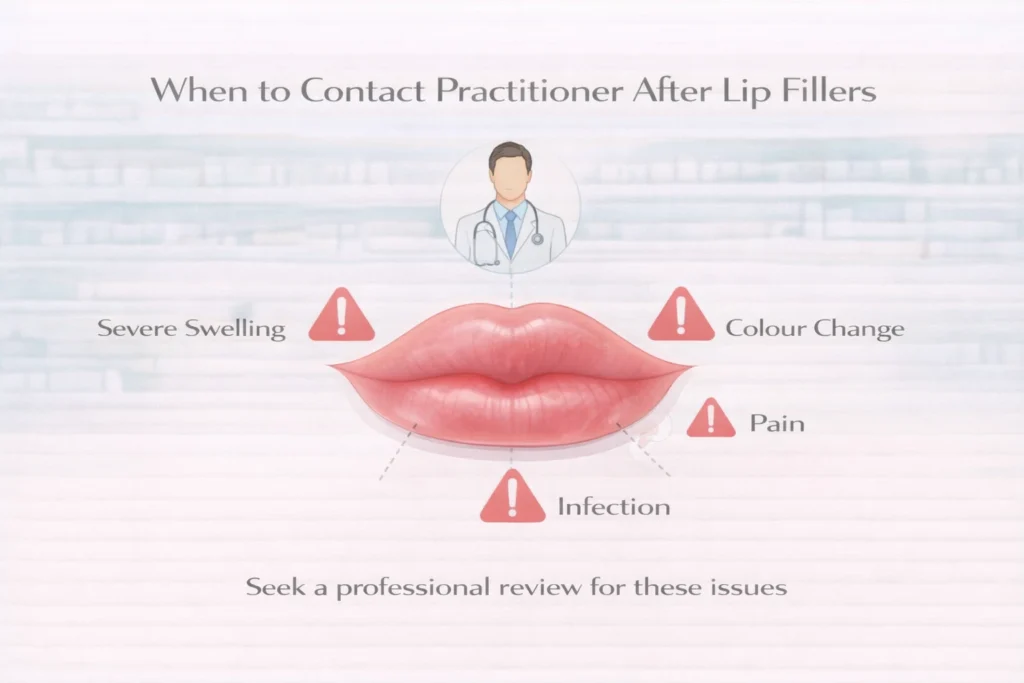
Persistent, severe, or unusual swelling should always be assessed by a qualified practitioner experienced in dermal filler complications.
Swelling after lip filler treatment occurs as part of the body’s natural inflammatory healing response to injection and tissue trauma.
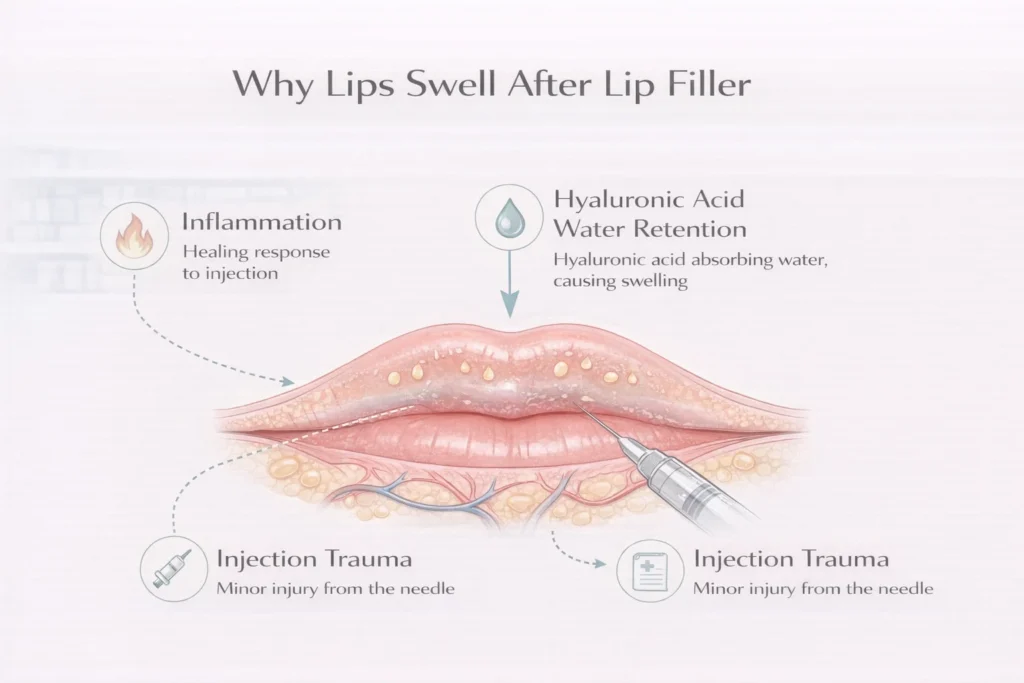
Whenever an HA (Hyaluronic Acid) type of filler is injected, the body tends to respond to it as a very small injury by increasing blood flow to the area.
Hyaluronic acid is the most common filler in use due to its water retentive properties. It holds on to water which can become problematic in the swollen area.
Soft tissues become inflamed due to the inserted needle and its associated soft technique of injecting.
This inflammation that occurs post injury is commonplace, and it tends to resolve itself within a few days. Some practitioners may recommend antihistamines in selected cases where histamine-related swelling or itching is present. However, antihistamines do not prevent normal inflammatory swelling after lip filler treatment.
Read More: What Is Lip Filler?
Antihistamines are primarily used to manage allergic symptoms such as itching and urticaria. In aesthetic practice, they may occasionally be considered where swelling is linked to histamine response rather than normal inflammatory healing.
During and after an inflammatory or allergic response, a chemical called histamine gets set loose. Redness, swelling and itching symptoms are part of the reaction caused by a substance called histamine. Antihistamines counter the after effects of histamine, so these symptoms are relieved.
Antihistamines may sometimes be discussed where itching or histamine-related swelling occurs. However, they are not routinely required for normal post-treatment swelling and should only be used if advised by a qualified practitioner.
While antihistamines will not completely remove swelling, they will help recovery time and comfort on the whole.
Non-drowsy antihistamines such as cetirizine, loratadine, or fexofenadine may sometimes be suggested by practitioners where histamine-related swelling or itching occurs after treatment.
However, antihistamines are not routinely required after lip filler procedures and should only be used following professional advice based on individual medical history.
Patients should always check for contraindications and potential medication interactions before use.
Antihistamines won’t fully help you on their own. These steps may help support a smoother recovery after treatment:
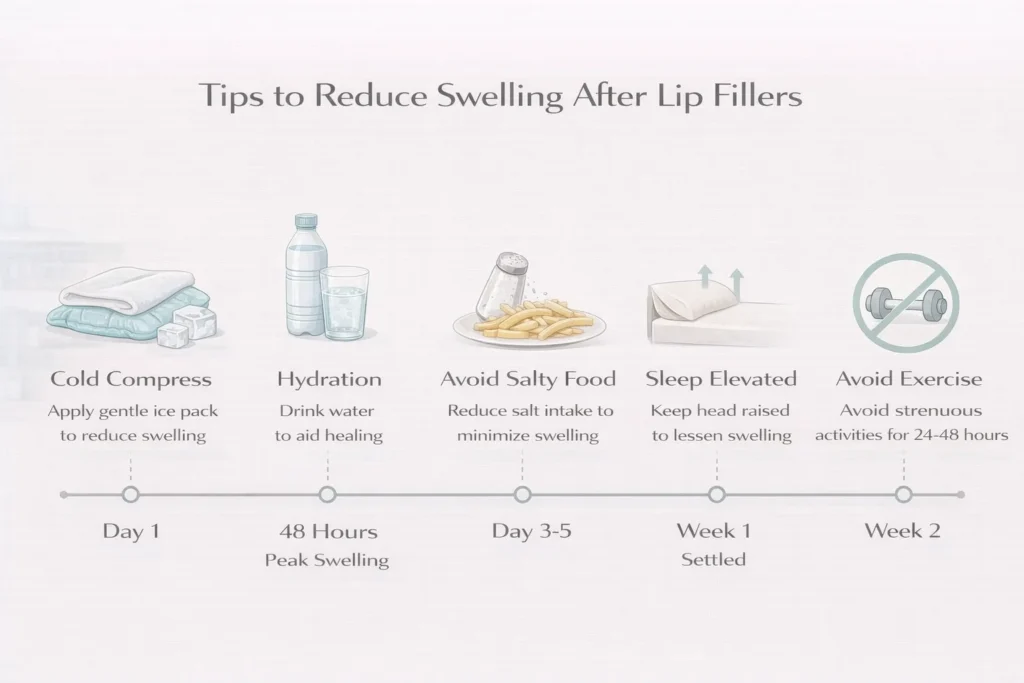
Use a soft cloth to wrap around an ice pack and put over your lips for 10-15 minutes. The cold helps reduce blood flow to the area and the ice further constricts blood vessels already doing so. Do not put ice directly on your skin; it can damage it.
Drink as much water as you can. This will allow your body to flush out salts and water that would potentially cause swelling.
Eating less salt will help prevent water retention, helping reduce swelling around the lips. It may help to avoid salty foods and processed foods for a couple of days post treatment.
Add an extra pillow to further prop yourself during sleep. Aim to minimise fluid accumulation in the lips by propping them.
Some patients choose arnica gel or tablets as part of their recovery routine. While it is commonly used to support bruising recovery, clinical evidence is mixed and it should not replace professional aftercare advice.
Try to do nothing that will get your heart pumping for a day or two as everything causes blood flow, which can amplify swelling.
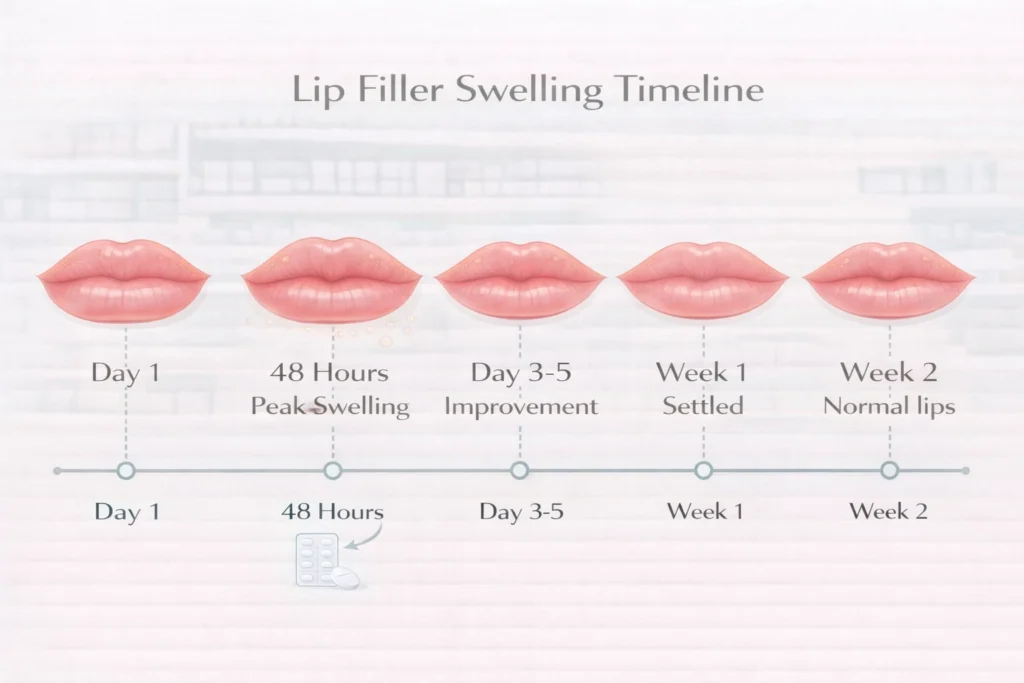
Most patients experience peak swelling within the first 48 hours following lip filler treatment. Swelling typically improves within 3–5 days, although mild residual swelling may persist for up to one week. The healing time varies from person to person, depending on metabolism, volume of filler used, and aftercare instructions.
Supporting the healing process and following appropriate aftercare guidance helps swelling settle more comfortably after treatment.
Most clinically observed swelling after hyaluronic acid lip fillers settles within several days as part of the normal inflammatory healing response, with only a small proportion of patients requiring medication-based support.
Read More: What to Expect After Lip Fillers: The Complete Guide
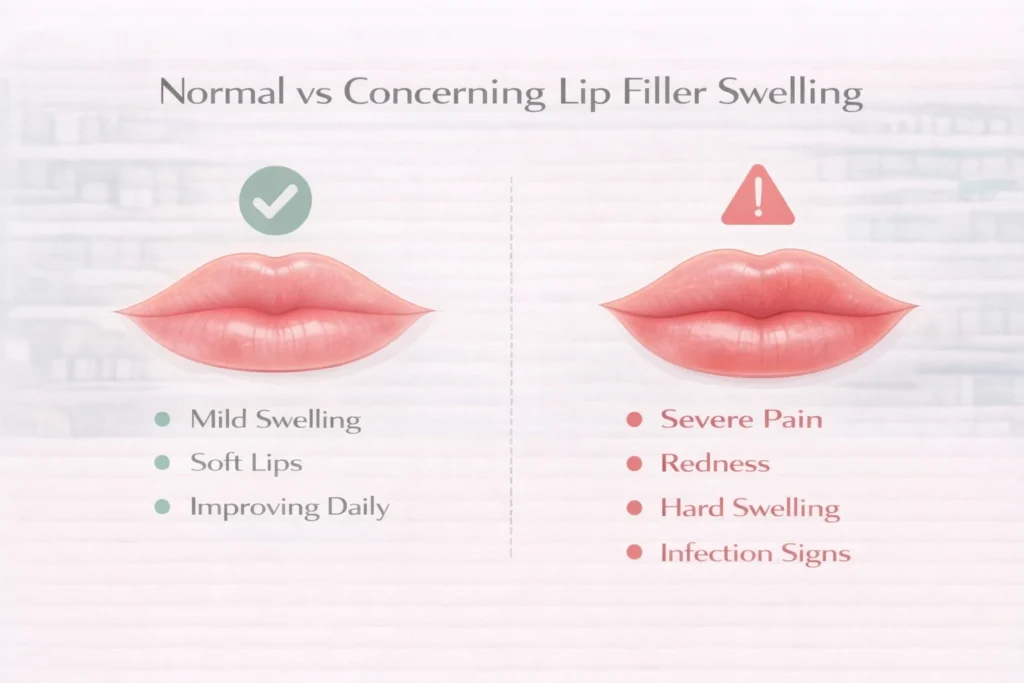
Most early swelling resolves naturally. Antihistamines may support comfort in selected cases, but persistent or unusual swelling should always be assessed professionally.
Antihistamines may occasionally be considered where swelling is associated with itching, urticaria, or histamine-related sensitivity rather than normal inflammatory swelling.
In most cases, standard post-treatment swelling settles naturally without medication. Persistent or unusual symptoms should always be assessed by a qualified practitioner experienced in dermal filler complications.
Antihistamines are not suitable for everyone. They may not be recommended for patients with certain medical conditions, those taking interacting medications, or where swelling is due to infection, vascular complication, or filler placement rather than histamine response.
Persistent or worsening swelling should always be assessed professionally rather than self-treated.
Antihistamines will not improve swelling caused by infection, vascular compromise, filler misplacement, or inflammatory nodules and should not replace professional assessment.
While it is possible to use antihistamines to effectively reduce swelling, using them is not viable for everyone in the most patients.
Anyone with specific allergies, chronic health conditions, or taking other medication should seek a professional’s help before implementing any new pharmacological treatment. Your practitioner, in addition to knowing the specifics of your treatment, is in a better position to give you advice that makes recovery easy and quick.
Always check with a GMC-registered aesthetic practitioner before starting antihistamines — especially if you’re on other medication.
Antihistamines may support comfort in selected cases where histamine-related swelling or itching occurs. However, most post-treatment swelling settles naturally as part of the healing process. Individual assessment by a qualified practitioner remains the safest approach.
For those of you who have a lip filler appointment or are still seeing swelling after the last treatment, speak to your aesthetic practitioner for specific guidance tailored to your goals. Following appropriate aftercare and professional guidance helps ensure a safe and predictable recovery after treatment.
Antihistamines can reduce histamine-related itching or mild sensitivity after lip filler treatment, but they do not prevent normal inflammatory swelling. However, most post-treatment swelling is part of the normal inflammatory healing response and settles naturally within several days.
They do not prevent swelling entirely and should only be used following professional advice. Persistent, severe, or worsening swelling should always be reviewed by a qualified practitioner experienced in dermal filler complications.
A: Some practitioners may advise antihistamines in selected cases. This should always be based on individual medical history and professional guidance.
A: Duration of use varies depending on individual response and practitioner advice. Antihistamines should only be taken following professional guidance.
A: They mainly help swelling. Some patients choose arnica or bromelain as part of their recovery routine, although clinical evidence varies and professional aftercare advice should always be prioritised.
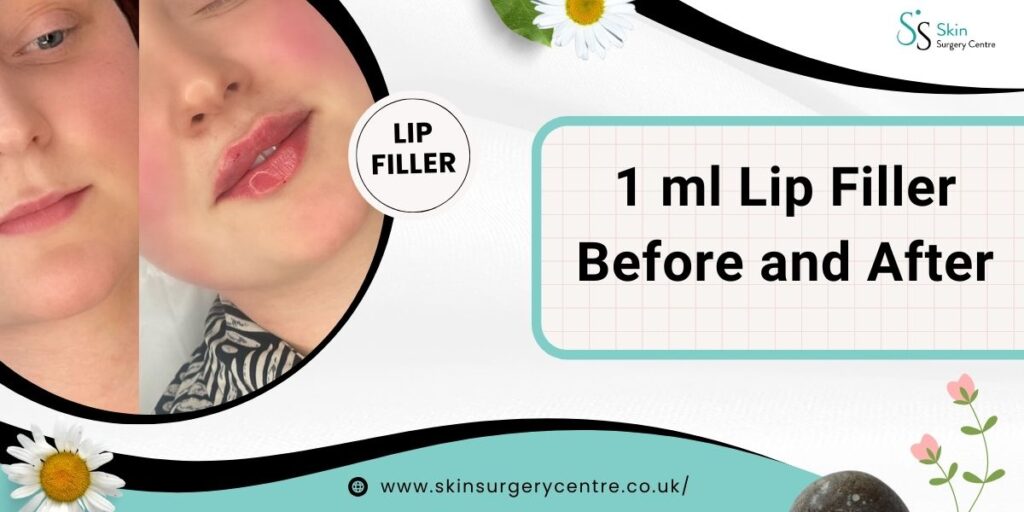

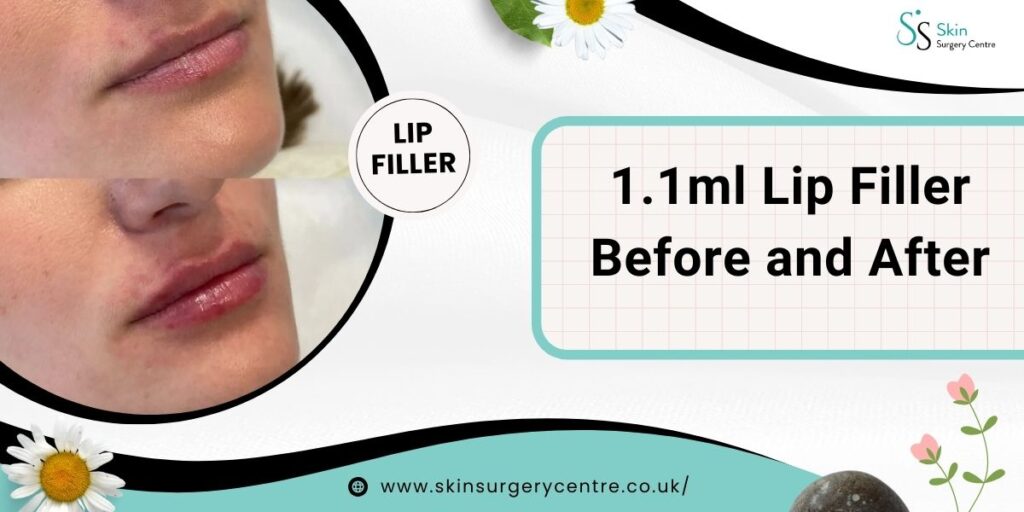
Lip fillers have become one of the most sought-after non-surgical cosmetic enhancements due to their efficiency, customisability, and minimal downtime....
Are you considering ways to achieve fuller, well-defined, and more symmetrical lips with 1.1ml lip filler? Whether this is your...
For people who are thinking about having their lips done, one of the most common questions is, “How much does...
The aesthetic procedure 1ml natural lip fillers is gaining more popularity in this day and age. This particular measurement is...
According to Beauty Tech industry trends, lip augmentation continues to grow in popularity, and for good reason. If you are...