



1.1 ml Lip Filler Before and After: What Results To Observe
Lip fillers have become one of the most sought-after non-surgical cosmetic enhancements due to their efficiency, customisability, and minimal downtime....
Do lip fillers go away? Yes — most modern lip fillers are temporary and gradually dissolve as the body breaks down the product over time.
For most people, hyaluronic acid lip fillers last between 6 and 12 months before slowly fading. The lips usually return to their natural shape as the filler dissolves, although individual longevity varies depending on metabolism, product used, and injection technique.

Understanding whether lip fillers go away is one of the most common questions asked during UK aesthetic consultations. Because modern lip fillers are designed to be temporary and adjustable, most reputable practitioners focus on gradual, natural-looking changes rather than permanent alteration. Knowing how fillers dissolve, how long they typically last, and when professional review may be useful helps set realistic expectations and supports safer treatment decisions.
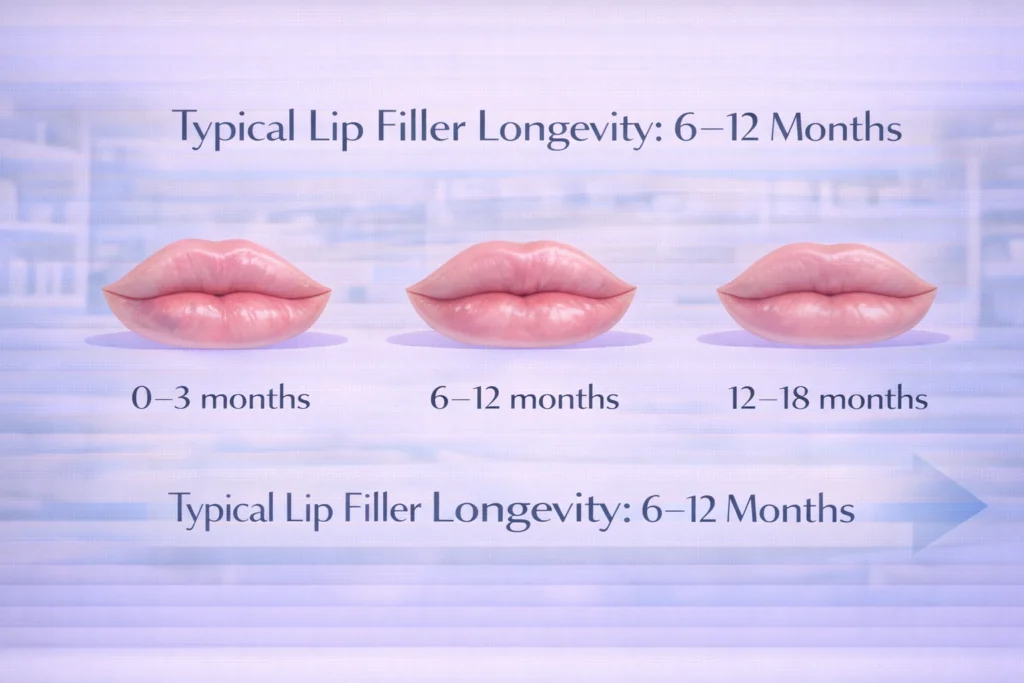
Most hyaluronic acid lip fillers typically last between 6 and 12 months before gradually fading. Longevity varies depending on metabolism, product type, injection technique, and individual lifestyle factors.
| Time After Treatment | What Happens to Lip Filler | What You May Notice |
|---|---|---|
| First 2 weeks | Filler settles and integrates | Swelling reduces, shape refines |
| 1–3 months | Filler fully integrated | Stable volume and natural feel |
| 3–6 months | Gradual breakdown begins | Very subtle reduction in fullness |
| 6–12 months | Most filler gradually dissolves | Noticeable soft reduction in volume |
| 12+ months | Small residual filler may remain | Lips usually return to natural baseline |
Several factors influence how quickly lip fillers go away. These include metabolism, product type, injection technique, and natural lip movement. Because the lips are highly mobile and used constantly when talking, eating, and smiling, filler in this area often dissolves slightly faster than in other parts of the face.
Some people may notice results lasting slightly longer, occasionally up to 12–18 months, while others may see gradual reduction sooner. Rather than disappearing suddenly, lip fillers typically fade progressively as the body metabolises the product.
As the filler dissolves, the lips usually return to their natural shape and size without permanent stretching when treatment has been performed correctly.
There are a few factors to consider when it comes to how long will lip fillers last:
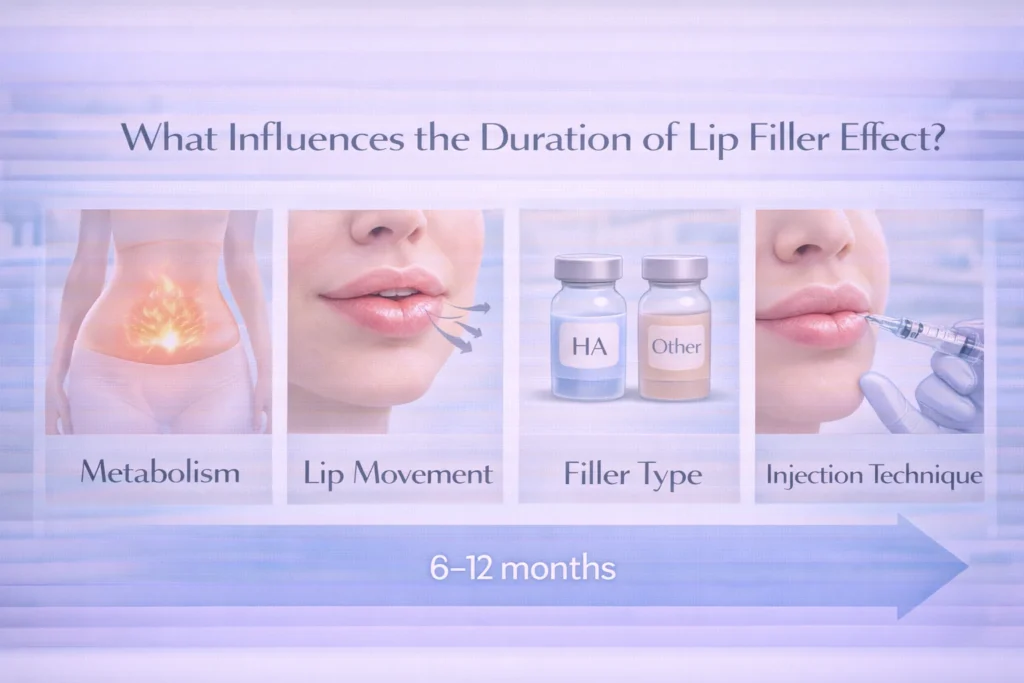
The type of filler will determine what its longevity is. Here’s a simple guide:
Hyaluronic Acid Fillers (HA): Juvederm and Restylane are designed specifically for lips, as they are multi-purpose and safe, and last on average from six months to a year.
Other Filler Type: Less known filler types, like Calcium hydroxylapatite, are used less frequently for lips but tend to last longer.
Everyone has their reasons for why touch-ups are needed more often for some than others. Metabolism plays a major role in how quickly filler breaks down. People with faster metabolic rates often notice results fading sooner than those with slower metabolism.
The lips are one of the most hyperactive regions of the body. While talking and eating, the lips are used in a multitude of ways. This performance leads to the filler being metabolised faster than the cheeks or jawline.
The injector’s skill and technique also play a key role. Proper placement and distribution can enhance both the longevity and natural appearance of the filler.
Most modern lip fillers are not permanent. The majority used in UK aesthetic practice are hyaluronic acid-based and designed to break down naturally over time.
Permanent or semi-permanent fillers are rarely used in lips due to safety considerations and limited reversibility. For this reason, temporary fillers are generally preferred for both safety and flexibility.
In a normal situation, your lips will return to their original size and shape over time after the filler gently dissolves or wears off. Lip fillers are designed to:

As lip filler gradually dissolves, the lips usually return to their natural size and movement. When treatment has been performed correctly using temporary hyaluronic acid fillers, permanent stretching or long-term structural change is uncommon.
If faster removal is required, a qualified practitioner can use hyaluronidase to dissolve hyaluronic acid filler safely and effectively.
While hyaluronic acid supports hydration and skin quality, individual responses vary. Any changes in skin texture or firmness after fillers are not guaranteed and should not be considered a long-term treatment for ageing.
Although lip fillers are considered to have a low risk, there are still certain expected side effects that should go away with time. Here’s what you can anticipate:
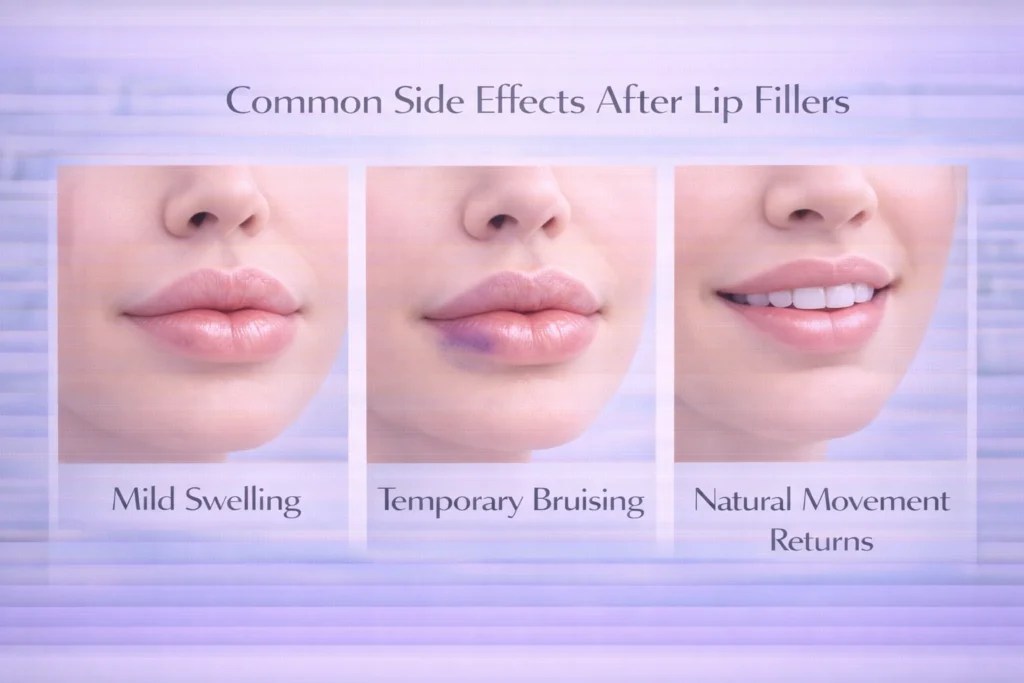
Swelling and mild bruising are common after lip filler treatment and usually improve swelling within the first one to two weeks, although healing timelines vary between individuals.
Some people experience some mild bruising around the injection wounds for a few days. These symptoms can also be treated with an arnica cream or cold compress.
Lip fillers won’t prevent you from smiling or moving your lips naturally. When fully settled, the fillers look very natural when performed by an appropriately trained and experienced practitioner.
Common questions about lip filler longevity often arise due to misinformation online. Understanding what actually happens as fillers dissolve can help set realistic expectations and reduce unnecessary concern.
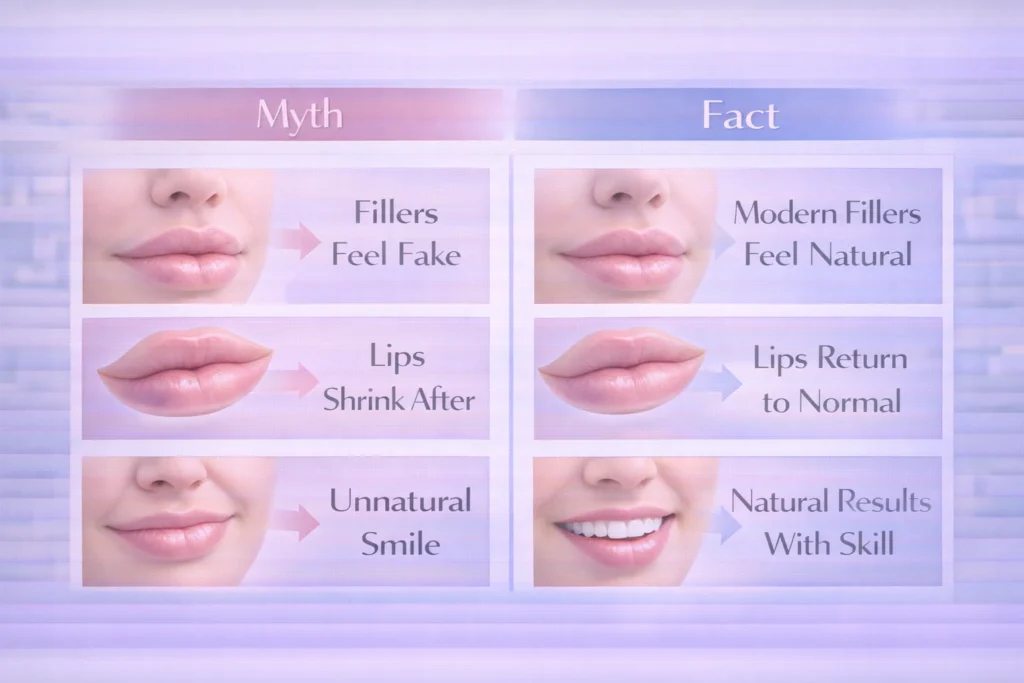
“Lip fillers make your lip feel weird or ‘fake.’”
Modern hyaluronic acid fillers are designed to feel soft and natural once settled. When placed correctly by an experienced practitioner, lips typically feel and move normally after healing.
“Your lip will become smaller when fillers dissolve.”
This statement is false, provided the fillers were correctly administered. Your lips would simply return to their natural size.
“Fillers make a smile look unnatural.”
When performed by a qualified and experienced practitioner, lip fillers are usually tailored to individual facial anatomy and desired outcomes. The goal in most modern UK aesthetic practice is subtle enhancement and balance rather than dramatic change, although results vary depending on technique and personal preference.
Outcomes depend significantly on practitioner experience, product choice, and treatment planning. Choosing a suitably trained and regulated practitioner helps reduce risks and supports more predictable, natural-looking results.
In UK clinical practice, most modern lip fillers are temporary hyaluronic acid-based products designed to break down gradually over time. Reputable practitioners usually advise reviewing results after several months rather than expecting permanent change.
In the UK, dermal fillers are regulated medical devices, and responsible providers follow MHRA guidance, informed consent standards, and safety protocols to ensure appropriate treatment and aftercare.
Reputable practitioners also follow guidance around patient safety, informed consent, and complication awareness similar to standards highlighted by organisations such as the NHS and MHRA. This includes ensuring patients understand that dermal fillers are temporary, medically regulated products and that individual suitability should always be assessed before treatment.
In terms of lip fillers, safety precautions have to be fully in place to guarantee a proper lip filler experience. Here are 2 most important notes you should never forget:

In the UK, dermal fillers are regulated medical devices, and responsible providers follow MHRA guidance, age restrictions, and informed consent standards for patient safety.
In the UK, dermal fillers should be administered by appropriately trained and qualified medical or aesthetic practitioners who follow recognised safety and consent standards.
In the UK, dermal fillers should always be performed by appropriately trained and qualified practitioners. Patients should receive a full consultation, understand risks and aftercare, and know when to seek professional review if symptoms feel unusual. Choosing an experienced and medically trained provider significantly reduces risks and supports safer, more predictable results.
Lip fillers may not be suitable for everyone. A consultation allows risks, expectations, and alternatives to be discussed before treatment. Individual anatomy, medical history, and goals should always guide decisions.
When performed correctly using temporary hyaluronic acid fillers, lip fillers do not usually stretch the lips permanently. As the body gradually breaks down the filler, lip tissue typically returns to its natural shape and movement over time.
Temporary fullness or heaviness immediately after treatment is usually related to swelling rather than permanent change. Once swelling settles and the filler dissolves gradually, most lips return to their original baseline appearance.
Permanent stretching is uncommon and generally associated with excessive volume placed repeatedly over time rather than standard, well-planned treatments. For this reason, most experienced UK practitioners focus on conservative, balanced enhancement to maintain natural lip structure.
For those new to cosmetic treatments or who have been pondering about lip fillers, it’s critical to evaluate the benefits, longevity, and most importantly, the overarching safety concerns.
Lip fillers provide a temporary option for individuals considering subtle volume or definition without permanent change. When performed by appropriately trained practitioners, lip fillers are generally considered low-risk cosmetic procedures, although all treatments carry potential complications.
Lip fillers may suit individuals seeking temporary volume or definition, but suitability depends on anatomy, expectations, and medical history. A professional consultation helps determine whether treatment is appropriate and ensures risks and alternatives are fully understood before proceeding.
In most cases, hyaluronic acid lip fillers gradually break down and are naturally absorbed by the body over time. Small residual amounts can occasionally remain for longer in some individuals, but these usually continue to soften and reduce gradually. Most practitioners consider lip fillers a temporary treatment that requires maintenance if volume is to be preserved.
In UK clinical settings, temporary hyaluronic acid lip fillers are widely used because they gradually break down over time and can be adjusted if needed. Most practitioners advise patients to view lip fillers as a temporary treatment rather than a permanent change, with regular review helping maintain balanced and natural results.
Although lip fillers naturally dissolve over time, professional review may be helpful if results appear uneven, persist longer than expected, or cause discomfort. Qualified UK practitioners can assess whether filler has fully broken down, whether residual product remains, or whether dissolving treatment may be appropriate. Early professional advice helps ensure safe and balanced long-term results.
Lip fillers are temporary treatments that gradually dissolve as the body breaks down hyaluronic acid over time. Most lip fillers last between 6 and 12 months, although longevity varies depending on metabolism, product type, and injection technique. As fillers fade, lips usually return to their natural appearance without permanent stretching. If required, hyaluronic acid fillers can be dissolved earlier using hyaluronidase. Understanding how lip fillers break down helps set realistic expectations and supports safer long-term treatment decisions.
A: Yes. If you’re unhappy with the outcome, your practitioner can use hyaluronidase to dissolve the filler quickly and safely.
A: Most patients choose to have touch-ups every 6 to 12 months to maintain their results.
A: Swelling usually subsides within 24–48 hours and fully settles within 7–10 days.
A: Lip fillers usually fade gradually over time as the body breaks down the product. Most people notice a slow reduction in volume rather than a sudden change.
If you are considering lip fillers or have questions about longevity and safety, speaking with a qualified aesthetic practitioner can help you make an informed decision. Individual outcomes vary, and professional guidance supports safe treatment planning.
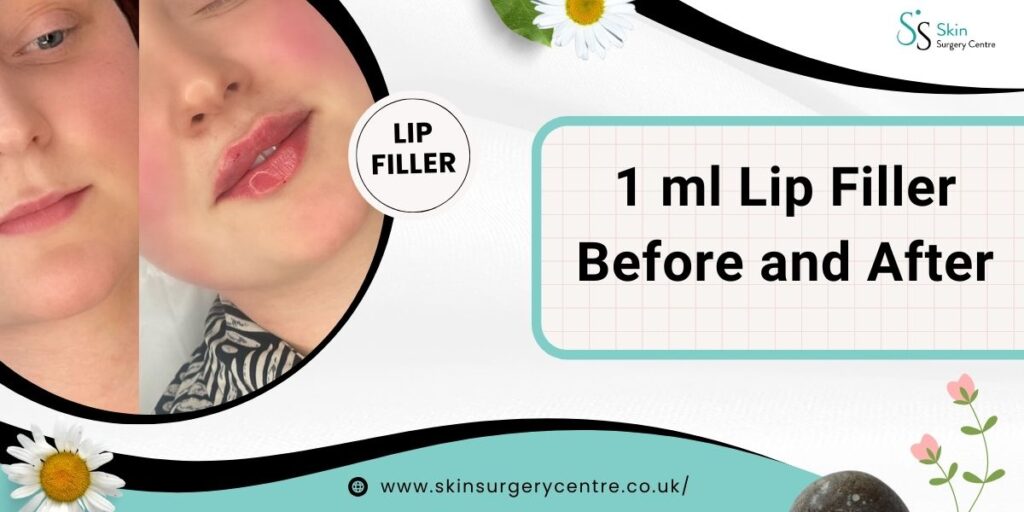

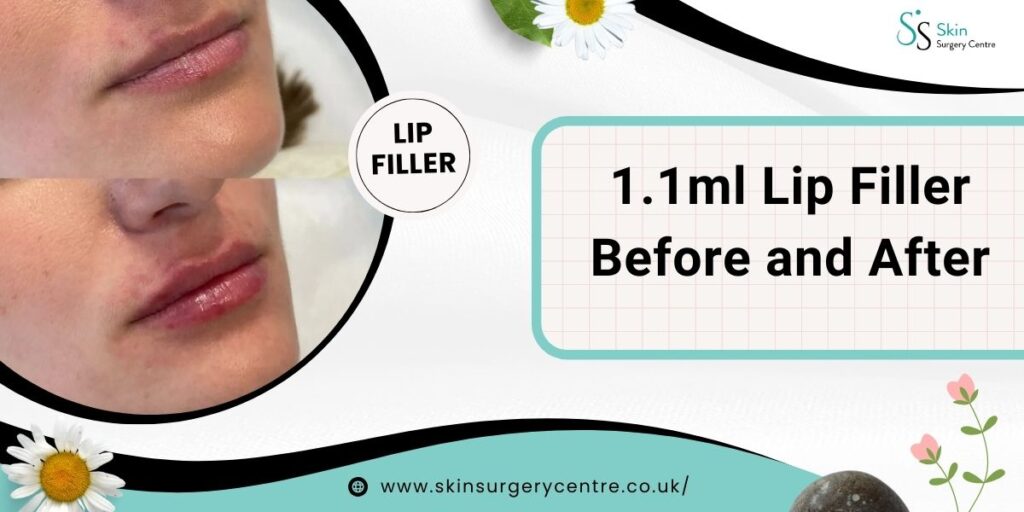
Lip fillers have become one of the most sought-after non-surgical cosmetic enhancements due to their efficiency, customisability, and minimal downtime....
Are you considering ways to achieve fuller, well-defined, and more symmetrical lips with 1.1ml lip filler? Whether this is your...
For people who are thinking about having their lips done, one of the most common questions is, “How much does...
The aesthetic procedure 1ml natural lip fillers is gaining more popularity in this day and age. This particular measurement is...
According to Beauty Tech industry trends, lip augmentation continues to grow in popularity, and for good reason. If you are...