



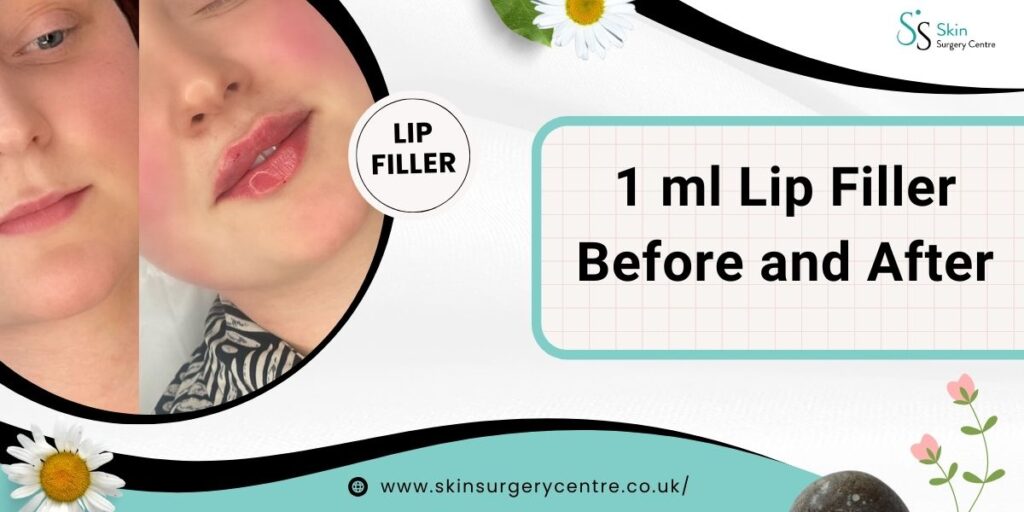
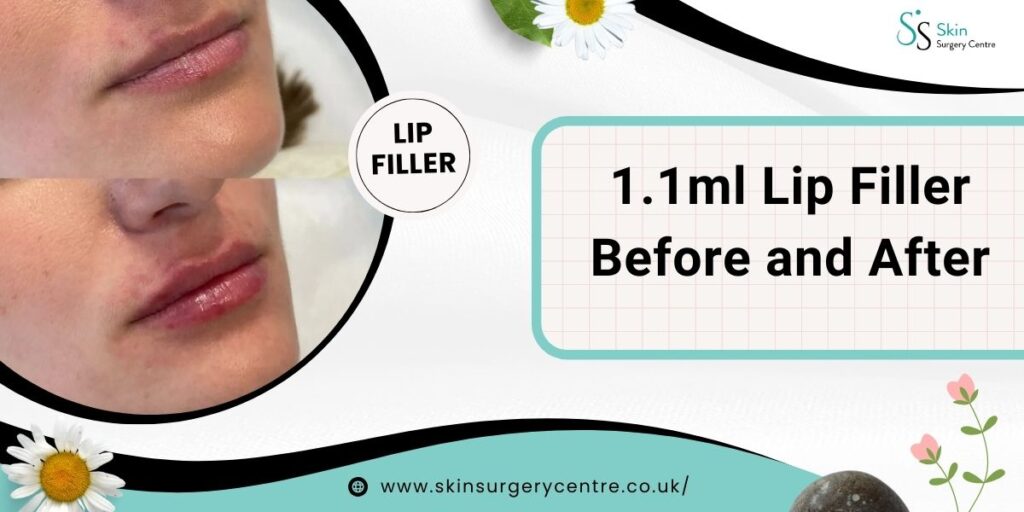
1.1 ml Lip Filler Before and After: What Results To Observe
Lip fillers have become one of the most sought-after non-surgical cosmetic enhancements due to their efficiency, customisability, and minimal downtime....
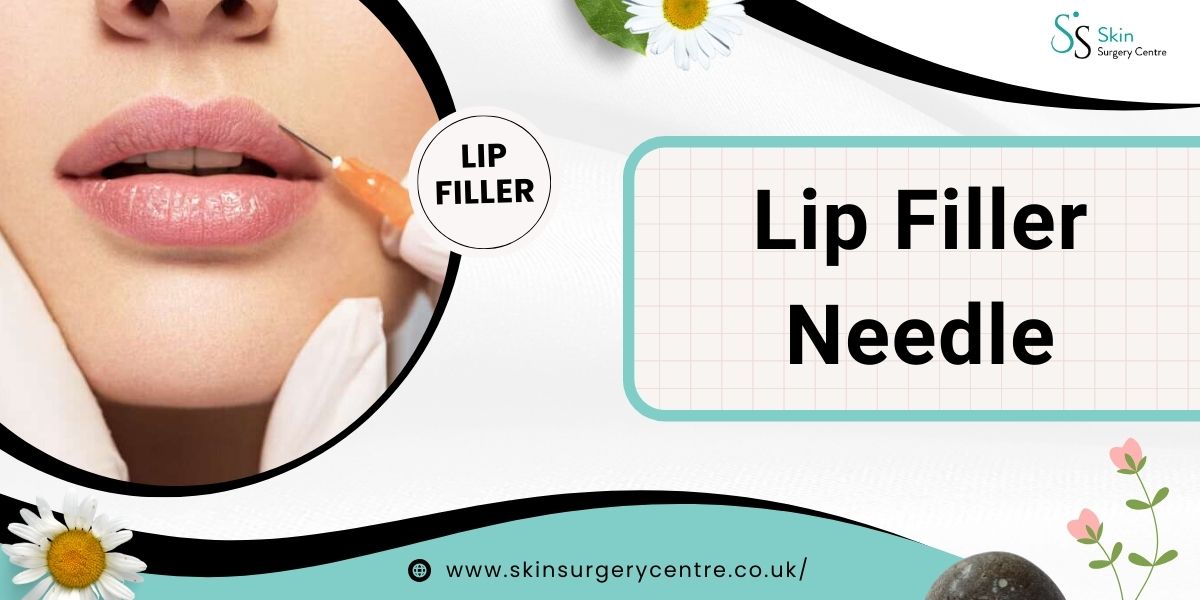
Learning the techniques and lip filler tools used in aesthetic enhancements broadens your options and gives you more understanding whether you are a novice or a professional beauty lover.
It is important to know that every form of this beauty enhancement comes with its own set of beauty filler needles, and lip augmentation isn’t different.
Each of these has a distinct filler’s needles technique, type and size, all of which determine the results of the lip enhancement in terms of safety and comfort.
If you’re researching what a lip filler needle is and how it’s used during treatment, understanding needle size, depth, and technique can help set realistic expectations before a consultation.
If you’re a fangirl of Victoria Beckham and are interested in learning about lip enhancement needles, then this guide is all about you.
• Lip filler needles are ultra-fine, medical-grade tools used for precise filler placement
• Needle size (often 30-gauge) affects comfort, control, and accuracy
• Injection depth and angle influence safety and aesthetic outcome
• Skilled technique reduces risks such as bruising or filler migration
• In the UK, practitioner training and MHRA-approved products are critical
Lip filler needles are a type of surgical-grade needles that are specifically engineered to give the utmost in precision and control while injecting dermal fillers.
These are effective in sculpting the volume and shape of the lips in aesthetic surgery. Each one is crafted, sized, and angled to not only provide the accuracy that is needed, but to protect the patient from as much discomfort as possible.
A lip filler needle is typically finer than standard medical needles, allowing controlled placement in delicate lip tissue.
The size of the needle is an important consideration when filler is being injected into the lips. In the case of medium-depth fillers such as Juvéderm Ultra and Restylane, the commonly recommended needle size is 30-gauge.
As in the case of all ultra-thin needles, this one possesses a smaller diameter which limits discomfort while allowing precision. With smaller gauges, the resistance encountered when extruding filler reduces, which is gentler for both the patient and the injector.
Most lip filler needle choices prioritise balance between precision and minimal tissue trauma rather than speed alone.
An experienced injector can transform a patient’s lips while ensuring the most favourable side effects. However, the techniques used and the depths to which the needle goes determine the success of the procedure.
Linear threading is one of the most popular techniques used for lip fillers, especially among novices to lip fillers. Here’s how it works:
Custom outcomes may employ a combination of threading and other techniques for more advanced practitioners to sculpt the patient’s unique facial structure.
The depth of injection measures how effective the treatment is towards preserving the look and maintaining the morphology of the filler.
No more than 2.5 mm is recommended by these experts as the limit in depth.
Greater depths result in more complications, including filler migration, which is the unnatural movement and shifting of the filler resulting in distortion of shape.
For volumetric restoration injections, a 30-degree angle is utilised. The needle is also inserted parallel to the surface when restoring or refining the lip shape for optimal results.
Injection depth with a lip filler needle is one of the key safety factors assessed during professional training.
In general, lip filler procedures have a good track record and a high level of safety when conducted by trained personnel. However, there are still some risks worth knowing.
The use of needles comes with a slightly higher chance of vascular occlusion than when using cannulas.
JAMA Dermatology published a study that stated vascular occlusions happen in one out of six thousand four hundred and ten times a needle is utilised, while the chances drop to one in forty thousand eight hundred and eighty-two with the use of cannulas.
From a UK clinical perspective, recognised bodies such as the NHS and BAAPS emphasise that risk is primarily linked to practitioner skill, anatomical knowledge, and prompt complication management rather than the tool alone.
Although less common, additional complications may include:
UK guidance highlights the importance of sterile technique, informed consent, and access to emergency protocols when needles are used for dermal fillers.
Regardless of the risks, many practitioners and patients gravitate towards needles due to their accuracy in procedures. Here are reasons needles are still widely utilised in lip filler treatment:
Practitioners can sculpt the lips with utmost precision using needles due to their better placement accuracy.
Lips are more easily manipulated and shaped because of the control afforded by the short length of the needles, especially in delicate areas such as the cupid’s bow.
Needle procedures can be faster than using a single cannula entry-point technique. Improved speed reduces the risk of patients experiencing discomfort or complications.
The risk of lumps is lower with needles because fillers can be placed more smoothly using linear techniques. Since the product is distributed evenly, the chances of lump formation are reduced.
Needles are more effective for many tasks than lip fillers, which are also performed with a cannula, a thin, flexible tube.
The decision for these options is tailored on their effectiveness, safety, personal tastes, and overall preferences.
Cannulas are longer than their counterparts, making them less likely to pierce blood vessels. Because of their flexibility, the chances of vascular occlusion and bruising greatly diminishes.
While needles are easier to work with on several points of entry, for some patients looking for more sculpted detail, needles allow greater control in defining borders and volume.
Choosing the type of tool can come down to the material used in the filler.
Thicker fillers often require precise placement with a lip filler needle, while softer fillers may be better suited to cannula techniques.
UK best practice recommends tool selection based on anatomy, treatment goal, and practitioner expertise rather than preference alone.
Lip fillers involve the use of needles and cannulas which are considered safe procedures. Most of today’s lip fillers contain hyaluronic acid—an ingredient naturally found in the skin.
In the UK, dermal fillers should be MHRA-approved, and treatments should follow standards outlined by professional bodies such as BAAPS and the GMC.
You should contact a qualified practitioner immediately if you notice:
• Severe pain or blanching of the skin
• Sudden swelling that worsens rather than improves
• Colour changes in the lips
• Signs of infection such as redness, warmth, or discharge
A: A 30-gauge lip filler needle is commonly used for precision and comfort.
A: Discomfort varies, but fine needles are designed to minimise pain when used correctly.
A: Migration is more related to technique, depth, and volume rather than the needle itself.
A: When used by trained UK practitioners following recognised guidelines, they are considered safe.
With lip enhancement needles ranging in size, understanding how each is used within safe clinical limits is fundamental.
Whether your treatment involves a lip filler needle or a cannula, the most important factors remain practitioner expertise, correct product choice, and realistic expectations.
A professional consultation ensures the safest and most natural outcome.

Lip fillers have become one of the most sought-after non-surgical cosmetic enhancements due to their efficiency, customisability, and minimal downtime....
Are you considering ways to achieve fuller, well-defined, and more symmetrical lips with 1.1ml lip filler? Whether this is your...
For people who are thinking about having their lips done, one of the most common questions is, “How much does...
The aesthetic procedure 1ml natural lip fillers is gaining more popularity in this day and age. This particular measurement is...
According to Beauty Tech industry trends, lip augmentation continues to grow in popularity, and for good reason. If you are...