


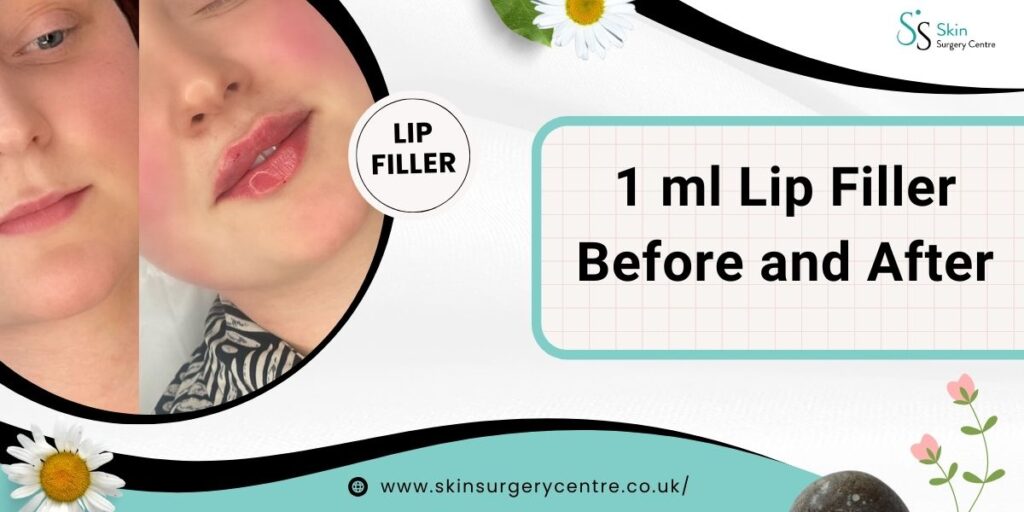
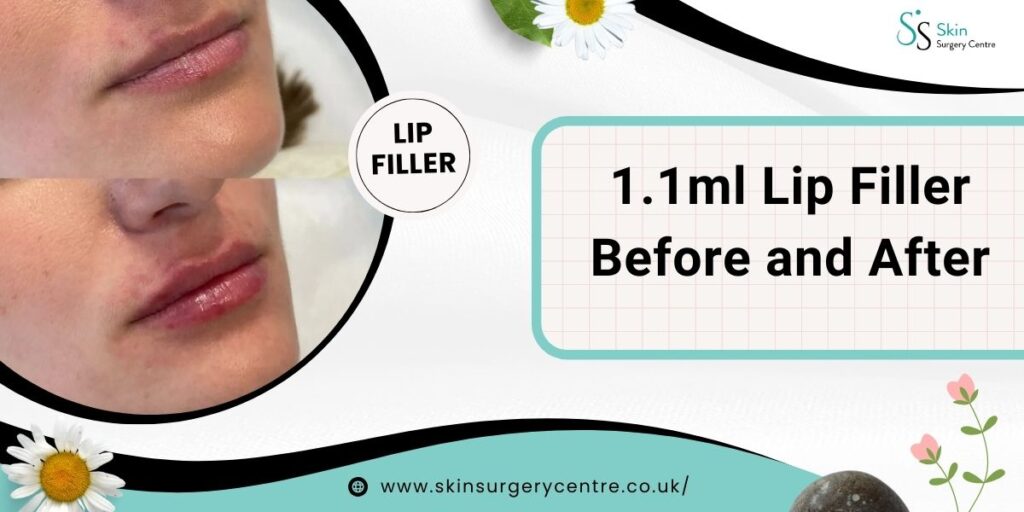
1.1 ml Lip Filler Before and After: What Results To Observe
Lip fillers have become one of the most sought-after non-surgical cosmetic enhancements due to their efficiency, customisability, and minimal downtime....
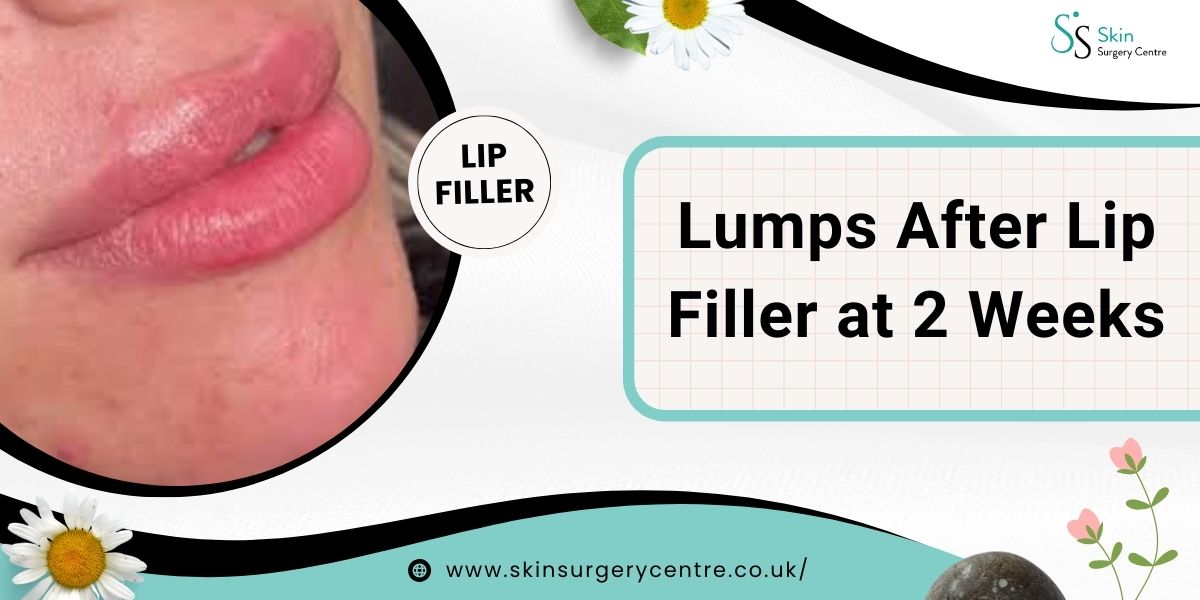
Feeling lumps in your lips two weeks after filler can be worrying, especially if you expected your results to feel smooth by now. Many people start to wonder whether something has gone wrong or if their filler has been placed incorrectly.
At two weeks after lip filler, small lumps or firmness are usually part of normal healing rather than a complication. The filler is still settling and integrating with surrounding tissue, and mild swelling may not have fully resolved. In most cases, soft lumps gradually improve between weeks 2 and 4 without treatment. Professional review is only recommended if lumps are painful, worsening, or not improving over time.
Many patients expect lips to feel completely smooth by two weeks, so feeling small lumps at this stage often causes unnecessary anxiety.
Yes — in most cases, feeling small lumps or firmness in the lips two weeks after filler is still considered normal.
At this stage, the filler is continuing to settle and integrate with the surrounding tissue. Mild swelling, internal bruising, or uneven product distribution can temporarily create areas that feel lumpy or firm. If lumps are soft, painless, and gradually improving, they usually resolve naturally over the following weeks without treatment.
At two weeks post-treatment, lips are often still transitioning from early swelling to final settled results. Many patients expect lips to feel completely smooth by this stage, but internal healing can take longer than visible swelling suggests.
Typical sensations at two weeks include:
Final texture and softness often continue improving between weeks 2 and 4.
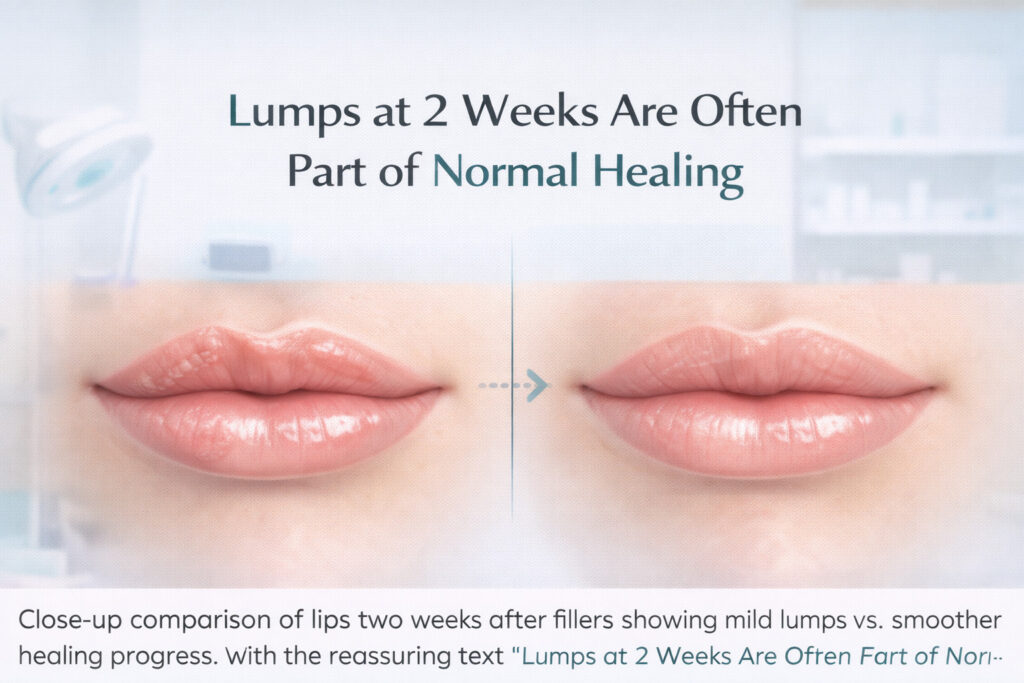
Yes, lumps after lip filler are extremely common and do not pose a concern. In the majority of cases, these lumps are part of the normal healing process. A degree of mild swelling and unevenness is observed when hyaluronic acid fillers such as Juvederm or Restylane fillers are injected into the lips.
Some of these lumps can form due to the following reasons:
Normal swelling and mild firmness are common inflammatory responses following lip filler injections.
Filler Restriction: Your skin requires the filler to be integrated as tissue in order to assimilate comfortably and naturally.
Bruising: Blood capillaries that rupture during the process can lead to the formation of lumps which resemble bruises.
Most lumps will disappear within a few weeks as your lips heal and the filler settles.
To comprehend the situation better, first examine what might be causing the lumps in your lips. However, the following are the common culprits.
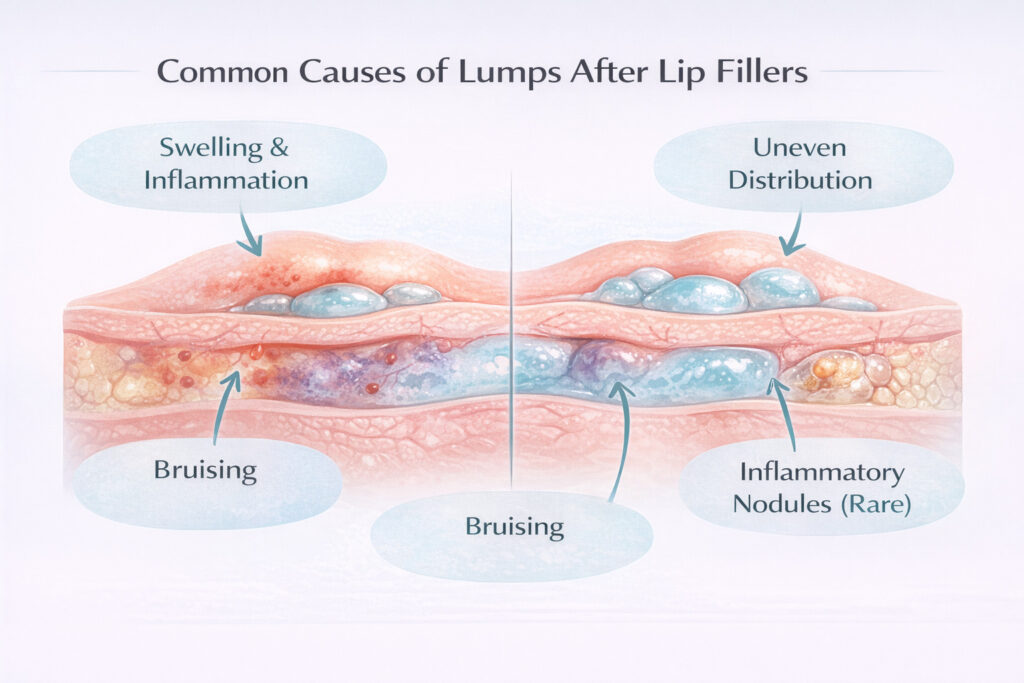
After any injection, the body responds with mild inflammation or swelling around the site of the injection. In most cases, the swelling is temporary and subsides within 1-2 weeks, which further contributes to the formation of lumps.
When the filler is not distributed evenly, even small lumps can become quite problematic. This can be a result of:
An unskilled injector who uses poor filling techniques.
Adding too much substance to some regions of the lips.
Nodules or granulomas are less common forms of lumps. These consist of an inflammatory response to the filler material which leads to a lump forming. Although modern fillers like hyaluronic acid make granulomas rare, older materials such as silicone tend to make it more common.
Certain fillers may trigger the immune system, causing inflammation, in which case lumps may form weeks later. These reactions are on the milder side but may result in some temporary deviations that are short-lived.
Most lumps resolve by themselves, which is the positive aspect. To keep in view, here’s a rough timeline of how lumps in the lips may progress:
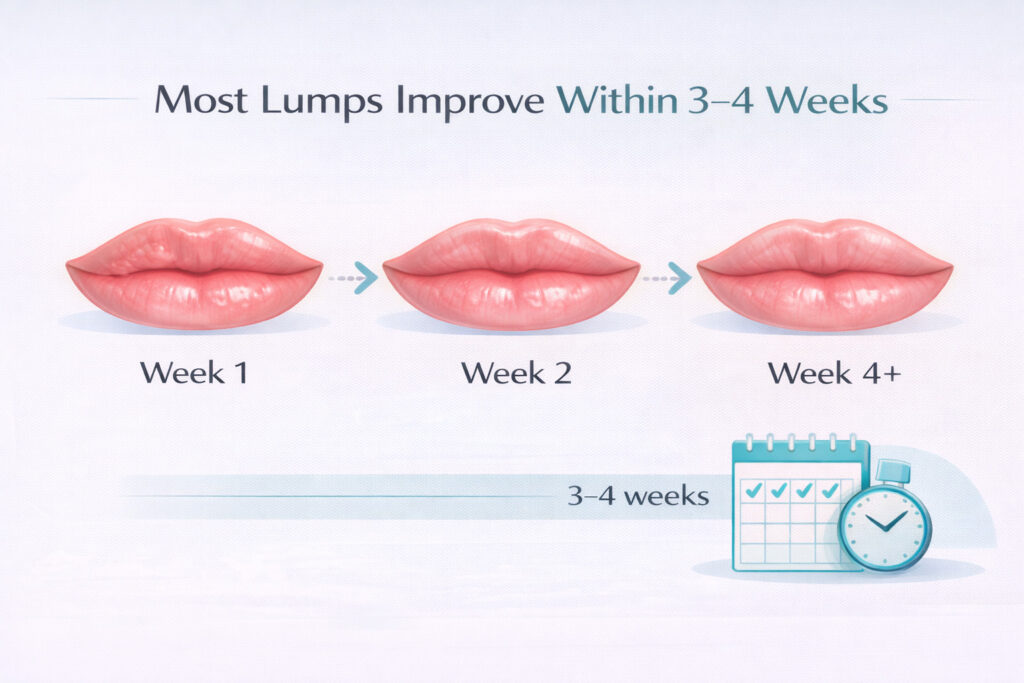
The general healing timeline below explains how lumps typically progress after treatment:
| Time After Treatment | What Is Usually Normal | What Is Happening |
|---|---|---|
| Week 1 | Swelling, bruising, firmness | Inflammation and early filler settling |
| Week 2 | Small lumps, uneven texture | Filler integrating with tissue |
| Weeks 3–4 | Gradual softening | Swelling resolving fully |
| After 4–6 weeks | Mostly smooth lips | Final result visible |
| Beyond 6 weeks | Persistent firm lumps | May need professional review |
Swelling and Bruising: These symptoms are usually self-limiting and resolve after the first 1-2 weeks.
Mild Unevenness or Lumps: These are known to persist for 3-4 weeks and gradually disappear as the tissues integrate the filler.
Persistent Lumps Beyond A Month: Lumps that do not resolve after 4 weeks tend to signal more concerning issues like poor filler placement, infection or adverse product reactions. These cases warrant professional evaluation.
At around two weeks after lip filler treatment, the lips are often still in the settling phase. Mild firmness, small uneven areas, or sensitivity can persist as swelling resolves and the filler integrates.
Complete softening and final results often take longer than two weeks and vary between individuals. At this stage, monitoring changes is usually more appropriate than immediate intervention unless concerning symptoms appear.
In most cases, lumps felt at the two-week stage are not complications but part of normal filler integration and residual swelling beneath the surface.
Many patients notice that areas which feel uneven at two weeks become noticeably softer by week three or four without intervention.
Immediate correction is rarely required at this stage unless lumps are painful, worsening, or associated with other concerning symptoms.
In most situations, lumps felt at two weeks are not a sign that anything has gone wrong. Healing timelines vary between individuals, and lips often take longer to settle than expected.
If the area is not painful, not worsening, and gradually improving, monitoring the lips for another couple of weeks is usually advised before considering corrective treatment.
Many people find that what feels uneven at two weeks looks and feels much smoother by week four.
For any lumps observed on the lips two weeks post filler procedure, the following may help alleviate the lumps:
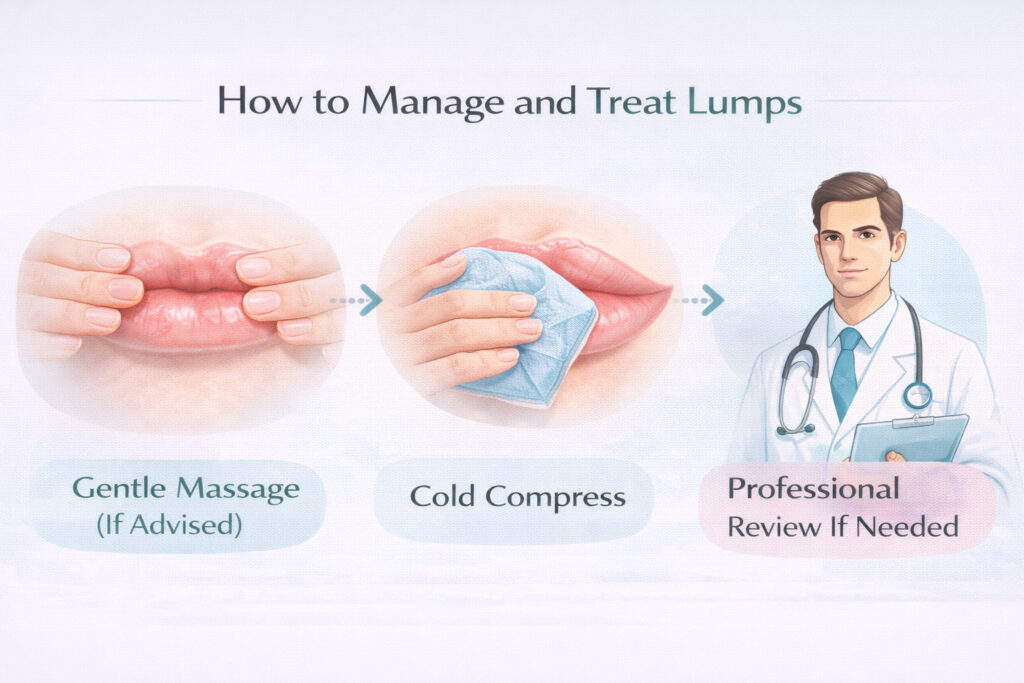
With clean hands, rub the lumps gently. This can assist in evening out the lumpy areas by smoothing out uneven filler injections, but only do this when instructed by your practitioner.
Applying ice packs to certain areas can help alleviate swelling while at the same time preventing lumpiness. For effective results, wrap your ice pack in a clean cloth and place it on the affected area for a maximum of 10-15 minutes each time.
Please note, lumps are a common aspect of the healing process. In order to allow your lips to settle, it is essential to give them some time, which can last a few weeks or up to a month and about 4 weeks in total.
An experienced injector can address the remaining or worsening lumps using these methods:
When unsure, professional assessment is safer than self-management.
Conservative aftercare and early review are preferred over forceful correction.
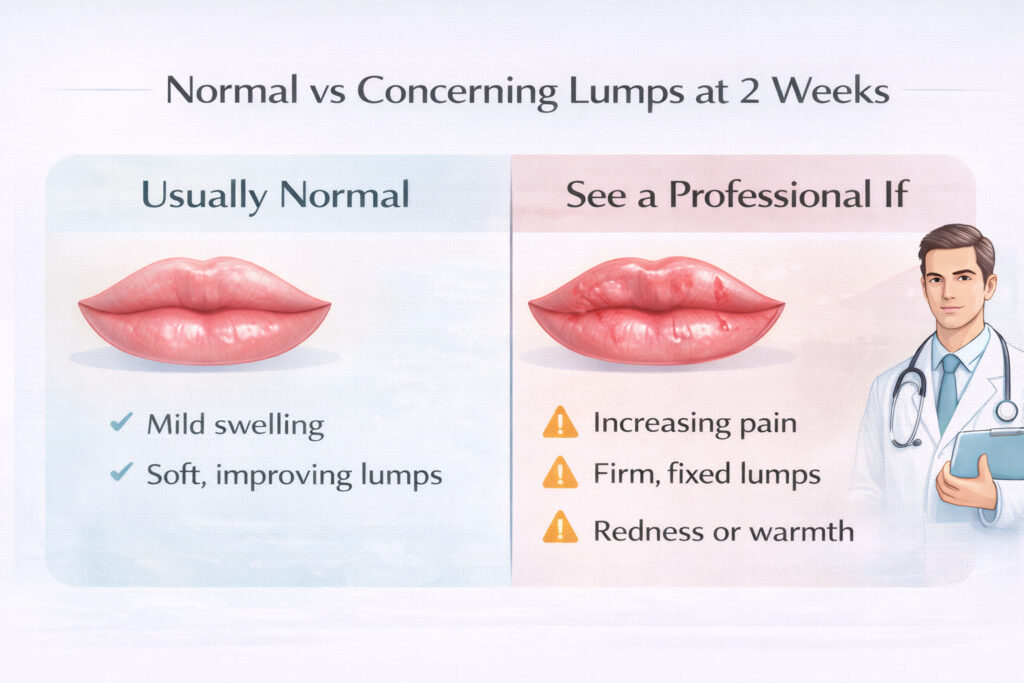
While most lumps are harmless, certain signs may indicate the need for professional assessment:
These situations do not always indicate a serious problem, but early review helps ensure appropriate management if required.
If you are unsure whether swelling is normal or concerning, understanding when lip filler swelling becomes abnormal can help you decide when to seek professional advice.
Although most lumps after lip fillers are benign, there are some features that could suggest different pathogenic complications. If you observe any of the following symptoms, then be sure to call your practitioner:
These lumps can indicate an infection, or the filler is placed improperly.
These lumps can indicate a delayed allergic reaction or inflammation.
If there are signs of inflammation, prompt professional review is advised.
Apart from achieving desirable aesthetic results, safety is of utmost importance while receiving lip fillers and that is where the medical professional’s training becomes vital.
Properly trained and experienced practitioners are less likely to overfill or misplace product, reducing the likelihood of persistent lumps. Furthermore, any potential complications that may arise can be resolved swiftly by an expert.
For those who are contemplating getting lip fillers for the first time or seeking help for lumps following treatment, a skilled clinic with favourable reviews is always the better option.
In the UK, dermal fillers are regulated as medical devices by the MHRA, and safe practice requires practitioners to understand facial anatomy and emergency management. Choosing a medically trained injector significantly reduces the risk of complications such as persistent nodules or vascular compromise.
Most minor lumps after lip filler soften naturally as swelling reduces and the filler settles into place. This process can take several weeks and varies between individuals.
If the lips continue improving, patience is often all that is needed. If lumps remain unchanged or feel worse after a month, a practitioner can assess whether massage, adjustment, or dissolving is appropriate.
If lumps feel persistent, painful, or concerning, seeking advice from a qualified aesthetic practitioner is recommended. Individual healing varies, and professional assessment helps ensure safe and appropriate management.
In most cases, monitoring for another 1–2 weeks is appropriate if lumps are improving. However, professional assessment is recommended if lumps feel very firm, painful, or unchanged after one month. Early reassurance from your practitioner is always safer than self-treatment or aggressive massage.
In UK medical aesthetics practice, patients are usually advised to allow at least 2–4 weeks for filler to fully settle before considering correction, unless symptoms suggest a complication. This conservative approach helps avoid unnecessary dissolving or over-treatment while normal healing continues.
A: Yes. At two weeks, lips are often still settling. Mild lumps, firmness, or uneven texture can remain while swelling resolves and the filler integrates with surrounding tissue. If lumps are soft, painless, and gradually improving, they are usually part of normal healing.
A: Not always. While some people notice smooth results earlier, others may still feel mild firmness or small lumps at two weeks. Final texture can take several weeks to fully settle depending on swelling, filler type, and individual healing response.
A: Professional review is recommended if lumps are painful, worsening, very firm, associated with redness or warmth, or not improving over time. Early assessment helps ensure appropriate management if needed.
A: Most minor lumps continue to soften between weeks 2–4 as swelling reduces and the filler settles. Many resolve without treatment. Persistent or unchanged lumps after several weeks may need professional assessment.
A: If lumps are caused by filler placement or product build-up and do not improve naturally, a qualified practitioner may assess whether dissolving with hyaluronidase or other treatment is appropriate.

Lip fillers have become one of the most sought-after non-surgical cosmetic enhancements due to their efficiency, customisability, and minimal downtime....
Are you considering ways to achieve fuller, well-defined, and more symmetrical lips with 1.1ml lip filler? Whether this is your...
For people who are thinking about having their lips done, one of the most common questions is, “How much does...
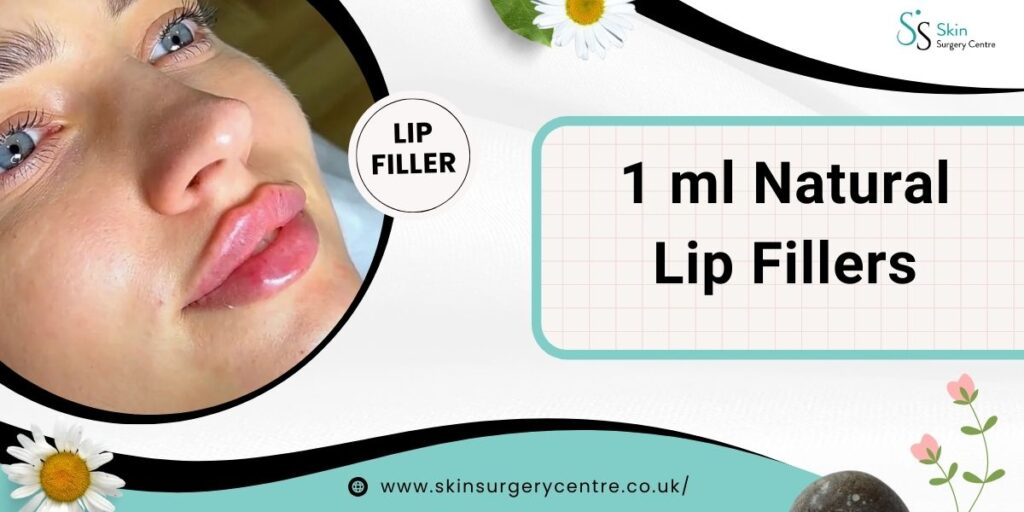
The aesthetic procedure 1ml natural lip fillers is gaining more popularity in this day and age. This particular measurement is...
According to Beauty Tech industry trends, lip augmentation continues to grow in popularity, and for good reason. If you are...