



Understanding 1.5 ml Lip Filler Applications and Results
Lip fillers have taken the beauty industry by storm. They offer women and men alike a convenient and non-invasive way...
Permanent lip fillers do exist, but they are rarely used in modern UK aesthetic practice due to higher long-term risks and limited reversibility. Most lip fillers used today are temporary hyaluronic acid treatments that gradually dissolve and can be adjusted if required.
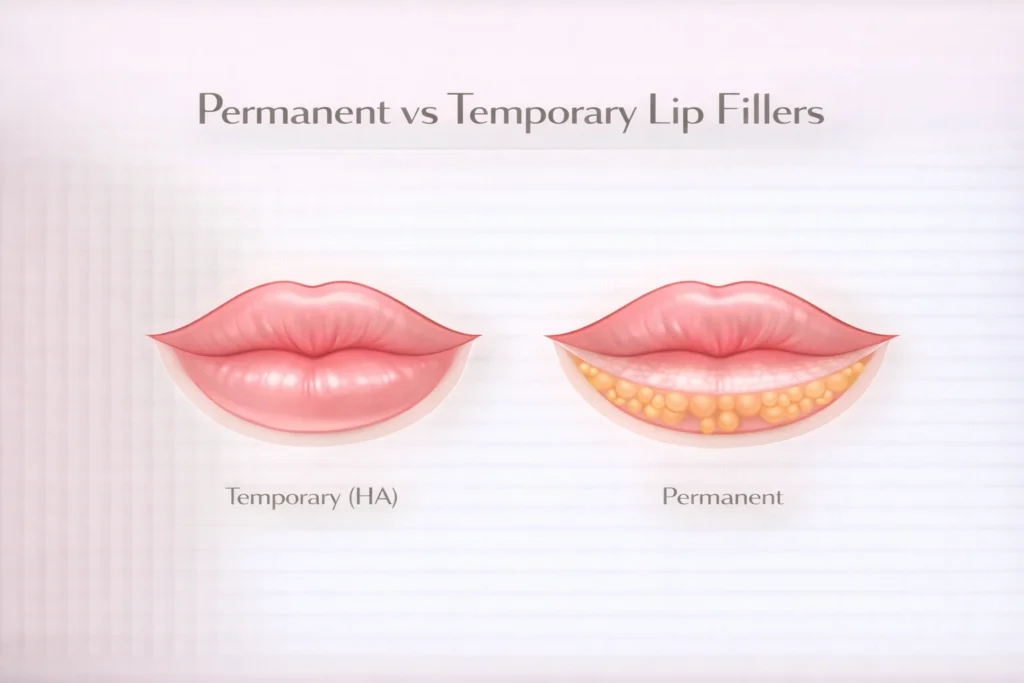
In clinical practice, the term “permanent lip fillers” usually refers to silicone, PMMA, or other long-lasting materials rather than standard temporary fillers. Understanding the difference between permanent and temporary lip fillers helps patients make safer, more informed treatment decisions.
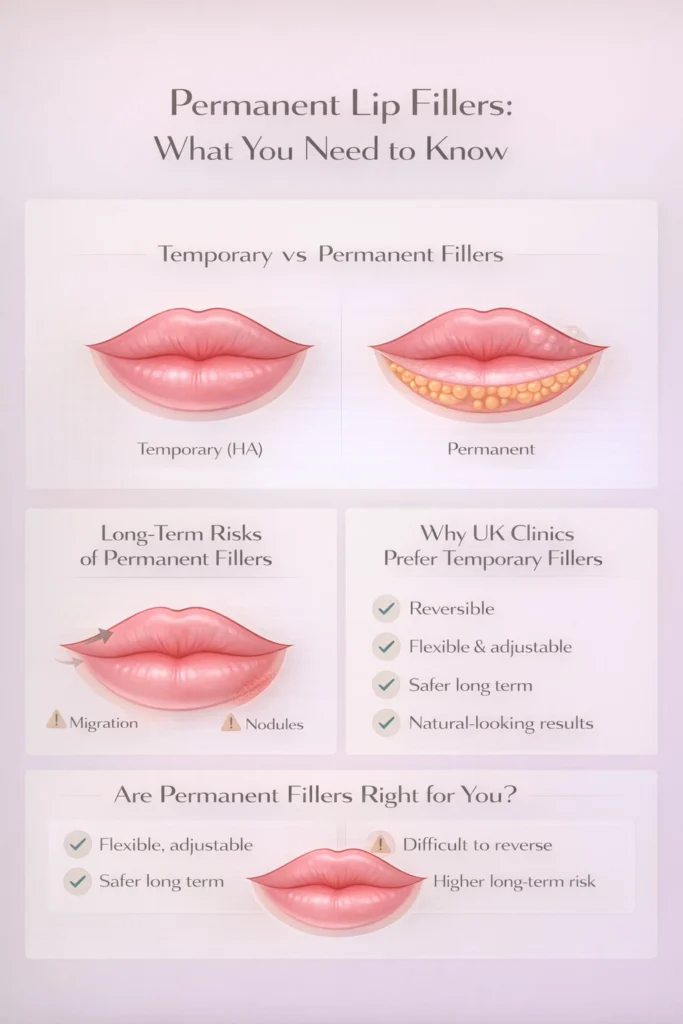
Permanent lip fillers such as silicone or PMMA are rarely recommended in modern UK aesthetic practice. Most reputable UK practitioners prefer temporary hyaluronic acid fillers because they are reversible, adjustable, and generally associated with lower long-term complication risk.
Permanent fillers may still be encountered in older treatments or in some international settings, but UK safety-focused clinics usually avoid them due to difficulty correcting complications if they occur.
For this reason, patients seeking lip enhancement in the UK are typically advised to choose temporary fillers that can be adjusted or dissolved if required.
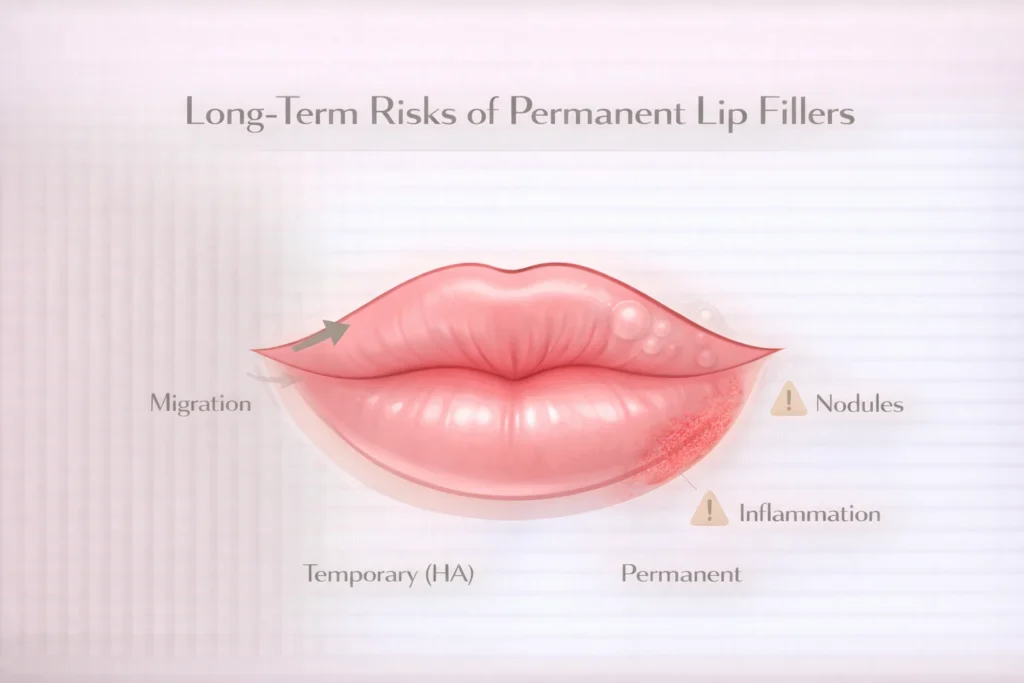
In the UK, dermal fillers are regulated as medical devices by the MHRA. Most reputable UK practitioners favour temporary hyaluronic acid fillers because they are reversible and easier to manage if complications occur. Permanent fillers are rarely used for lips due to difficulty correcting long-term complications such as nodules, migration, or chronic inflammation.
To begin with, lip fillers are not permanent. Most fillers, within the scope of 6 months to a year, can be fully dissolved depending on the kind of filler used and your body’s metabolism rate.
Most patients choose temporary fillers because they gradually fade rather than remaining permanently in the lips. You can read a full guide here: Do Lip Fillers Go Away Over Time?
In order to sustain your desired fullness, the volume of your lips, regular touch ups will be required every 4 to 5 months. This schedule contributes to achieving the desired look consistently while avoiding sudden deflation from fillers.
Consistency in touch-ups also allows for a more refined, natural-looking enhancement over time.
Note: “Touch-up intervals vary between individuals and should be determined during clinical review rather than scheduled routinely.”
Most patients only need to come in 2-3 times a year to maintain their results. This frequency seems to work best for their lips remaining plump, but also not overfilled. Your cosmetic practitioner will come up with a treatment plan that works best for what you want and need.
For a lot of people, less appointments is better as it allows them to maintain their busy lifestyles while still enjoying fuller lips.
Here are some factors that explain what can influence the duration of filler lip benefits. Understanding these will aid in more optimally planning for maintenance.
How long fillers are effective can also be influenced by other factors such as staying hydrated and how often you touch your lips.
Reminder: Consult your practitioner before lifestyle changes like increasing facial workouts or using lip care products.
Although lip fillers have become common in today’s world, and are considered safe when executed by a professional, they do still pose certain risks similar to other cosmetic surgeries. Learning about the fillers can make the procedure a lot less daunting.
Granulomas: Granulomas are small lumps that result as a consequence from inflammation. They can be solved through treatment using an enzyme called hyaluronidase that works by dissolving hyaluronic acid fillers.
Filler Migration: This occurs when fillers from the injection site shift from their designated region. Hyaluronidase can fix this problem as well.
Overfilling or Stretching: Overuse of fillers can lead to sagging lip tissues which would require surgical intervention to restore the lips’ original structure.
Note: “Such outcomes are uncommon and are more often associated with repeated overfilling or inappropriate technique rather than conservative, well-planned treatment.”
Filler Fatigue: Continuous injections may lead to sagging lip tissues over time, requiring more fillers to achieve the desired look.
Permanent fillers such as silicone, PMMA, or other non-resorbable materials are rarely recommended for lips today.
Due to higher complication rates and limited reversibility, most UK practitioners favour temporary hyaluronic acid fillers.
A board certified plastic surgeon, dermatologist or experienced injector has domain knowledge, guaranteeing assistance on how to accomplish the end goal without performing risky procedures. The right practitioner is able to obtain the correct measurements and preferences to guarantee you look natural and balanced.
The chances of complications forming are greatly reduced because they will be using quality and regulated products.
You’re in safe hands with a practitioner whose portfolio and credentials reflect consistent, high-quality results.
Given the precision required, it’s essential to entrust your lips to a skilled, medically trained professional. Choose clinics with verified patient reviews, a professional portfolio, and certifications.
Lip fillers are not the only option available to achieve fuller lips. Here’s how lip fillers compare to other lip enhancement options in terms of cost, longevity, and suitability:
| Feature | Temporary Lip Fillers (HA) | Permanent Lip Fillers |
|---|---|---|
| Longevity | 6–12 months | Several years or permanent |
| Reversibility | Can be dissolved with hyaluronidase | Usually not easily reversible |
| Safety profile | Widely used in UK practice | Higher long-term complication risk |
| Adjustability | Can be adjusted over time | Difficult to correct if issues occur |
| UK practitioner preference | Strongly preferred | Rarely recommended for lips |
Lip fillers are the best option for people looking for a more affordable and temporary option. These are ideal for people seeking some flexibility in their appearance over time.
Note: “Costs, longevity, and suitability vary widely and should be discussed during a medical consultation rather than used as a treatment guide.”
Despite trending online, needle-free filler devices have some significant medical risks associated with them. As per MHRA guidance, along with experienced dermatologists, puts strong warnings against the use of these devices for the following reasons:
For your peace of mind, stay professional and choose needle-based treatments carried out by licensed practitioners.
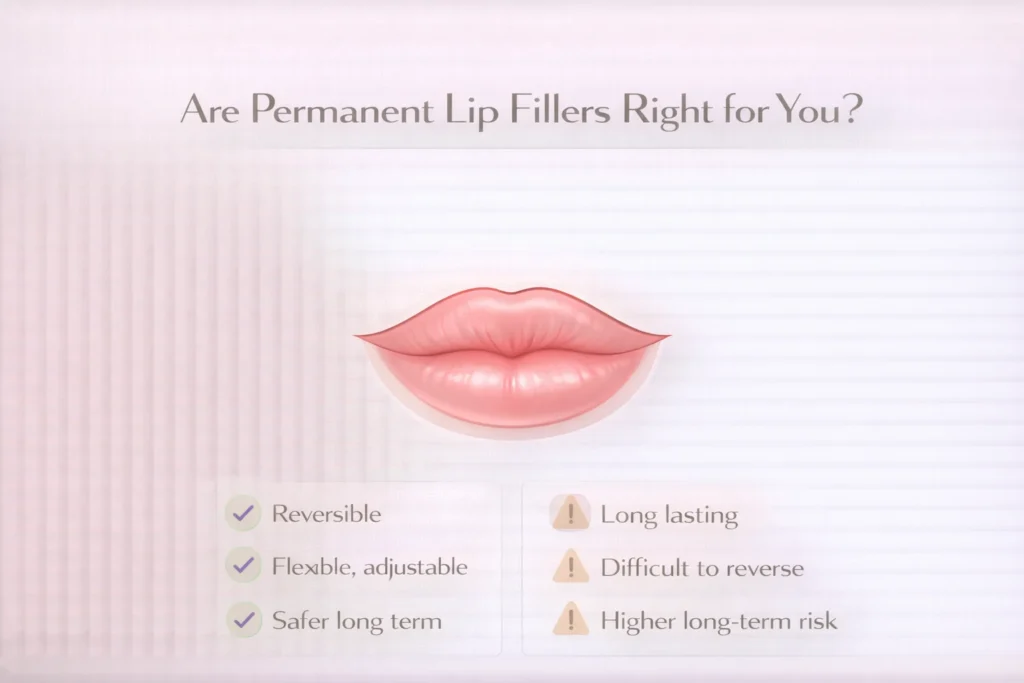
Permanent lip fillers are generally considered suitable only in carefully selected cases and are rarely used in routine UK aesthetic practice. Most individuals seeking lip enhancement benefit from temporary hyaluronic acid fillers because they allow gradual, adjustable changes rather than permanent alteration.
Patients who prefer flexibility, safety, and natural-looking results usually choose temporary fillers that can be reviewed and adjusted over time. A professional consultation helps determine whether temporary or longer-lasting options are appropriate based on anatomy, expectations, and risk tolerance.
Permanent lip fillers are generally not recommended for routine lip enhancement in modern UK practice. Although they can provide long-lasting volume, they are associated with higher long-term complication risk and are difficult to reverse if problems occur.
Most experienced UK practitioners prefer temporary hyaluronic acid fillers because they:
For most patients seeking safe, natural-looking lip enhancement, temporary fillers remain the preferred option.
Permanent lip fillers refer to long-lasting materials such as silicone or PMMA that remain in the lips for many years. These fillers are rarely used in modern UK aesthetic practice due to higher complication risk and limited reversibility.
Most UK practitioners recommend temporary hyaluronic acid fillers instead because they dissolve naturally, can be adjusted over time, and are easier to manage if complications occur.
For most patients seeking safe, natural-looking enhancement, temporary fillers remain the preferred option.
A: Permanent lip fillers can last for many years, but they are rarely used in modern UK practice due to higher complication risk and limited reversibility.
A: Permanent fillers carry higher long-term risk compared to temporary hyaluronic acid fillers, which is why most UK practitioners prefer temporary, reversible options.
A: Silicone and some non-resorbable fillers can be long-lasting or permanent, but they are rarely recommended for routine lip enhancement.
A: Permanent fillers generally do not dissolve naturally and may require medical or surgical correction if complications occur.
A: Most reputable UK clinics prefer temporary hyaluronic acid fillers due to safety, flexibility, and reversibility.
Permanent lip fillers require careful consideration due to their long-term implications and limited reversibility. For most individuals seeking safe and adaptable lip enhancement, temporary fillers remain the preferred option in modern UK aesthetic practice.
Lip fillers are a medical aesthetic treatment that should always be approached with careful planning, realistic expectations, and professional guidance.
If you’re considering permanent lip fillers, speak with a professional you can trust. It is possible to create beautifully shaped lips that you will adore for months while reaching those goals with the right information and prioritisation of safety.
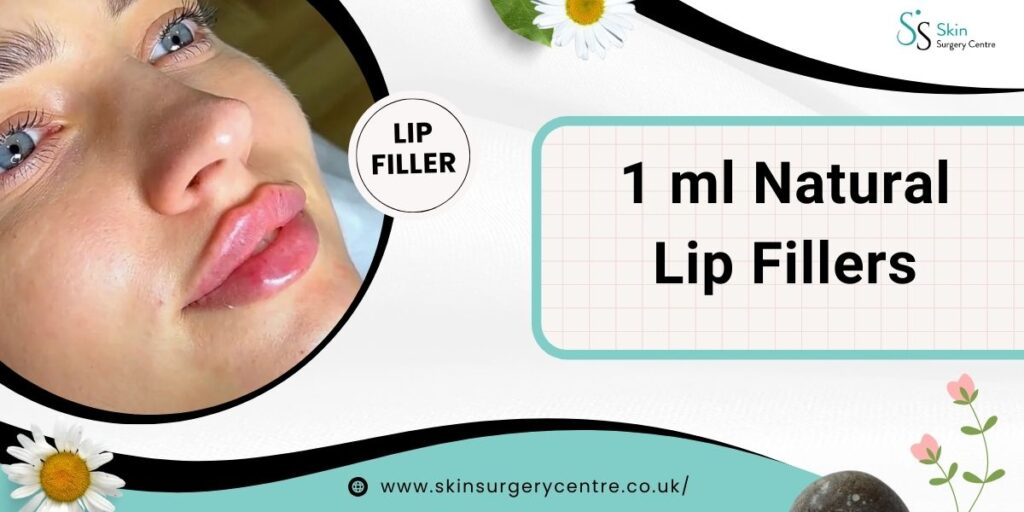

Lip fillers have taken the beauty industry by storm. They offer women and men alike a convenient and non-invasive way...
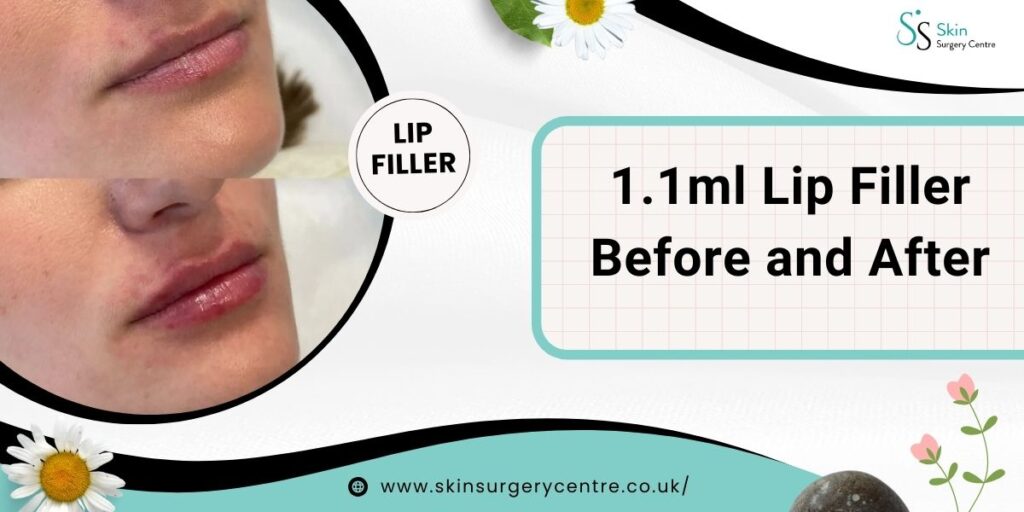
Lip fillers have become one of the most sought-after non-surgical cosmetic enhancements due to their efficiency, customisability, and minimal downtime....
Are you considering ways to achieve fuller, well-defined, and more symmetrical lips with 1.1ml lip filler? Whether this is your...
For people who are thinking about having their lips done, one of the most common questions is, “How much does...
The aesthetic procedure 1ml natural lip fillers is gaining more popularity in this day and age. This particular measurement is...