



Quick Answer
Lip filler procedures in the UK typically take 45–60 minutes, including consultation and numbing time. Most patients describe the sensation as a sharp scratch or pinch, followed by pressure. Pain levels are generally mild to moderate (3–4/10) due to the use of strong topical numbing cream and lidocaine contained within the filler gel itself. Recovery involves immediate swelling and potential bruising, with lips feeling firm and numb for several hours post-treatment. While techniques vary between needle and cannula, a qualified practitioner will select the method best suited to your anatomy to minimise discomfort and ensure safety.
Understanding the Lip Filler Procedure Journey
Lip fillers are not a one-size-fits-all treatment, and suitability depends on individual anatomy, goals, and medical history. In UK clinical practice, a responsible consultation focuses on whether treatment is appropriate rather than simply whether it is requested.
Individuals who are typically suitable for lip filler treatment include those seeking improved lip hydration, subtle volume enhancement, better symmetry, or definition of the lip border. Many patients are not looking for dramatically larger lips, but rather balanced, natural-looking enhancement that complements their facial features.
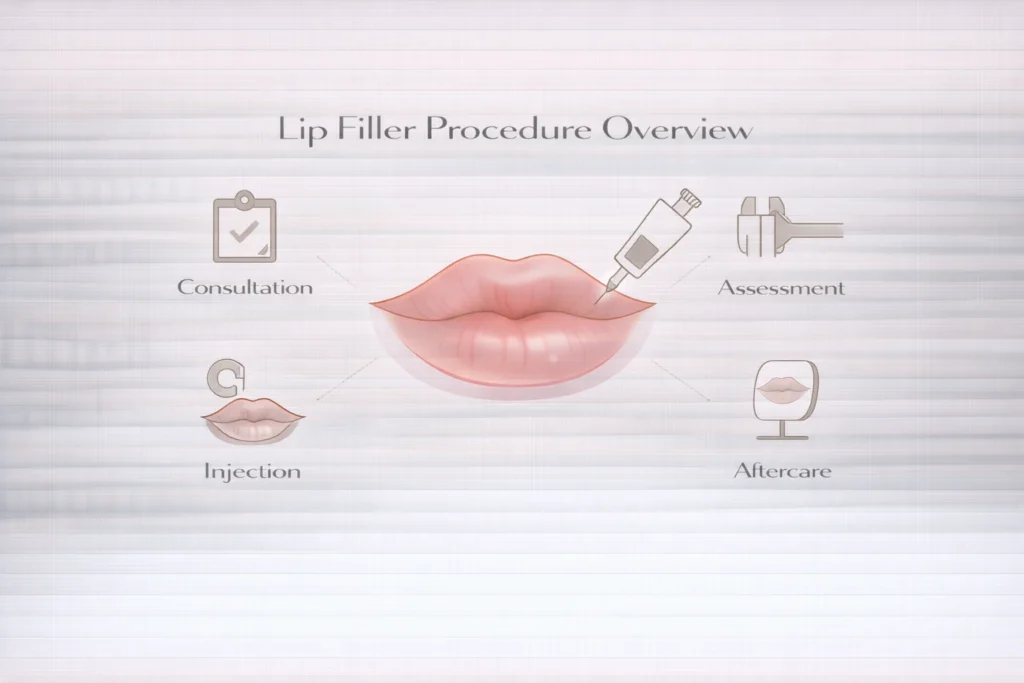
Suitability also depends on tissue quality. Healthy lip tissue with good elasticity generally responds more predictably to hyaluronic acid fillers, while extremely thin or heavily scarred tissue may require a more conservative approach or staged treatments over time.
A thorough consultation should always take place before treatment. This allows a qualified practitioner to assess facial proportions, discuss realistic outcomes, and determine whether lip fillers are likely to achieve the desired result safely.
Note: “A lip filler procedure is a structured medical aesthetic treatment designed to enhance lip shape, volume, and symmetry using carefully placed dermal filler injections. Understanding how the lip filler procedure works, how it feels, and how UK practitioners perform it helps reduce anxiety and allows you to approach treatment with realistic expectations and informed decision-making.”
Who This Guide Is For
This guide is designed for individuals researching what lip filler treatment actually feels like, how long the procedure takes, and how UK practitioners perform it safely. It is particularly useful for first-time patients who want realistic expectations around pain, technique, and recovery.
Quick Overview: Lip Filler Procedure, Pain & Technique
- Lip filler treatment usually takes 45–60 minutes including consultation and numbing
- Most patients describe discomfort as mild to moderate (around 3–4/10)
- Strong topical numbing cream and lidocaine in the filler reduce pain significantly
- Swelling, firmness, and temporary asymmetry are normal immediately after treatment
- Choosing a medically qualified UK practitioner improves comfort and safety
How Long Does a Lip Filler Procedure Take?
A standard lip filler procedure in the UK usually takes 45–60 minutes from consultation to completion.
This includes medical assessment, numbing time, injection, and post-treatment review. While the injection stage itself often takes only 15–30 minutes, safe treatment requires careful preparation and planning to ensure optimal results and minimise complications.
What Happens During a Lip Filler Procedure? (Step-by-step)
A professional lip filler appointment is a structured medical procedure. It follows a specific clinical protocol to ensure patient safety and optimal results.
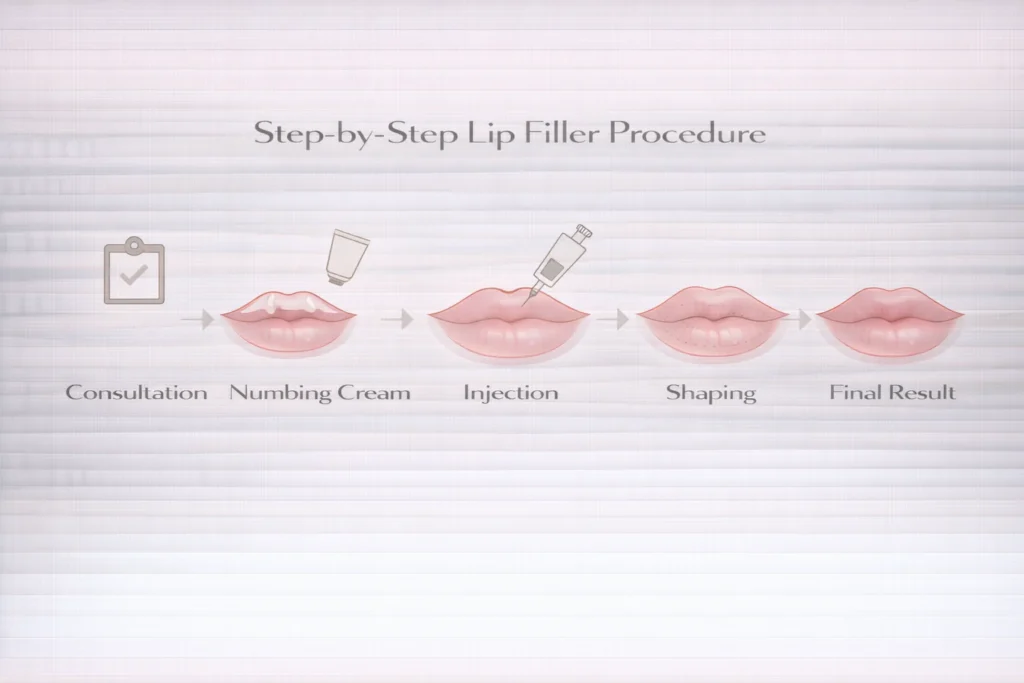
Stage 1: The Consultation and Assessment
Before any treatment begins, a thorough consultation takes place. This is arguably the most critical part of the process. Your practitioner will examine the natural shape, symmetry, and volume of your lips. They will assess your facial profile and the balance of your features to determine if you are a suitable candidate.
A full medical history review is conducted to check for contraindications, such as active cold sores, pregnancy, breastfeeding, or autoimmune conditions. Discussions regarding your aesthetic goals—whether you seek subtle hydration or noticeable volume—help the practitioner choose the correct type and density of dermal filler.
Stage 2: Preparation and Numbing
Once consent is obtained, the area is prepared. All makeup and surface debris are removed from the lower face using a surgical-grade cleanser. This sterilisation step is vital to prevent bacterial infection.
A potent prescription-grade topical anaesthetic (numbing cream) is then applied to the lips and the surrounding skin. This is typically left on for 15–25 minutes. During this time, the sensation in the lips will gradually dull, and the surface skin will become pale (blanched) due to the vasoconstricting effects of the cream.
Stage 3: The Injection Process
After the numbing period, the cream is wiped away, and the skin is sterilised once more. The practitioner may mark specific anatomical points on the vermilion border (the lip edge) to guide injection placement.
The injection phase involves the precise delivery of hyaluronic acid (HA) gel into specific layers of the lip tissue. Depending on the technique chosen, your practitioner may use a fine needle, a blunt-tip cannula, or a combination of both.
You will be asked to keep your facial muscles relaxed and may be asked to open or close your mouth slightly to allow access to different areas.
Stage 4: Moulding and Shaping
Immediately after injecting the filler, the practitioner will firmly massage the lips. This moulding process ensures the product integrates smoothly with the natural tissue and prevents the formation of lumps.
This part of the procedure can feel odd—a sensation of firm pressure and manipulation—but it is essential for a smooth result.
Stage 5: Post-Treatment Review
Once the injection and moulding are complete, the lips are cleaned again. You will be given a mirror to review the immediate outcome. It is normal at this stage for the lips to look larger than the final result due to immediate swelling from the trauma of the needle.
How UK Practitioners Approach Safe Lip Filler Treatment
Across reputable UK clinics, lip filler treatment is approached as a medical procedure requiring structured assessment, sterile technique, and detailed aftercare guidance.
A qualified practitioner will prioritise facial harmony, tissue health, and safety over rapid or high-volume treatment. Careful planning and conservative technique are widely regarded as key factors in achieving natural-looking results while minimising avoidable complications.
How Painful Are Lip Fillers Really?
Pain perception is subjective, but clinical experience allows us to gauge the average discomfort levels reported by patients.
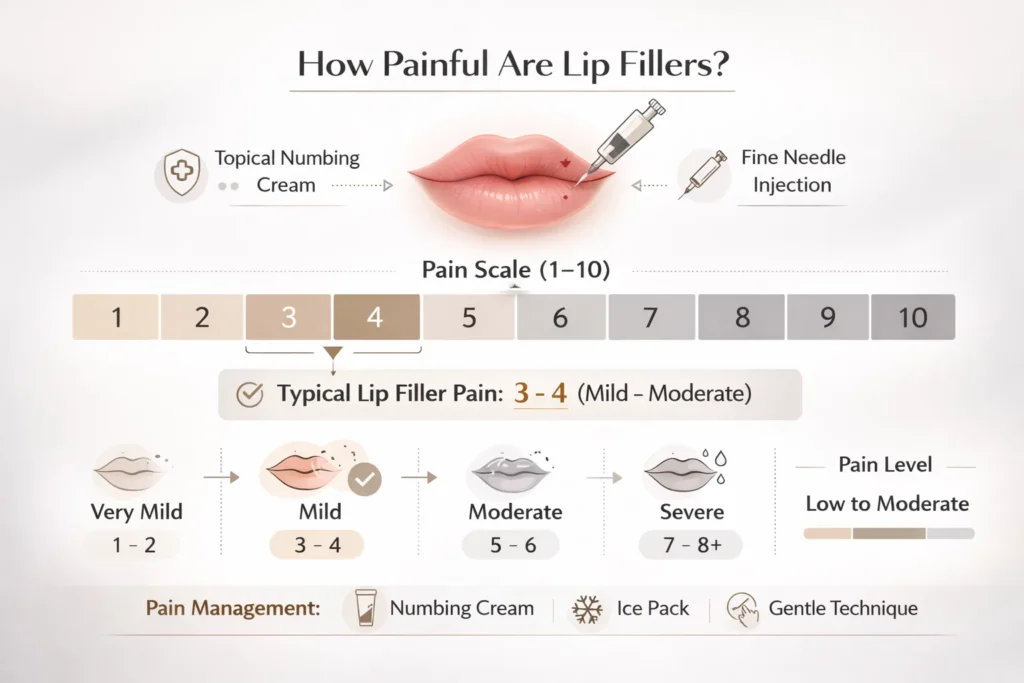
Most patients rate the pain of lip fillers between 3 and 4 on a scale of 10. It is rarely described as unbearable. The lips are a highly sensitive area of the face, densely packed with nerve endings, which is why numbing agents are standard practice.
The sensation is often described less as “pain” and more as a series of specific feelings:
- The initial prick: A sharp scratch as the needle breaches the skin.
- The flow: A sensation of expansion or coldness as the product enters the tissue.
- Pressure: A feeling of fullness or pushing, particularly when working near the Cupid’s bow or the philtrum columns.
Comparing it to other procedures, many patients find it more comfortable than a dental injection into the gum, but more sensitive than anti-wrinkle injections (Botox) elsewhere on the face. The Cupid’s bow (the centre of the top lip) tends to be the most sensitive area due to the high density of nerves.
Pain Level: Needle vs Cannula
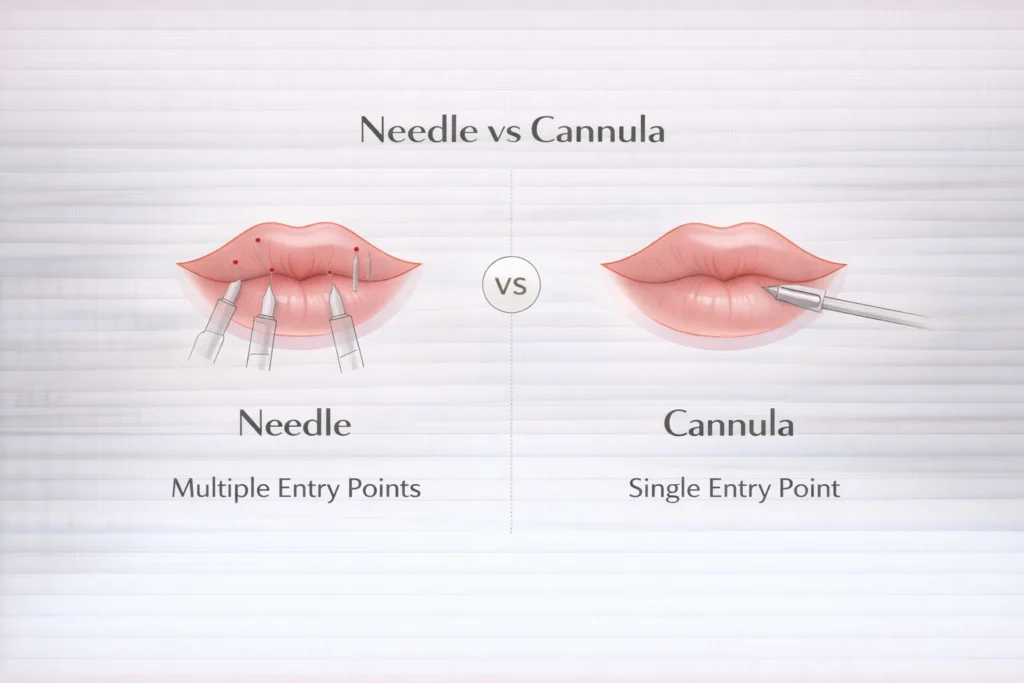
Practitioners use two main tools to deliver filler: needles and cannulas. The choice between them significantly influences the sensory experience.
| Technique | Sensation | Entry Points | Bruising Risk | Best For |
|---|---|---|---|---|
| Needle | Sharp pinch | Multiple | Slightly higher | Precise shaping & border definition |
| Cannula | Pressure/tugging | Few | Usually lower | Volume distribution & less trauma |
Needle Injections
A needle is sharp and rigid.
- Sensation: You will feel a sharp “scratch” every time the needle enters the skin. Because needles are used for precise detailing (like defining the lip border or Cupid’s bow), multiple entry points are required. This means repeated scratches throughout the treatment.
- Pain Profile: Generally sharper and more acute, but very short-lived for each injection point.
Cannula Injections
A cannula is a blunt-tipped tube that is longer and flexible.
- Sensation: The practitioner makes one small pilot hole with a needle, then inserts the blunt cannula through that single entry point to treat the entire lip. Because the tip is blunt, it does not cut through tissue but pushes it aside.
- Pain Profile: Patients rarely feel sharpness. Instead, the sensation is often described as “tugging,” “pushing,” or deep pressure moving through the lip. It can feel strange or uncomfortable, but rarely “painful” in the traditional sense.
- After-effects: Cannulas generally cause less trauma to blood vessels, often resulting in less bruising than needles, though swelling can still be significant.
Numbing Options Used in UK Clinics
Managing patient comfort is a priority in UK clinics. Several methods are utilised to minimise sensation.
Topical Anaesthetic (Numbing Cream)
This is the industry standard. High-strength creams (often containing lidocaine and tetracaine) are applied to the skin surface. They effectively numb the nerve endings in the mucosa (skin) of the lip. This makes the initial needle entry much more comfortable.
Lidocaine in the Filler
Modern, premium dermal fillers (such as Juvederm, Teosyal, or Belotero) come pre-mixed with lidocaine powder. This means that as the gel is injected, it numbs the lips from the inside out. While the first injection might pinch, subsequent injections become progressively less painful as the internal anaesthetic takes effect.
Dental Block
Some practitioners—particularly those with a dental background—may offer a dental block. This involves injecting anaesthetic into the gum line to completely numb the lower face, similar to what you would have for a tooth filling. While this removes all feeling from the lips, it also distorts movement and shape temporarily, making it harder for the practitioner to assess symmetry during treatment. For this reason, it is less commonly used for aesthetic lip procedures than topical cream.
Ice and Distraction
Ice packs may be used immediately before injection to vasoconstrict vessels (reduce bruising risk) and numb the skin receptor. Vibration tools are sometimes placed on the cheek or jaw; the vibration sensation distracts the brain’s pain pathways, reducing the perception of the needle pinch (known as the Gate Control Theory of pain).
Patient Comfort & Pain Management in UK Clinics
Patient comfort is considered an important part of safe aesthetic practice in the UK. Most clinics use prescription-strength topical anaesthetic and modern fillers that contain lidocaine to reduce discomfort during treatment.
A calm environment, clear communication, and gradual technique all contribute to a more controlled and comfortable experience. While some sensitivity is normal due to the high nerve density in the lips, the procedure is generally well tolerated when performed by an experienced practitioner.
What Happens During the 45–60 Minute Appointment?
A realistic timeline for a standard lip filler appointment in the UK is approximately 45–60 minutes.
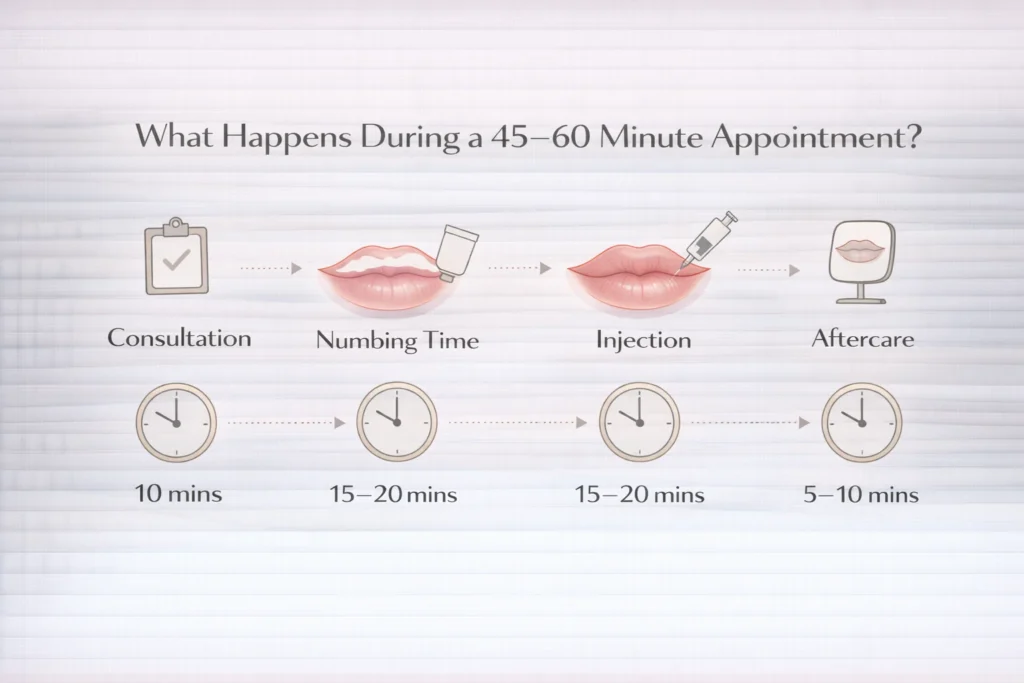
- Consultation & Consent (10–20 mins): Reviewing medical history, discussing goals, and signing paperwork.
- Numbing (15–25 mins): Waiting for the topical cream to take full effect.
- Injection (15–30 mins): The actual treatment time depends on the complexity of the technique and the anatomy of the patient. A straightforward volume enhancement is quicker than a corrective procedure or complex reshaping.
- Aftercare & Cleaning (5–10 mins): Cleaning the skin, applying aftercare balm, and discussing recovery instructions.
If a clinic suggests the entire process can be done in 15 minutes, this is a red flag. Proper medical consent and sterile preparation cannot be rushed.
Why Injection Technique Matters for Results
Injection technique plays a significant role in both comfort and final results. In UK clinical practice, practitioners select techniques based on lip anatomy, tissue density, and desired outcome rather than using a single standard method for all patients.
A personalised approach helps reduce trauma to the tissue and supports smoother, more natural-looking outcomes as the filler settles.
Different Lip Injection Techniques
There is no “one size fits all” technique. An experienced practitioner adapts their hand skills to the patient’s natural anatomy.
Linear Threading (Classic Volume)
The most common technique. The needle is inserted along the body of the lip, and product is deposited in a line as the needle is withdrawn. This is excellent for general hydration and foundation volume.
Vermilion Border Definition
This involves injecting small amounts of filler specifically along the rim of the lip (the white roll) to create a crisper edge and prevent lipstick bleeding. This can be more sensitive than body injections.
Tenting / Vertical Fanning (Russian Lip Style)
This technique focuses on height and flatness rather than outward projection. The injector places multiple vertical columns of filler starting from the base of the lip upwards.
- Note on comfort: This technique requires significantly more entry points than classic methods, meaning more needle pricks and potentially more swelling.
Micro-Droplet
Tiny amounts of filler are placed deep within the lip tubercles (the fleshy cushions of the lip) to create specific shapes, such as a “keyhole” look.
What Affects Pain During Lip Fillers?
Why does one friend find fillers painless while another finds them uncomfortable? Several variables are at play.
Anatomy and Scar Tissue
If you have had previous lip injuries or multiple previous filler treatments, you may have internal scar tissue (fibrosis). Pushing a needle or cannula through scar tissue requires more pressure and can be more uncomfortable than treating “virgin” lips.
Menstrual Cycle
Hormonal fluctuations impact pain thresholds. Many women find they are hypersensitive to pain in the week leading up to their period. It is often recommended to book appointments mid-cycle if you are worried about sensitivity.
Anxiety and Adrenaline
Fear increases pain perception. If you are tense, your facial muscles contract, making it harder for the needle to glide smoothly. Adrenaline also heightens nerve sensitivity. Deep breathing and a calm environment are scientifically proven to lower pain scores.
Practitioner Technique
A heavy-handed injector will naturally cause more pain. Experienced practitioners use a “light hand,” changing needles frequently (as needles blunt after a few injections) to ensure the entry is always as smooth and sharp as possible.
Lip Filler Pain Expectations (Typical UK Patient Experience)
| Stage of Treatment | Sensation Level | What Most Patients Feel |
|---|---|---|
| Numbing cream applied | 0–1/10 | Mild tingling or cooling |
| First needle entry | 3–5/10 | Sharp scratch or pinch |
| During injections | 2–4/10 | Pressure or fullness |
| Moulding stage | 2–3/10 | Firm pushing sensation |
| After procedure | 2–4/10 | Tender, swollen, tight |
First-Time Lip Filler: What To Expect
If this is your first treatment, the unknown is often the scariest part.
Nervousness is Normal
Ideally, your practitioner will guide you through the breathing process. Do not be afraid to say you are nervous; they deal with this daily.
Immediate Swelling
As soon as the needle leaves the skin, the body reacts. Swelling (oedema) is an inflammatory response to trauma and the hydrophilic (water-loving) nature of the filler. Your lips may look “stung” or distorted immediately after. This is not the final result.
Asymmetry
It is extremely common for lips to look uneven immediately after treatment. One side may swell more than the other, or a haematoma (bruise) may form on one side, making it look larger. Do not panic; symmetry can only be accurately judged once swelling has fully subsided, usually after 14 days.
Immediately After Procedure: How It Feels
When you leave the clinic, your lips will likely still feel numb from the anaesthetic cream and the lidocaine in the filler. This numbness can last for 1–2 hours.
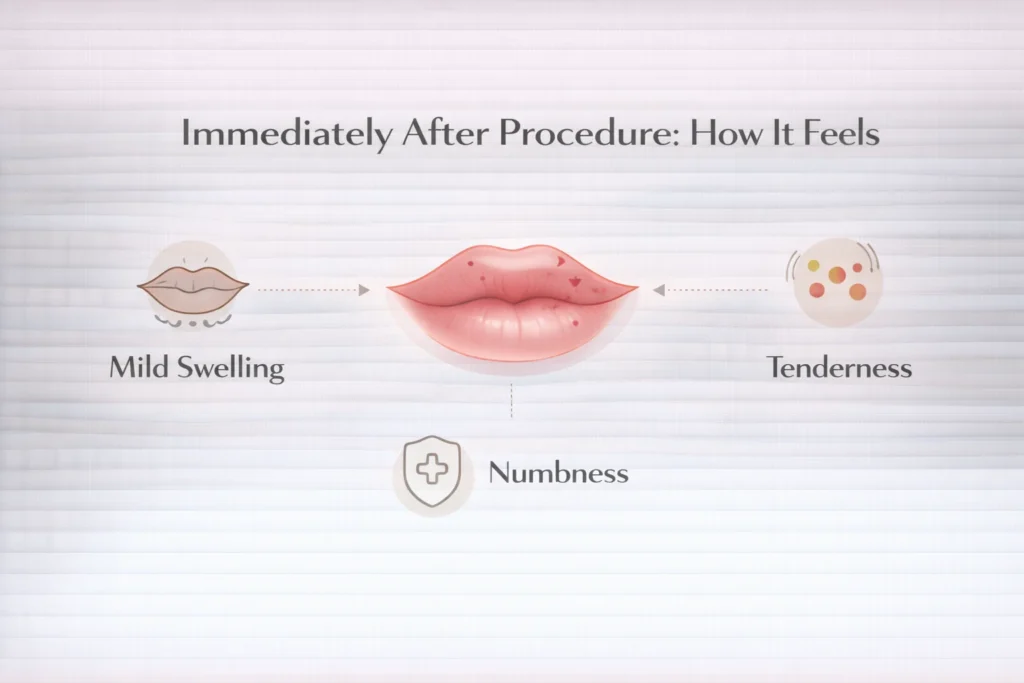
- Sensation: Your lips will feel gigantic. This is a sensory trick caused by the numbness and swelling; when you look in the mirror, they will be swollen, but rarely as big as they feel.
- Function: Drinking hot drinks should be avoided until feeling returns to prevent burning yourself. Eating can be messy; stick to easy-to-eat foods for the first few hours.
- Tenderness: As the numbness wears off, a throbbing or aching sensation is normal. The lips will feel firm and potentially bumpy to the touch. This firmness softens over the coming weeks as the product integrates with the tissue.
When Pain After Lip Fillers Is NOT Normal
While mild tenderness and swelling are expected, certain symptoms should always be assessed promptly by a qualified practitioner.
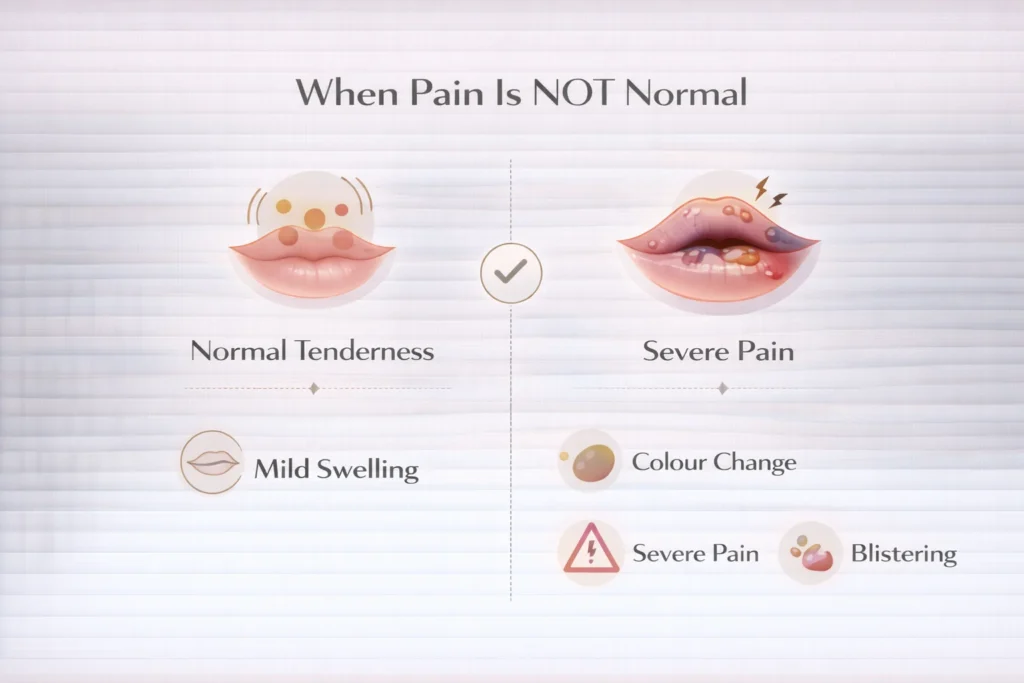
Seek urgent professional advice if you notice:
- Severe or worsening pain rather than gradual improvement
- Skin turning pale, grey, dusky, or mottled
- A cold sensation in the lips or surrounding skin
- Blistering or unusual discolouration
- Increasing swelling after initial improvement
Early assessment and treatment significantly reduce the risk of serious complications. When in doubt, contacting your practitioner for advice is always safer than waiting.
Safety Considerations Before Undergoing Treatment
Although lip fillers are widely performed, they should never be viewed as routine beauty treatments. As with any injectable procedure, there are potential risks that require appropriate training and prompt management.
UK safety guidance consistently highlights the importance of choosing practitioners who understand facial anatomy, maintain sterile technique, and have access to prescription-only emergency treatments where necessary.
Early recognition of unusual symptoms and timely professional review significantly reduces the likelihood of serious complications.
Safety & Professional Standards in UK
The UK aesthetic industry is not fully regulated in terms of who can inject dermal fillers. However, product safety, prescribing standards, and professional accountability are strictly governed.
Dermal fillers used in the UK are regulated as medical devices by the Medicines and Healthcare products Regulatory Agency (MHRA), meaning approved products must meet recognised safety and quality standards before clinical use.
For the safest and most predictable experience, treatment should always be carried out by a medically qualified practitioner (doctor, dentist, or nurse) who is accountable to a recognised regulator such as the General Medical Council (GMC), General Dental Council (GDC), or Nursing and Midwifery Council (NMC).
Choosing a practitioner who follows MHRA, GMC, and Joint Council for Cosmetic Practitioners (JCCP)-aligned safety standards significantly reduces avoidable risk and improves treatment predictability.
Why a medically led clinical environment matters
A qualified clinical setting helps ensure:
- Sterile technique and proper infection control
- Strong anatomical knowledge to minimise vascular risk
- Immediate access to prescription-only emergency medication such as hyaluronidase
- Clear complication management and follow-up protocols
Note: “UK professional bodies including the GMC, NMC, and JCCP consistently emphasise that dermal filler procedures should be performed by appropriately trained professionals within safe clinical environments.“
Who May Find Lip Fillers More Painful?
Certain groups of patients may statistically find the procedure more challenging:
- Anxiety Sufferers: High cortisol levels lower pain tolerance.
- Thin Lip Tissue: Patients with naturally very thin, tight lips often feel more pressure as there is less space for the filler to expand into. The tissue must stretch to accommodate the gel, which causes a “tight” sensation.
- Smokers: Smoking can sometimes affect circulation and tissue health, potentially making the lips more sensitive or prone to bleeding.
Common Myths About Lip Filler Pain
Myth: Lip fillers are excruciating.
Reality: Most patients are pleasantly surprised. The anticipation is almost always worse than the event. With modern numbing techniques, it is a manageable discomfort, not an endurance test.
Myth: Cannulas are completely painless.
Reality: While they avoid the sharp scratch of a needle, the sensation of a cannula moving under the skin is distinct and can feel invasive or strange. It is a different sensation, not necessarily a zero-pain one.
Myth: You can go straight back to work without anyone knowing.
Reality: While pain-wise you likely can, the physical swelling means it is usually obvious you have had a procedure done for at least 24–48 hours.
When To Speak To Your Practitioner
While mild pain and tenderness are normal, severe pain is not. You should contact your practitioner immediately if you experience:
- Excruciating pain that is not relieved by paracetamol.
- Blanching or mottling: If the skin on the lip or surrounding area turns white, grey, or purple and looks like a lace pattern.
- Coldness: If the area feels cold to the touch.
- Blisters: Small white blisters appearing in the days following treatment.
These can be signs of vascular occlusion (a blocked blood vessel), which requires urgent medical reversal.
What Most People Expect vs Reality of Lip Filler Procedure
Most people researching lip fillers expect the procedure to be either extremely painful or completely painless. In reality, the experience usually sits somewhere in between.
Many patients are surprised that discomfort is brief and manageable due to strong topical anaesthetic and lidocaine within the filler itself. The anticipation of pain is often worse than the procedure.
Another common expectation is that lips will look immediately natural after treatment. In practice, swelling and temporary asymmetry are normal for the first few days. Final results can only be judged once healing settles, usually after two to four weeks.
Understanding this difference between expectation and reality helps reduce anxiety and allows patients to approach treatment with realistic confidence.
Frequently Asked Questions (FAQs)
Q: Do lip fillers hurt the first time?
A: First-time patients often feel more anxiety, which can heighten pain perception, but the physical sensation is no different from subsequent treatments. Most find it very manageable with numbing cream.
Q: How painful are lip fillers on a scale of 1-10?
A: With adequate numbing cream, most patients rate it a 3 or 4 out of 10. The Cupid’s bow is usually a 5/10, while the corners of the mouth are a 2/10.
Q: Can I ask for more numbing cream?
A: Yes, but there is a limit. Leaving cream on for longer than 30-40 minutes does not necessarily increase numbness and can sometimes cause skin irritation. The standard 20 minutes is usually the optimal time.
Q: Is a cannula less painful than a needle?
A: Generally, yes. Cannulas involve fewer skin punctures (usually only 2–4 total), reducing the sharp scratching sensation. However, the feeling of pressure is often higher with a cannula.
Q: Do lips stay numb after the procedure?
A: Yes, numbness from the anaesthetic can last for 45 minutes to 2 hours after the procedure finishes.
Q: Can I drive home after lip fillers?
A: Yes. The procedure does not impair your ability to drive. However, if you feel lightheaded due to nerves or adrenaline, sit in the waiting area for 10 minutes and have a sugary drink before leaving.
Q: Why do my lips feel hard after filler?
A: Swelling and the presence of fresh, concentrated gel make the lips feel firm. Over 2–4 weeks, the filler hydrates (absorbs water) and softens, integrating with your natural tissue.
Q: What is the “dental block” injection?
A: It is an injection of anaesthetic into the gum, identical to what dentists use. It completely numbs the lower face. While effective for pain, it can distort lip shape, so many aesthetic practitioners prefer topical cream to ensure accurate symmetry.
Individual Assessment & Professional Consultation
Every individual responds differently to lip filler treatment depending on anatomy, metabolism, lifestyle, and previous treatments. For this reason, personalised consultation remains essential before undergoing any cosmetic procedure.
A qualified practitioner can assess suitability, explain realistic outcomes, and provide tailored advice based on your goals and medical history. Well-informed decisions and appropriate treatment planning are key factors in achieving results that remain balanced, natural-looking, and safe over time.
Who May Need to Delay or Avoid Treatment
Lip filler treatment may not be suitable for everyone at all times. Most qualified practitioners in the UK will postpone treatment if there is an active cold sore, skin infection, or inflammation around the mouth. Treatment is also commonly delayed during pregnancy or breastfeeding as a precaution.
Individuals with certain autoimmune conditions, bleeding disorders, or known allergies to filler ingredients may require specialist medical advice before proceeding. A thorough consultation allows potential risks to be assessed and ensures treatment is only carried out when safe and appropriate.
How to Prepare Mentally for a Lip Filler Appointment
Many people feel anxious before their first lip filler treatment simply because they do not know what to expect. Understanding that mild discomfort, temporary swelling, and short recovery time are normal can significantly reduce anxiety.
Booking with a qualified practitioner, allowing enough time for numbing, and avoiding rushing into treatment helps create a more controlled and positive experience. Patients who feel informed and prepared typically report a much more comfortable and reassuring treatment journey.
Summary Overview: Lip Filler Procedure, Pain & Technique (UK)
Lip filler procedures in the UK typically take under one hour and are generally well tolerated with modern numbing methods. Most patients report mild to moderate discomfort rather than severe pain. Swelling, firmness, and temporary asymmetry are normal immediately after treatment and usually settle within days to weeks. Choosing a medically qualified practitioner and understanding the procedure helps ensure a safe, predictable experience with minimal discomfort.
Most swelling settles within the first week, although full results and longevity vary depending on metabolism and lifestyle. You can read a detailed breakdown in our guide on how long lip fillers last and how results change over time.