



Quick Answer
Lip filler results are usually visible immediately but fully settle within 3–4 weeks. Most hyaluronic acid lip fillers last between 6–12 months, depending on metabolism, lifestyle, and injection technique. Maintenance typically involves top-ups once or twice a year, though individual longevity varies significantly. Proper practitioner selection and realistic expectations are key to long-term natural-looking results.
Introduction
Understanding lip filler results, longevity, and maintenance is one of the most common concerns for people researching cosmetic treatments in the UK. While social media often focuses on dramatic before-and-after photos, it rarely explains what happens in the weeks and months after treatment — how fillers settle, how long they realistically last, and what maintenance actually involves.
Many people researching lip fillers are not just curious about the procedure itself. They want to understand what living with lip fillers is like over time.
How do they settle?
Why do some people retain results for a year while others notice fading after a few months?
How often are top-ups required to maintain natural-looking results?
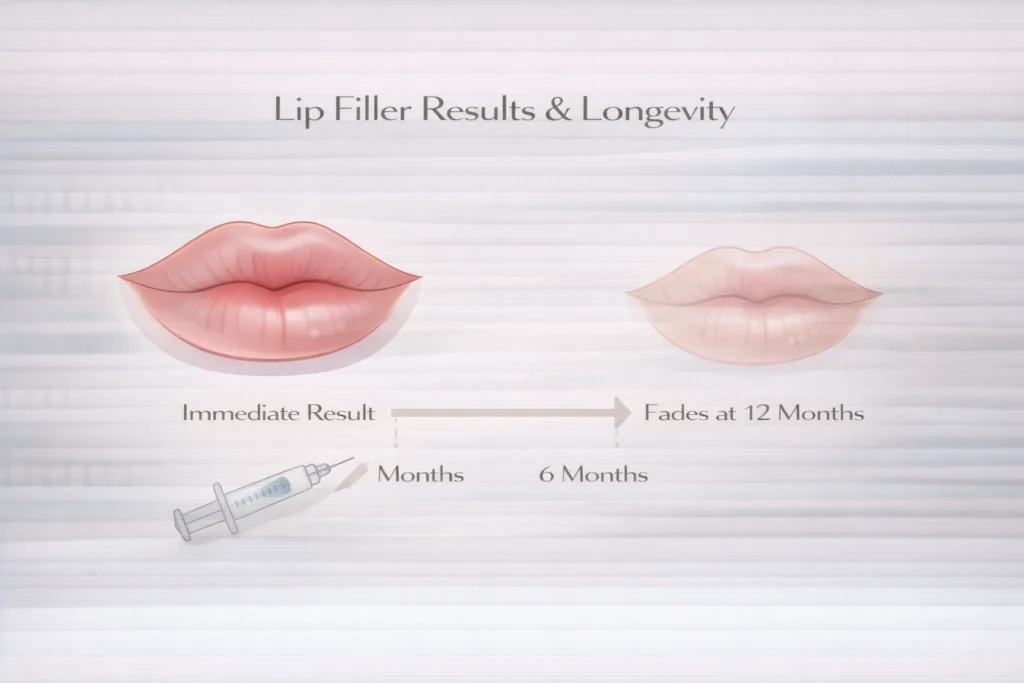
This guide provides a realistic, UK-focused overview of lip filler results and longevity, based on clinical expectations rather than marketing claims. The aim is to help you make informed decisions with clear, balanced information.
Note: “Lip augmentation remains one of the most frequently requested non-surgical cosmetic procedures across the United Kingdom, with thousands of treatments performed each year in medically led clinics and regulated aesthetic environments.”
Quick Overview: Lip Filler Results & Longevity
If you are looking for the headline facts before reading the detailed breakdown, here is a summary of typical UK standards:
- Initial Visibility: Immediate, though distorted by swelling.
- Swelling Period: Typically peaks within 24–48 hours and subsides significantly by day 5–7.
- Final Result: Visible at 4 weeks once the product has fully integrated with the tissue.
- Average Longevity: Most hyaluronic acid (HA) fillers last between 6 and 12 months.
- Maintenance: Top-ups are usually required once or twice a year to maintain the desired volume.
UK Clinical Perspective on Lip Filler Longevity
Across the UK, lip fillers remain one of the most commonly requested non-surgical aesthetic treatments. Professional organisations such as the British Association of Aesthetic Plastic Surgeons (BAAPS) and patient safety register Save Face regularly emphasise that long-term satisfaction depends not only on the product used but on practitioner skill, conservative treatment planning, and realistic maintenance expectations.
UK clinical guidance generally focuses on gradual enhancement, appropriate spacing between treatments, and regular professional review rather than frequent high-volume top-ups. This approach is intended to support natural-looking results while maintaining long-term tissue health and safety.
Understanding longevity and maintenance from a UK clinical perspective helps individuals approach treatment as an ongoing aesthetic decision rather than a one-time cosmetic procedure.
Note: “UK professional guidance increasingly emphasises patient education, informed consent, and realistic maintenance planning as key factors in achieving safe and satisfactory long-term aesthetic outcomes.”
What Do Lip Fillers Actually Look Like When Settled?
One of the most common misconceptions is that “settled” lips look the same as they do immediately after the needle leaves the skin. They don’t.
When lip fillers have fully integrated into the tissue—usually around the four-week mark—the result should look and feel different from the initial “fresh” look.
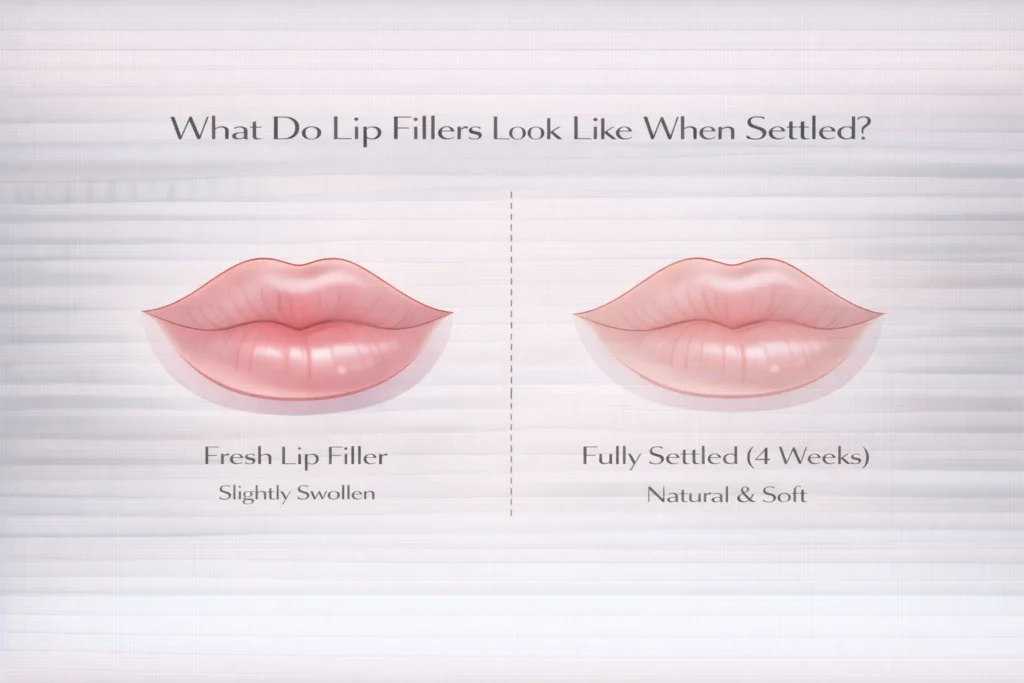
Natural vs. Noticeable
A settled result often appears softer than the initial treatment. The sharp definition seen on day one usually blends slightly as the filler hydrates and merges with the natural lip tissue. In the UK, the trend has shifted largely towards “undetectable” work, where the improvement is in hydration and balance rather than obvious projection.
Shape vs. Volume
Well-placed filler isn’t just about size. Settled results often show an improvement in the definition of the Cupid’s bow or a correction of asymmetry. The goal for many practitioners is facial harmony. When the swelling goes down, the lips should sit proportionally with the nose and chin, rather than dominating the lower face.
UK Clinical & Safety Context
In the UK, dermal fillers are classed as medical aesthetic procedures rather than simple beauty treatments. National guidance from organisations such as the NHS, General Medical Council (GMC), and Joint Council for Cosmetic Practitioners (JCCP) emphasises the importance of informed consent, realistic expectations, and treatment by appropriately trained professionals.
Understanding results, longevity, and maintenance is not simply about appearance. It is also about tissue health, product safety, and long-term aesthetic planning. Reliable information helps individuals make informed decisions before undergoing treatment with a qualified practitioner.
Lip Filler Healing & Result Timeline
The journey from the appointment chair to the final result involves several distinct physiological stages. Understanding this timeline prevents unnecessary panic during the healing process.
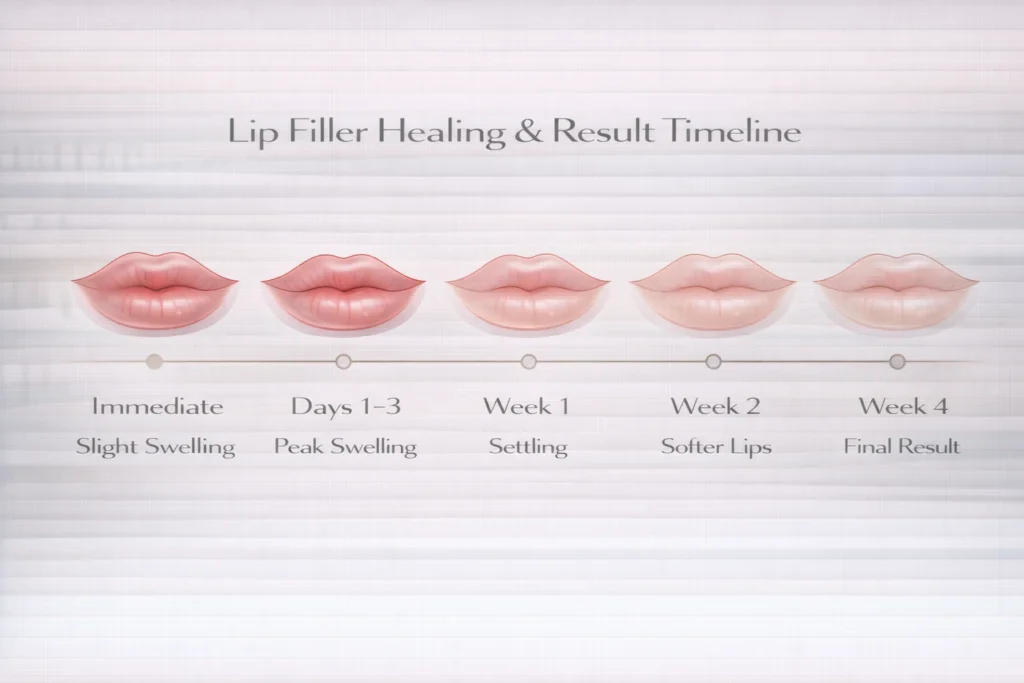
| Stage | What to Expect | Is This Normal? |
|---|---|---|
| Immediately After | Swelling, firmness, numbness | Yes |
| Days 1–3 | Peak swelling, possible bruising | Yes |
| Days 4–7 | Swelling reduces, mild asymmetry | Yes |
| Week 2 | Shape clearer, softer texture | Yes |
| Week 4 | Final settled result visible | Yes |
Immediately After Treatment
You will see an instant increase in volume. However, roughly 20-30% of this size is likely due to the trauma of the injection (swelling) and the presence of anaesthetic (lidocaine) in the product. The lips may feel firm, numb, and look slightly uneven.
The First Week
This is often the most turbulent stage.
- Day 1-3: Swelling peaks. It is common to wake up with significantly larger lips due to fluid retention overnight. Bruising may darken.
- Day 4-7: Swelling begins to subside rapidly. The lips may start to feel a bit lumpy or hard as the filler begins to integrate. Asymmetry is very common here—one side often swells more than the other.
Two Weeks
This is the “settling stage.” By now, the majority of the acute swelling and bruising should have resolved. The shape becomes clearer, though the filler may still be malleable. The tissues are softening.
Four Weeks
This is the clinical endpoint for the initial treatment. The product has integrated, hydration levels have stabilised, and the true shape is visible. This is the only appropriate time to judge whether the treatment was successful or if adjustments are needed.
How Long Do Lip Fillers Last?
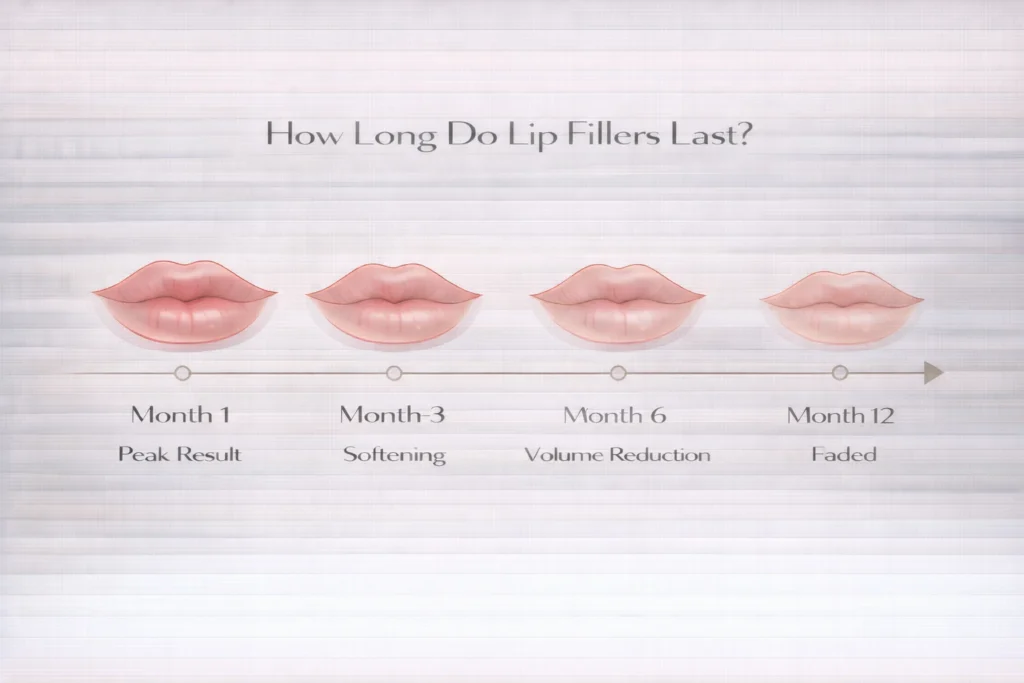
The longevity of lip fillers is not a fixed guarantee. While product manufacturers often state that results last up to 12 or 18 months, clinical experience in the UK suggests a more nuanced reality.
UK Practitioner Perspective on Longevity
Across UK aesthetic practice, most practitioners advise patients that longevity varies significantly depending on metabolism, lifestyle, and treatment approach. While manufacturers may suggest longer durations, many UK-based practitioners observe that visible volume typically softens within 6–12 months, with subtle structural support sometimes lasting longer.
Regular professional review helps ensure that results remain balanced and that tissue health is maintained over time.
The 6–12 Month Average
For most patients receiving standard hyaluronic acid fillers (such as Juvederm or Restylane), the visible result typically lasts between 6 and 12 months.
First-Time Patients
Those receiving filler for the first time often find their results fade faster, sometimes noticing a reduction in volume around the 4–6 month mark. This is not necessarily because the product has disappeared, but because the initial tissue expansion has settled, and there is no “base layer” of previous product to support the new filler.
Repeat Treatments
Conversely, patients who have had multiple treatments over several years often find they need top-ups much less frequently. This is due to the accumulation of residual product and the stimulation of the body’s own collagen in the area.
Factors That Affect Lip Filler Longevity
Why does filler last 12 months for your friend but only 5 months for you? Several biological and lifestyle variables influence how quickly the body breaks down hyaluronic acid.
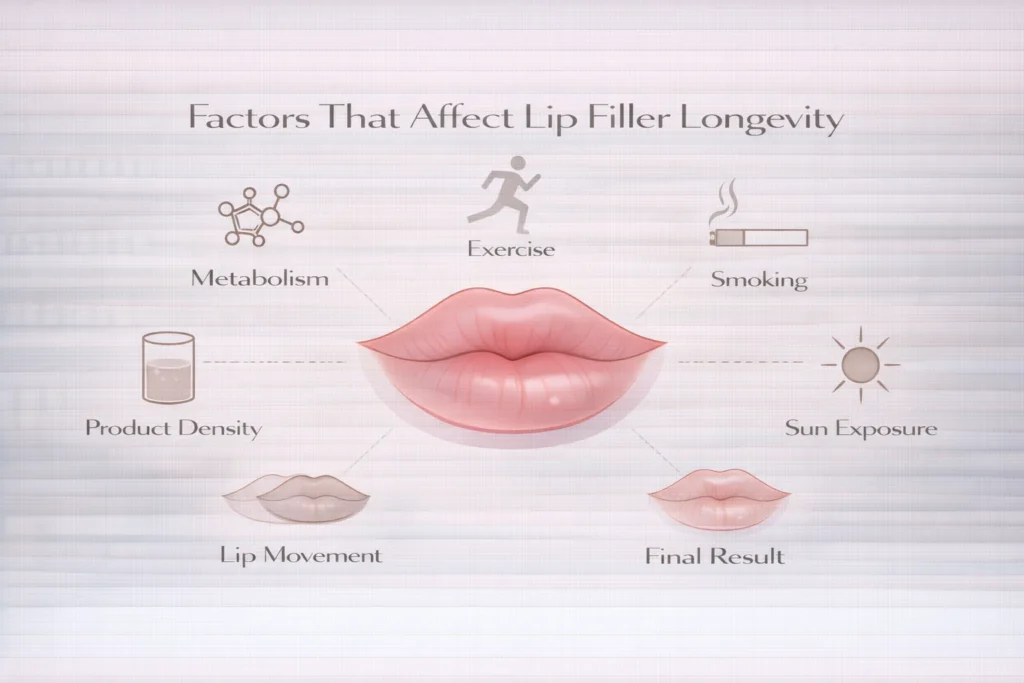
| Factor | Effect on Longevity |
|---|---|
| Fast metabolism | May shorten duration |
| High-intensity exercise | May reduce lifespan |
| Smoking | May accelerate breakdown |
| UV exposure | Can degrade HA faster |
| Product density | Thicker fillers may last longer |
| Injection depth | Deeper placement often lasts longer |
| Lip movement | High movement area reduces longevity |
Metabolism
This is the most significant factor. Individuals with a naturally fast metabolism often process and break down the filler quicker than those with a slower metabolic rate. Your body views the filler as a sugar (polysaccharide) and naturally metabolises it over time via an enzyme called hyaluronidase.
Lifestyle Choices
External factors accelerate the breakdown process.
- High-Intensity Exercise: Athletes or regular gym-goers often experience shorter longevity due to their increased metabolic rate.
- Smoking: Smoking restricts blood flow and introduces toxins that degrade skin quality and can break down hyaluronic acid faster.
- UV Exposure: Excessive sunbeds or sun exposure can degrade the product.
Injection Technique and Product Choice
Denser, thicker fillers generally take longer to break down than softer, more fluid fillers used for hydration. Additionally, where the product is placed matters. Filler placed deeply typically lasts longer than superficial injections.
Lip Movement
The lips are one of the most mobile parts of the face. We use them constantly for speaking, eating, and expressing emotion. This constant mechanical stress contributes to the product breaking down faster in the lips than in static areas like the cheeks or jawline.
Why Some Lip Fillers Fade Faster
There are specific scenarios where results seem to vanish surprisingly quickly.
The “Hydration Drop”
Hyaluronic acid works by attracting water. In the first few months, the “plumpness” is largely water retention held by the filler molecules. As the body slowly degrades the filler chains, they hold less water. You might lose the volume (water weight) before you lose the actual structure (filler gel).
The Breakdown Process
It is rare for filler to disappear overnight. It is a gradual degradation. However, because you see your face in the mirror every day, you may not notice the slow decline until a significant amount of volume is lost.
Maintenance & Top-Ups: What To Expect
Maintaining lip fillers is rarely a case of “one and done.” It usually requires a strategy to keep results consistent without creating an unnatural look.
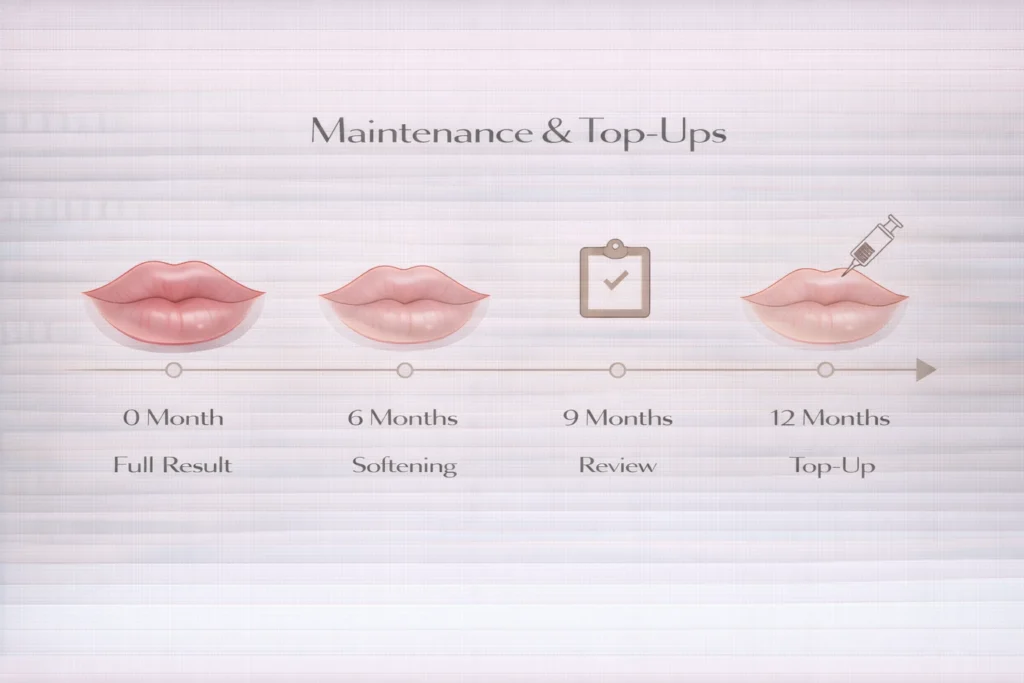
| Time After Treatment | What Most Patients Notice | Action |
|---|---|---|
| 0–1 month | Full settled result | No top-up needed |
| 3–6 months | Slight softening | Usually no action |
| 6–9 months | Volume reduction visible | Review recommended |
| 9–12 months | Most volume reduced | Maintenance top-up |
| 12+ months | Minimal visible filler | Full reassessment |
When are top-ups needed?
Most patients in the UK return for a top-up when they notice roughly 50% of the volume has diminished. This is usually around the 6–9 month mark.
The “Layering” Approach
Many aesthetic practitioners advocate for a gradual approach. Rather than injecting 2ml in one sitting, they might inject 0.5ml or 1ml, let it settle for several months, and then add a small amount more. This builds a stable structure over time, which often leads to greater longevity and a more natural appearance.
Avoiding the “Overfilled” Look
A common error in maintenance is topping up too frequently or too aggressively. If you add more filler while a significant amount of the previous product remains, you risk migration (where filler moves above the lip border) or the “duck lip” appearance.
Why Conservative Maintenance Is Preferred in the UK
Many experienced UK practitioners favour a conservative maintenance approach. Rather than frequent large-volume top-ups, gradual treatment over time is often considered safer for tissue integrity and long-term aesthetics.
Spacing treatments appropriately allows practitioners to assess how the product settles and breaks down naturally before adding additional volume. This approach helps reduce the likelihood of migration, overfilling, and long-term tissue stretching.
How Results Change Over Time
Your lips will not look the same in month six as they did in month one. The lifecycle of the result evolves.
Months 1–3: Peak Result
Following the 4-week settlement, this period usually offers the most defined and hydrated look. The shape is crisp, and the volume is at its maximum stable level.
Months 3–6: Softening
The result often begins to look more natural. The borders may become slightly less sharp, and the volume may reduce slightly. Many patients prefer this stage as the lips feel softer and move more naturally.
Months 6+: Gradual Decline
From this point, the volume slowly decreases. The specific shape created by the practitioner may become less distinct. This is the window where most people begin considering their next appointment.
When Results May Not Last Long
Certain demographics should manage their expectations regarding longevity. If you have a very low body fat percentage and a high metabolic rate (for example, long-distance runners or personal trainers), it is biologically normal for filler to degrade faster.
Furthermore, if a very small amount of product was used (e.g., 0.5ml) to achieve a subtle result, the visible change will naturally disappear faster than if a larger volume had been injected, simply because there is less substance to break down.
When Results May Last Longer
Conversely, there are instances where filler persists far longer than the labelled 12 months. MRI scans in clinical studies have sometimes shown residual filler present years after treatment. Even when the visible cosmetic result has reduced significantly.
This tends to happen in patients who have had repeated treatments over many years. The body may form a capsule of collagen around the filler, or the product may integrate so thoroughly that it remains stable. While this sounds positive, it underscores the importance of not over-treating, as the product may be accumulating rather than disappearing.
Signs Lip Filler Is Fading
How do you know it is time for a review?
- Lipstick Application: You may notice vertical lines reappearing on the lip body, causing lipstick to bleed.
- Loss of Definition: The sharp border (vermilion border) created by the filler softens, and lip liner becomes necessary again to define the shape.
- Volume Loss: The physical size reduces, and the lips feel flatter against the teeth.
- Dryness: As the hydrating properties of the HA reduce, the lips may feel drier than they did in the months following treatment.
Dissolving & Resetting Lip Fillers
Sometimes, the maintenance plan involves removing the product entirely. This is done using an enzyme called hyaluronidase, which dissolves the filler.
This is not always a sign of a “botched” job. Over several years of maintenance, filler can sometimes migrate slightly or build up unevenly. Many UK practitioners now recommend a “dissolve and refill” approach every few years to clear the canvas and ensure the tissue remains healthy and the shape remains crisp. This allows for a fresh start rather than constantly layering new product over old, potentially migrated product.
UK Safety Considerations Around Dissolving
In the UK, hyaluronidase (used to dissolve filler) is a prescription-only medicine. This means access to a qualified prescriber is essential if dissolving becomes necessary. For this reason, many UK safety bodies emphasise the importance of choosing practitioners who can manage both aesthetic outcomes and potential complications.
Dissolving is not always required, but when used appropriately it can help restore natural anatomy and support safer long-term maintenance.
Dermal fillers are regulated as medical devices by the Medicines and Healthcare products Regulatory Agency (MHRA), and prescription-only medicines such as hyaluronidase must be supplied by a qualified prescriber.
Long-Term Maintenance Strategy
If you plan to maintain lip fillers for years, a strategic mindset is healthier than a reactive one.
Spacing Treatments
Extending the time between appointments is often beneficial. If you can push your top-up from 6 months to 9 or 12 months, you reduce the risk of tissue fatigue and migration.
Consultation is Key
A good practitioner should assess your lips at every appointment as if it were the first time. They should check for migration and tissue softness. If the tissue feels firm or “full,” they may advise waiting, even if you feel you have lost volume. Trusting this advice is crucial for long-term aesthetic health.
Realistic Expectations
It is vital to understand the limitations of non-surgical procedures.
Anatomy is King
Lip fillers can enhance what you have, but they cannot fundamentally change your anatomy. If you have very thin lips, you will not achieve massive volume naturally, regardless of how much filler is used. Attempting to force the lips beyond their anatomical limit usually results in migration and unnatural projection.
Perfection is Impossible
Faces are naturally asymmetrical. While filler can improve balance, it rarely achieves perfect symmetry. Expecting pixel-perfect symmetry often leads to disappointment and over-treatment.
Who Gets the Longest Lasting Results?
Generally, the patients who enjoy the most stable, long-lasting results are those who:
- Have built their results up slowly over several sessions.
- Maintain a healthy lifestyle with good hydration.
- Do not smoke.
- Follow their practitioner’s advice regarding the timing of top-ups.
- Use premium-grade, thoroughly tested filler brands.
Common Myths About Longevity
Myth: Lip filler is permanent.
Reality: Standard HA fillers are not permanent. They are temporary and biodegradable. While small traces can last years, the aesthetic result usually fades within a year.
Myth: If I exercise, my filler will dissolve in a week.
Reality: While metabolism affects longevity, it does not work that instantly. Heavy exercise may shorten the lifespan by a few months, not wipe it out immediately.
Myth: Bigger lips last longer.
Reality: Overfilling does not guarantee longevity; it often guarantees migration. A large amount of poorly placed filler may need dissolving sooner than a smaller amount of well-placed filler.
When To Speak To A Professional
While fading is normal, there are times you should seek professional advice outside of your scheduled top-up:
- Lumps: If you feel firm nodules that are visible when you speak.
- Migration: If you notice a “shelf” or shadow above your top lip (often looking like a moustache).
- Asymmetry: If one side has faded significantly faster than the other, causing a visible imbalance.
- Discomfort: Any pain or swelling months after the treatment is not normal and requires urgent assessment.
Long-Term Satisfaction Depends on Maintenance Decisions
For many individuals, lip filler satisfaction is influenced less by the initial treatment and more by how maintenance is approached over time. Gradual, well-spaced treatments planned with a qualified practitioner tend to produce more stable and natural-looking outcomes than reactive or frequent high-volume top-ups.
Taking time to review results properly before scheduling additional treatment allows the lips to settle fully and helps avoid unnecessary product build-up. Many experienced practitioners in the UK encourage a conservative approach focused on long-term balance rather than short-term volume.
Approaching maintenance as a long-term aesthetic plan rather than a series of isolated appointments often leads to more predictable results and reduces the likelihood of migration or overfilling.
Lip Filler Longevity: Key Takeaways
Most lip fillers used in the UK are temporary hyaluronic acid-based products that gradually break down over time. While individual longevity varies, visible results typically last between 6 and 12 months for most patients.
Final results are usually assessed around four weeks after treatment, once swelling has resolved and the filler has fully integrated with the tissue. Maintenance is commonly performed once or twice per year, depending on metabolism, lifestyle, and desired volume.
Gradual, conservative top-ups with a qualified practitioner are widely considered the safest and most effective approach for maintaining natural-looking results long term.
Clinical studies suggest that visible HA lip filler results typically reduce significantly between 6–9 months for most patients, although small amounts of product may persist beyond 12 months.
Lip Filler Longevity Overview (UK Clinical Summary)
Lip filler results are visible immediately but settle fully within approximately four weeks. Most hyaluronic acid lip fillers last between six and twelve months, although longevity varies depending on metabolism, lifestyle, and injection technique. Maintenance is typically performed once or twice per year using a conservative, gradual approach. Overfilling and frequent top-ups increase the risk of migration and long-term tissue changes. Professional review is recommended before any additional treatment.
Lip Filler Results & Longevity FAQs
Q: How long do lip fillers usually last in the UK?
A: Most hyaluronic acid lip fillers used in the UK typically last between 6 and 12 months. Longevity varies depending on metabolism, lifestyle, product used, and injection technique. Some individuals may notice volume reducing sooner, while others retain subtle results for longer.
Q: When do lip fillers fully settle?
A: Lip fillers usually settle within 2–4 weeks. Swelling can distort shape initially, so final results should only be assessed after this settling period. A review appointment is often recommended around the two-week to four-week mark.
Q: Why do lip fillers fade faster for some people?
A: Faster metabolism, frequent exercise, smoking, high lip movement, and smaller treatment volumes can all contribute to quicker breakdown of filler. First-time treatments also tend to fade faster than repeat treatments.
Q: Do lip fillers last longer after multiple treatments?
A: In many cases, yes. Some individuals find that repeat treatments build a small residual base of product over time, meaning maintenance appointments may be needed less frequently. However, overfilling should always be avoided to protect long-term tissue health.
Q: How often should lip fillers be topped up?
A: Most people consider maintenance treatments every 6–12 months. A qualified practitioner should assess remaining product and tissue condition before recommending additional filler.
Q: Can lip fillers last longer than a year?
A: Small amounts of filler may remain in the tissue beyond 12 months, even when visible volume has reduced. Longevity varies by person, and results should always be reviewed professionally before further treatment.
Q: What are the signs that lip filler is fading?
A: Common signs include reduced volume, softer lip definition, increased dryness, and the gradual return of natural lip lines. Changes usually occur gradually rather than suddenly.
Q: Is it better to dissolve lip filler before refilling?
A: In some cases, dissolving may be recommended if filler has migrated, built up unevenly, or created excessive volume over time. This decision should always be made by a qualified practitioner after assessment.
Q: Can lifestyle affect how long lip fillers last?
A: Yes. Smoking, frequent sun exposure, intense exercise, and natural metabolic rate can all influence how quickly hyaluronic acid fillers break down in the body.
Q: When should I seek professional advice about my lip filler results?
A: Professional review is recommended if you notice persistent lumps, migration, significant asymmetry, or unexpected changes months after treatment. Routine review appointments also help maintain balanced, natural-looking results.
Individual Results & Professional Assessment
Every individual responds differently to dermal fillers. Factors such as natural anatomy, metabolism, previous treatments, and lifestyle habits all influence how results develop and how long they last.
This guide provides general educational information based on typical UK clinical observations. It should not replace personalised advice from a qualified aesthetic practitioner, who can assess suitability, discuss realistic outcomes, and provide tailored guidance based on individual needs.
Final Educational Summary
Lip fillers are a widely used aesthetic treatment with variable longevity depending on individual biology and lifestyle. Results evolve over time and usually require periodic maintenance to remain consistent.
Understanding realistic timelines, gradual fading, and appropriate maintenance strategies allows patients to make informed decisions. Before undergoing treatment, always consult a qualified medical professional who can assess suitability and explain expected outcomes based on your individual anatomy and goals.
UK Safety & Consultation Reminder
Anyone considering lip fillers should seek treatment only from appropriately trained and insured professionals working in a safe clinical environment. A thorough consultation before treatment allows risks, expectations, and maintenance planning to be discussed in detail.
Well-informed decisions and realistic expectations are key factors in achieving results that remain balanced, natural-looking, and safe over time.
Educational Purpose of This Guide
This guide is designed to provide balanced, research-based information to support informed decision-making around lip filler treatment within the UK. It does not replace personalised consultation with a qualified practitioner but aims to help individuals understand realistic timelines, maintenance considerations, and long-term safety before proceeding.