


The popularity of non-surgical cosmetic procedures has increased significantly across the United Kingdom in recent years, with lip augmentation remaining one of the most requested aesthetic treatments. While social media often highlights aesthetic results, understanding the safety profile of these procedures is equally important.
Lip fillers are medical aesthetic procedures involving the injection of a substance—most commonly hyaluronic acid—into the lip tissue. While many treatments are performed successfully every day, they are not entirely risk-free. Risks can range from common temporary side effects to rare but more serious complications.
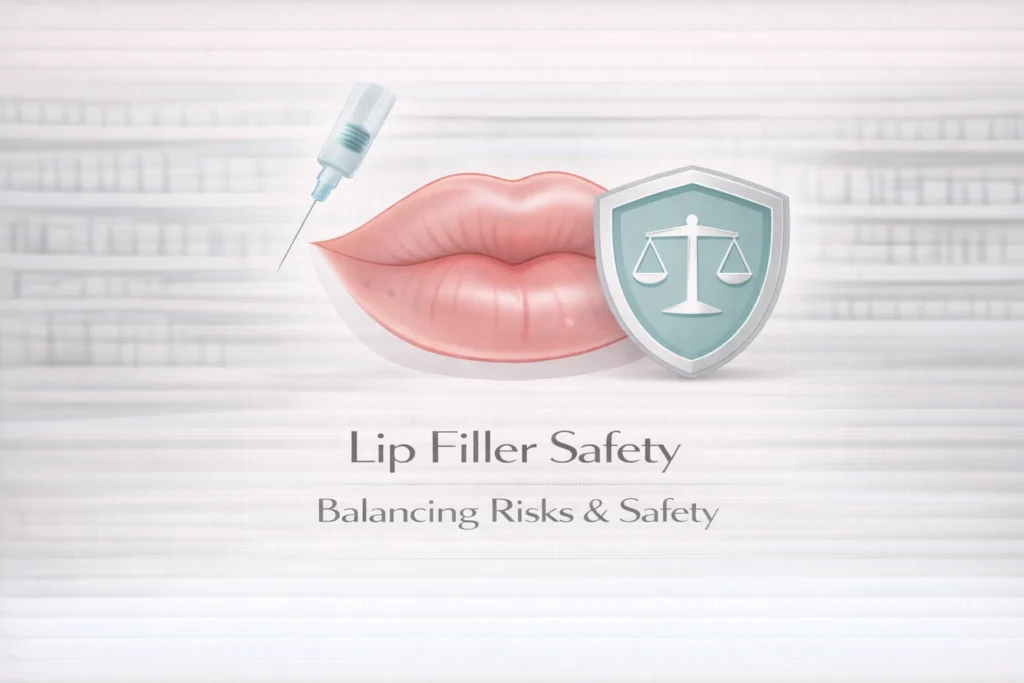
Making an informed decision involves understanding what happens during treatment, how the UK regulatory landscape affects safety, and how to identify a qualified practitioner. This guide provides a neutral, educational overview of lip filler safety to help you research the topic with clarity and confidence.
Note: “This guide is written as a neutral, research-based overview of lip filler safety within a UK clinical context. It reflects current UK aesthetic safety guidance and aims to help individuals understand risks, practitioner standards, and decision-making considerations before undergoing treatment. The purpose is educational — helping you research safely, recognise warning signs, and make informed choices based on reliable medical-style information rather than social media trends or promotional content.”
Who This Guide Is For?
This guide is intended for individuals researching lip filler treatment from a safety perspective rather than a purely cosmetic one. It may be helpful if you are considering treatment for the first time, comparing clinics, or simply trying to understand the risks, recovery process, and realistic expectations before making any decision.
The aim is to provide balanced, clinically informed information so you can assess whether treatment feels appropriate for you and how to approach it safely within the UK.
Quick Overview: Lip Filler Safety Snapshot
For those seeking immediate clarity, here are the key safety considerations:
- Lip fillers are generally considered safe when performed by a qualified medical professional using appropriate products and sterile technique. However, no medical procedure is completely without risk.
- Common temporary effects include swelling, bruising, redness, and tenderness around the injection site.
- Rare but serious complications, such as vascular occlusion or severe infection, can occur and require immediate medical attention.
- Your safety depends heavily on the training, experience, and clinical environment of the practitioner performing the procedure.
- A proper consultation allows a practitioner to review your medical history, assess suitability, and explain potential risks before treatment takes place.
Are Lip Fillers Safe in the UK? Key Safety Perspective
Lip fillers are widely performed across the UK and are generally considered safe when carried out by appropriately trained medical professionals in a clinical environment. However, like any injectable aesthetic treatment, they are not completely risk-free and should always be approached with informed decision-making.
Safety largely depends on who performs the treatment
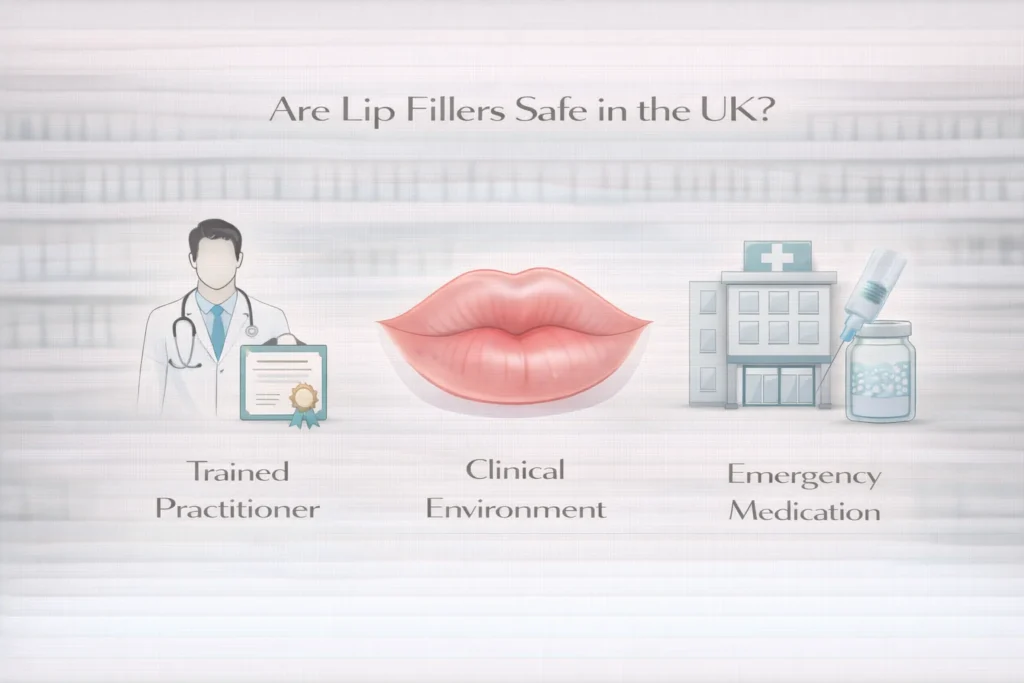
The safety of lip filler treatment is influenced more by practitioner training, clinical standards, and patient suitability than by the filler product itself. Treatments carried out in medically led clinics with proper consultation, sterile technique, and emergency protocols are generally considered safer than those performed in non-clinical environments.
Choosing a qualified and experienced practitioner remains one of the most important factors in reducing overall risk.
Most modern lip fillers are temporary and reversible
Most fillers used in the UK are hyaluronic acid-based. This substance naturally occurs in the body and can be dissolved if necessary using a prescription-only medication called hyaluronidase. When appropriate products and conservative techniques are used, complication rates are considered low.
The majority of patients experience only temporary swelling, bruising, or tenderness, which usually settles as part of the normal healing process.
Serious complications are rare but possible
Although uncommon, complications such as vascular occlusion or infection can occur and require prompt professional attention. Early recognition and treatment significantly improve outcomes, which is why access to trained medical support is essential.
Understanding early warning signs and seeking timely review helps reduce the likelihood of long-term issues.
A balanced, informed approach is safest
Understanding both the benefits and limitations of lip filler treatment allows individuals to make balanced decisions based on clinical safety rather than social media trends. Taking time to research practitioners, ask questions, and consider suitability helps support safer and more predictable outcomes.
What Determines Lip Filler Safety Most?
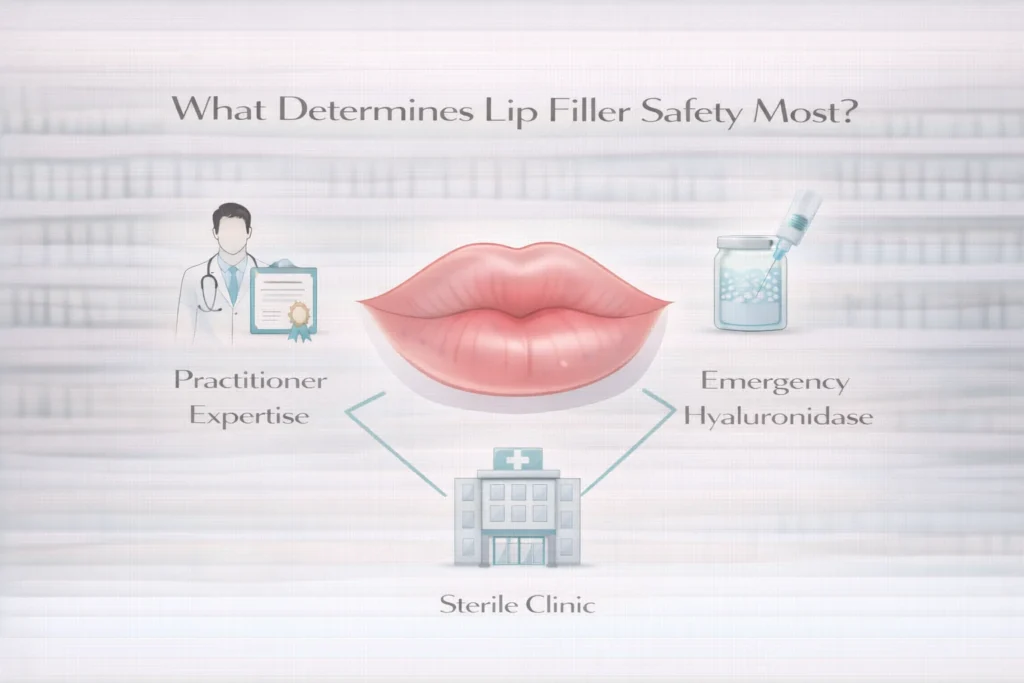
Lip filler safety in the UK is primarily determined by three factors:
- Practitioner training and anatomical knowledge
- Clinical environment and hygiene standards
- Access to emergency prescription-only medication
When all three are present, complication risk is significantly reduced and issues can be managed quickly if they occur.
How Safe Are Lip Fillers Overall?
Lip fillers are generally considered safe when appropriate safety standards are followed and treatment is carried out by a qualified and experienced practitioner. The overall safety of the procedure depends on three primary factors: the product used, the suitability of the patient, and the practitioner’s clinical skill and anatomical knowledge.
Most lip fillers used in the UK are made from hyaluronic acid (HA), a substance naturally present in the body. HA fillers are temporary and reversible. If necessary, a medical professional can dissolve the product using an enzyme called hyaluronidase.
However, safety is not guaranteed. The UK aesthetic industry has historically been less regulated than other healthcare sectors. This means the difference between a safe and unsafe experience often depends on who performs the treatment and the clinical standards followed.
When lip fillers are administered in a sterile clinical environment by a trained medical professional with strong knowledge of facial anatomy, risks are significantly reduced compared to treatments performed in non-clinical settings by untrained individuals.
Published clinical reviews suggest serious complications such as vascular occlusion occur in well under 1% of treatments when performed by experienced medical practitioners.
UK Regulation and Safety Standards
Understanding UK regulation helps place lip filler safety into context.
Dermal fillers are currently classified as medical devices rather than prescription-only medicines. This has historically allowed non-medical individuals to administer them. However, regulation is evolving to improve patient safety.
The Botulinum Toxin and Cosmetic Fillers (Children) Act 2021 made it a criminal offence in England to administer cosmetic fillers to anyone under the age of 18.
The UK government is working towards a licensing scheme for non-surgical cosmetic procedures to ensure minimum training and hygiene standards.
Although fillers themselves may not require a prescription, the emergency medication used to treat serious complications (hyaluronidase) is prescription-only. This makes access to a qualified prescriber essential for safety.
Common Side Effects (Normal Healing Responses)

It is important to distinguish between normal side effects and complications. When the skin is punctured and a product is injected into tissue, the body will respond naturally.
Typical temporary reactions include swelling, bruising, tenderness, redness, and initial firmness within the lips. These effects usually improve gradually as the lips heal and the filler integrates with surrounding tissue.
Swelling and bruising are often most noticeable within the first 48 hours. During the first week, swelling typically reduces and any asymmetry caused by uneven inflammation begins to settle. By around two weeks, most swelling has resolved and the true result becomes clearer.
These responses are considered part of the normal healing process.
Normal Side Effects vs Potential Complications
| Normal Temporary Effects | Potential Complications |
|---|---|
| Swelling (first 48 hours) | Spreading redness or heat |
| Mild bruising | Severe or worsening pain |
| Tenderness | Pale, grey, or mottled skin |
| Temporary firmness | Persistent lumps or nodules |
| Short-term asymmetry | Visual disturbance |
Possible Complications (Less Common)
Complications fall outside the normal healing process and may require professional review.
Infection can occur if bacteria enter the injection site. Symptoms may include spreading redness, heat, tenderness, or discharge.
Allergic reactions are uncommon with hyaluronic acid fillers but can occur due to lidocaine or other components.
Persistent lumps or nodules may result from product placement, swelling, or the body’s immune response.
Migration refers to filler moving away from the intended area, sometimes into the upper lip or surrounding tissue.
Significant asymmetry can occur if product distribution is uneven or healing differs between sides.
Most of these issues can be managed if identified early and assessed by a qualified practitioner.
Rare but Serious Risks
Although uncommon, certain complications require urgent medical attention.
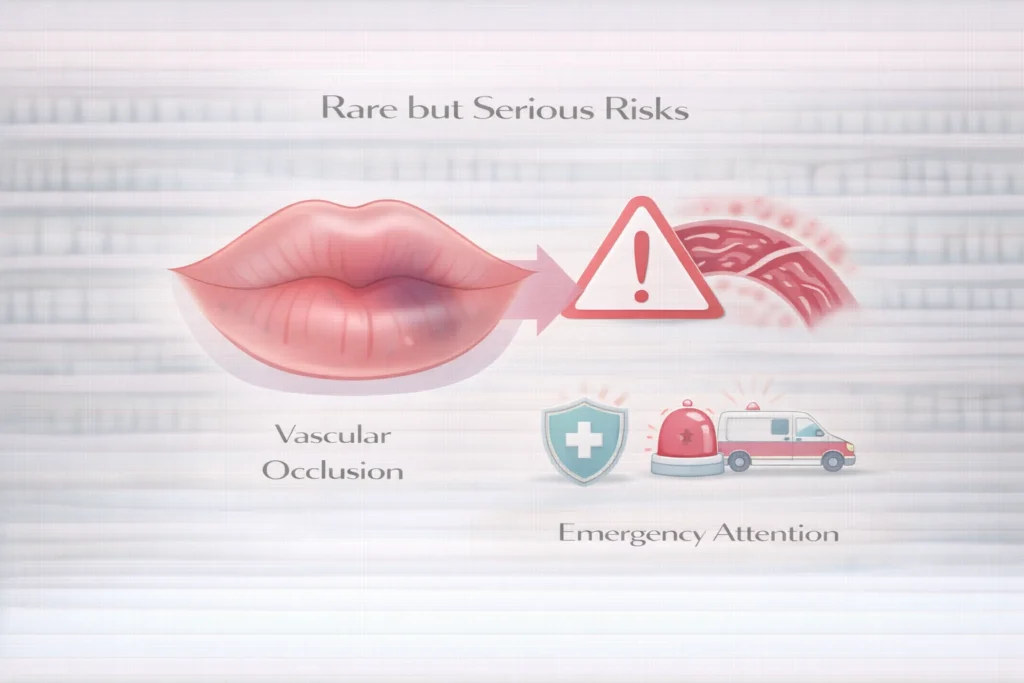
Vascular Occlusion
Vascular occlusion occurs when filler enters or compresses a blood vessel, reducing or blocking blood supply to surrounding tissue. If untreated, this can lead to tissue damage.
Medically trained practitioners are trained to recognise early signs and can administer hyaluronidase to dissolve filler and restore circulation.
Visual Complications
Extremely rarely, filler entering certain blood vessels may affect blood supply to the eye. While this risk is very low, it highlights the importance of choosing a medically qualified injector.
Signs That Require Urgent Medical Attention
Seek immediate professional advice if you experience:
- Skin turning pale, grey, or dusky in colour
- Severe or increasing pain
- Mottled or patchy skin patterns
- Vision disturbance
- Spreading redness, heat, or discharge
- Skin that feels unusually cold
Prompt treatment significantly improves outcomes if complications occur.
Importance of a Qualified Practitioner
The most significant factor in reducing lip filler risks is practitioner qualification and clinical environment.
A medically qualified practitioner has detailed knowledge of facial anatomy, sterile technique, and complication management. They also have access to prescription medications required for emergency treatment if needed.
Medical professionals are regulated by bodies such as the GMC, NMC, or GDC and must follow professional standards relating to patient safety and ethical practice.
How to Choose a Safe and Qualified Lip Filler Practitioner in the UK
Choosing a practitioner is one of the most important safety decisions when considering lip filler treatment. While many people focus heavily on filler brands or pricing, the experience, training, and clinical standards of the practitioner usually have a far greater impact on both safety and final results.
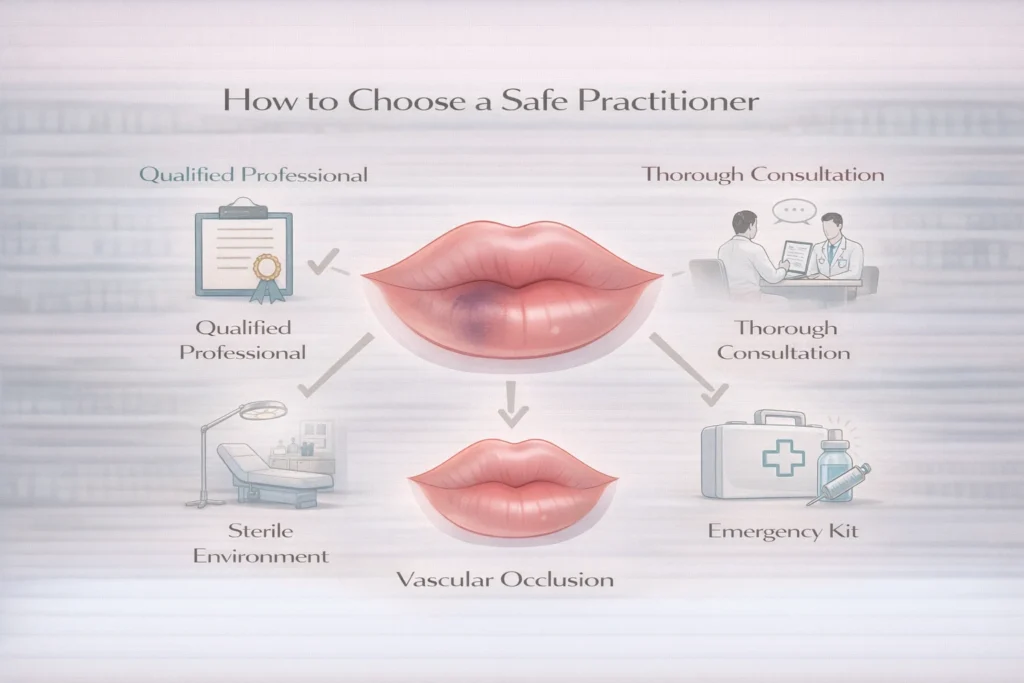
Why practitioner skill matters more than the product
Many people spend time researching specific filler brands, believing the product itself determines the safety of the outcome. In reality, the skill, anatomical knowledge, and clinical judgement of the practitioner are usually the most important factors.
A high-quality product used by an inexperienced injector carries significantly more risk than a standard, reputable product used by an experienced medical professional.
In practice, results tend to vary more between practitioners than between well-established filler brands. Careful technique, conservative volume planning, and respect for natural anatomy often influence outcomes more than the specific product chosen.
Technique and anatomical knowledge
The lips are a highly vascular area with a complex network of arteries and veins. Safe treatment requires a detailed understanding of facial anatomy and correct placement depth. Practitioners with advanced training are better equipped to avoid blood vessels, maintain symmetry, and achieve balanced results.
Precise placement and gradual enhancement are usually associated with more natural and predictable outcomes than rapid volume increases. For this reason, clinical knowledge and experience remain central to treatment safety.
Clinical environment and hygiene standards
Infection risk exists whenever the skin is punctured. Treatments performed in a clean, clinical environment using appropriate sterile technique help reduce this risk significantly. Medical practitioners are trained in aseptic procedures and work within environments designed to support safe treatment and aftercare.
Non-clinical settings may not always provide the same level of hygiene control, emergency preparedness, or follow-up care. For this reason, the treatment environment is an important part of overall safety.
Ability to recognise and manage complications
Even when treatment is performed carefully, complications can occasionally occur. A key difference between practitioners lies in how quickly concerns are recognised and managed. Medically trained professionals are typically able to identify early warning signs such as compromised blood flow, infection, or unusual swelling patterns and act promptly if required.
Early recognition and timely intervention often prevent minor issues from developing into more serious complications.
Access to emergency prescription-only medication
Hyaluronidase — the medication used to dissolve hyaluronic acid filler in urgent situations — is a prescription-only medicine in the UK. Only qualified prescribers such as doctors, dentists, or independent nurse prescribers can legally hold and administer it without delay.
Immediate access to this medication can be critical if a vascular complication occurs. For this reason, many people prefer treatment within medically led environments where emergency protocols and prescription support are readily available.
How to Research a Lip Filler Clinic Safely in the UK
Finding a safe provider usually requires looking beyond social media images or promotional pricing. A careful research process can significantly reduce avoidable risks and improve the likelihood of a safe, well-planned treatment experience.
Checking professional registration
In the UK, medical professionals can be verified through public registers. Doctors are listed with the General Medical Council (GMC), nurses with the Nursing and Midwifery Council (NMC), and dentists with the General Dental Council (GDC). Verifying registration helps confirm that the practitioner is accountable to recognised professional standards.
Dermal fillers fall under medical device regulation overseen by the Medicines and Healthcare products Regulatory Agency (MHRA) in the UK.
Some clinics also appear on voluntary registers such as Save Face or the Joint Council for Cosmetic Practitioners (JCCP), which can provide an additional level of reassurance regarding training, insurance, and safety protocols.
Reviewing consultation quality
A consultation should feel like a clinical assessment rather than a sales process. A reputable practitioner will review medical history, discuss risks and limitations, and assess anatomy before agreeing to treat. Situations where treatment is offered immediately without meaningful discussion may warrant additional caution.
A thorough consultation often reflects a safety-focused and patient-centred approach.
Why healed results matter more than immediate photos
Many images shared online are taken immediately after treatment when swelling is present. These photographs do not reflect the final settled result. When reviewing practitioner work, it is usually more helpful to look at healed results taken several weeks after treatment.
Healed images provide a clearer indication of how results typically appear once swelling subsides and the filler integrates with the tissue.
Why very low prices require caution
Dermal filler treatment involves more than the cost of the product itself. Pricing often reflects practitioner training, insurance, clinical standards, and aftercare support. Fees that appear significantly below typical UK ranges may indicate differences in experience, product sourcing, or safety infrastructure.
While higher pricing does not automatically guarantee better results, unusually low pricing can sometimes reflect reduced safety margins or limited aftercare provision.
Importance of complication protocols and aftercare
It is reasonable to ask how a clinic manages concerns or complications. A responsible provider should be able to explain what steps are taken if issues arise and how follow-up support is provided. Clear aftercare guidance and accessible communication channels are important components of overall treatment safety.
A practitioner who welcomes questions and provides balanced, transparent information is often a positive indicator of a safety-focused approach.
Psychological & Expectation Safety (Often Overlooked)
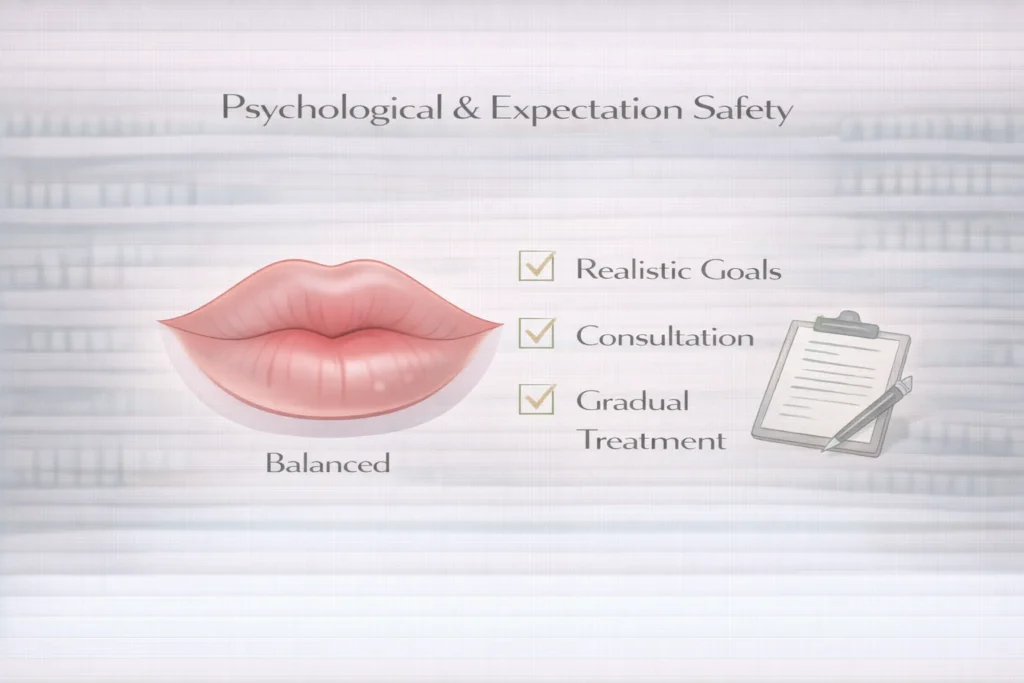
Safety in aesthetic treatments is not solely physical. Expectations, motivations, and emotional readiness can influence satisfaction and long-term outcomes. Individuals who approach treatment with realistic goals and a balanced perspective often report greater satisfaction than those seeking dramatic or trend-driven change.
Social media can create pressure to achieve specific aesthetic outcomes that may not suit every face. A responsible practitioner will discuss whether desired changes are achievable and appropriate. In some cases, practitioners may advise against treatment if expectations are unlikely to be met safely or proportionately.
There is also a recognised phenomenon in aesthetic practice where individuals gradually become accustomed to increased volume and request further treatment sooner than recommended. Over time, this can affect natural proportions.
Ethical practitioners may suggest waiting between treatments or declining additional volume if it is not in the patient’s best interest. Long-term facial balance and tissue health are often prioritised over short-term aesthetic change.
When Lip Fillers May Not Be the Right Choice
There are circumstances in which postponing or avoiding treatment may be advisable. A professional consultation is intended to identify these situations and reduce avoidable risk.
Pregnancy and breastfeeding are typically considered unsuitable periods for elective cosmetic injectables due to limited safety data. Active infections near the treatment area, such as cold sores or skin infections, may require treatment to be delayed until healing is complete. Certain medical conditions, medications affecting healing or bleeding, or known allergies to filler components may also influence suitability.
In some cases, unrealistic expectations or external pressure can make treatment inappropriate at that time. Responsible practitioners may recommend postponing treatment if they believe it would not lead to a safe or satisfactory outcome.
A Careful Personal Decision, Not Just a Cosmetic One
Understanding the decision beyond appearance
For many people, the decision to have lip filler treatment is not purely about appearance. It often involves balancing expectations, safety considerations, timing, and personal comfort with aesthetic change.
While online images can make treatment appear simple or routine, the reality is that outcomes depend heavily on practitioner skill, individual anatomy, and realistic expectations.
Why taking time before booking matters
Taking time to reflect before booking treatment is often one of the most effective ways to avoid regret or unnecessary risk.
Many experienced practitioners encourage a measured approach — allowing space to consider whether treatment feels appropriate, what level of change is desired, and whether expectations align with what can be achieved safely.
Subtle treatment often leads to higher satisfaction
Subtle, conservative treatment plans are frequently associated with higher long-term satisfaction than rapid or trend-driven changes. Individuals who approach treatment gradually and with clear understanding of limitations often report more predictable and natural-looking outcomes.
The importance of personal motivation and expectations
It can also be helpful to consider motivation. Choosing treatment based on personal preference and comfort tends to lead to more positive experiences than decisions influenced primarily by trends, social media comparison, or external pressure.
A calm, informed approach allows space to ask questions, review practitioner credentials carefully, and make decisions based on safety rather than urgency.
Balanced decisions support safer outcomes
For many individuals, the safest and most satisfying outcomes are linked not just to the treatment itself, but to the quality of decision-making beforehand.
Taking time to research properly, reflect on expectations, and prioritise safety standards helps ensure that any choice made is balanced, considered, and appropriate.
Reducing Risks Before Treatment
Patients can support their own safety by preparing appropriately.
- Research practitioners carefully.
- Provide full medical history and medication details.
- Avoid alcohol and certain blood-thinning supplements before treatment if advised.
- Reschedule if unwell or experiencing active cold sores.
Honest communication during consultation supports safer outcomes.
Aftercare and Safety
Safety continues after leaving the clinic.
- Avoid unnecessary pressure on the lips.
- Avoid excessive heat exposure initially.
- Follow practitioner aftercare advice closely.
- Maintain hygiene and avoid touching injection sites unnecessarily.
Proper aftercare reduces infection risk and supports healing.
Long-Term Safety Considerations
For individuals having repeated treatments, long-term considerations include migration, overfilling, and maintaining natural lip structure.
Allowing time between treatments and avoiding excessive volume helps maintain natural results. In some cases, dissolving older filler may be recommended before further treatment.
What Is Normal vs What Needs Review?
Normal healing signs include temporary swelling, mild bruising, firmness, and short-term asymmetry.
Signs that require review include persistent lumps, prolonged swelling, or suspected migration.
Urgent symptoms include severe pain, skin colour change, mottled appearance, or visual disturbance.
When in doubt, early professional review is safer than waiting.
Lip Filler Safety Overview (UK Clinical Perspective)
Lip fillers are generally safe when performed by appropriately trained medical professionals in a regulated clinical environment. Most patients experience temporary swelling or bruising, while serious complications such as vascular occlusion are rare but require urgent medical intervention. Safety depends primarily on practitioner training, anatomical knowledge, sterile technique, and access to emergency prescription medication. Informed consultation and realistic expectations significantly reduce overall risk.
Frequently Asked Questions
Q: Are lip fillers dangerous?
A: All procedures carry some risk, but lip fillers are generally safe when performed by qualified medical professionals in appropriate clinical settings.
Q: What is the biggest risk?
A: Vascular occlusion is considered the most serious complication, though it is rare and treatable when identified early.
Q: Can lip fillers go wrong?
A: Yes, aesthetic or medical complications can occur, particularly if treatment is performed by unqualified individuals or in non-clinical environments.
Q: How common are serious complications?
A: Serious complications are considered rare. Minor effects such as swelling or bruising are far more common and usually temporary.
Q: Can filler be dissolved?
A: Hyaluronic acid fillers can be dissolved using hyaluronidase if medically necessary or aesthetically desired.
Q: Are lip fillers safe long term?
A: When performed appropriately and maintained conservatively, long-term safety is generally considered acceptable. However, repeated excessive treatment may affect tissue quality.
Summary

Lip fillers are a widely performed aesthetic treatment with a strong safety profile when carried out appropriately. However, they remain medical procedures requiring careful consideration.
Understanding potential risks, choosing a qualified practitioner, and recognising early warning signs all contribute to safer outcomes. A thorough consultation and realistic expectations are essential parts of the decision-making process.
Prioritising safety and professional assessment ensures that if complications occur, they can be managed promptly and effectively.