



In recent years, lip augmentation has become one of the most frequently performed non-surgical aesthetic treatments in the UK. With the rise of social media and changing beauty standards, interest in achieving fuller or more defined lips has grown significantly.
However, the accessibility of these treatments often masks the complexity of the procedure and the medical considerations involved.
Lip fillers are now widely requested across the UK and are considered one of the most commonly researched non-surgical aesthetic treatments.
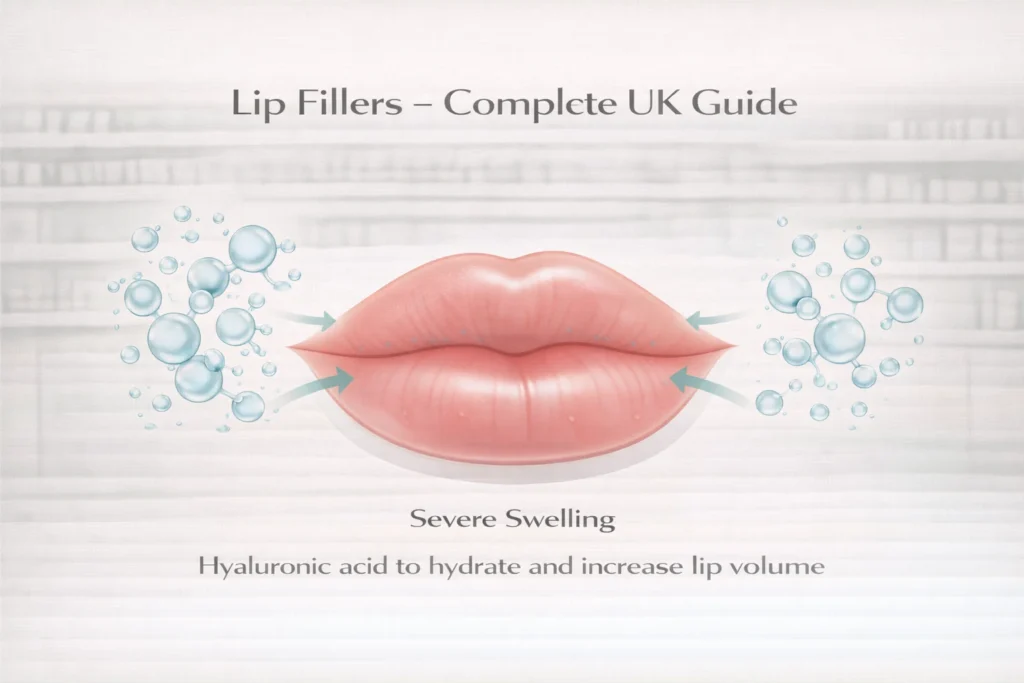
This guide aims to provide a comprehensive, neutral, and educational overview of lip fillers for those researching the topic. It covers the fundamental science behind the products used, the typical stages of treatment, potential risks, and the regulatory landscape in the UK.
Note: “Interest in lip fillers has increased steadily across the UK over the past decade, with demand now spanning a wide range of age groups and aesthetic preferences. As availability has expanded, so too has the importance of understanding realistic outcomes and safety considerations before treatment.”
It is important to understand that aesthetic outcomes are highly individual. What suits one person’s facial anatomy may not be suitable for another.
This article is intended for informational purposes only and does not replace the need for a face-to-face consultation with a qualified and insured medical professional.
Quick Overview: Lip Fillers (UK Guide)
- Lip fillers are temporary injectable treatments used to enhance lip volume and definition
- Most UK lip fillers contain hyaluronic acid and last 6–12 months
- Swelling and bruising are common during the first week
- Serious complications are rare but require immediate professional treatment
- A consultation with a qualified practitioner is essential before treatment
Quick Reality Check Before You Continue
Lip fillers are often presented online as simple, predictable treatments with uniform results. In practice, outcomes vary significantly between individuals due to anatomy, tissue quality, practitioner technique, and healing response.
This guide is designed to explain what lip fillers can realistically achieve, where their limitations lie, and why professional assessment remains essential before making any treatment decision.
Why Natural-Looking Lip Fillers Are Now Preferred in the UK
In recent years, preferences across the UK have shifted away from obvious volume towards more subtle, proportionate lip enhancement. Many individuals now favour results that appear balanced and natural rather than noticeably augmented.
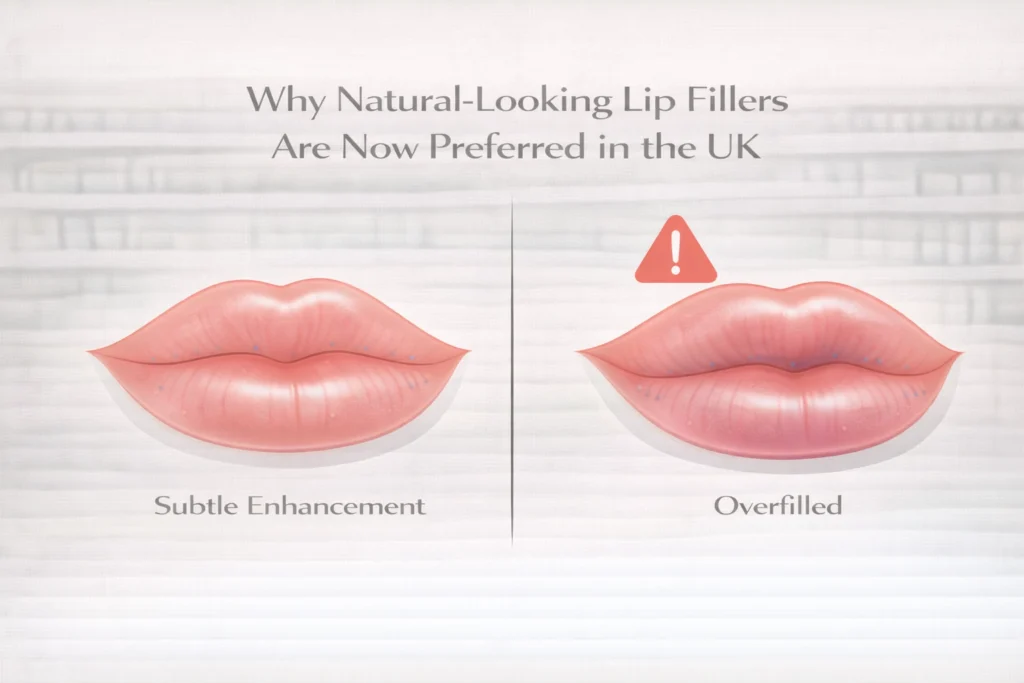
Changing preferences towards subtle results
Overtly filled or exaggerated lip styles have become less desirable for many people in the UK. Current preferences often focus on definition, hydration, and proportion rather than dramatic increases in size.
Many individuals researching treatment aim to maintain their natural lip shape while making subtle adjustments that sit in harmony with their overall facial features.
Social media vs real-life expectations
Although heavily edited images remain common on social media, there is increasing awareness of the difference between filtered visuals and real-life results.
Many people now recognise that lips seen in posed or edited photographs may look different during normal facial movement such as speaking or smiling. This shift has encouraged a more cautious and research-led approach to treatment decisions.
Gradual enhancement trend in UK
A more gradual approach to enhancement has also become increasingly common. Rather than pursuing dramatic change in a single session, some individuals choose to build volume slowly over time.
This staged approach can help maintain proportion and reduce the likelihood of an overfilled or disproportionate appearance.
Note: “Across many UK clinics, there is now a noticeable shift towards subtle enhancement and long-term facial balance rather than dramatic short-term change.”
What This Guide Does Not Promise?
This guide is intended to inform, not persuade. It does not promise:
- Guaranteed or identical results
- Permanent outcomes from temporary fillers
- That lip fillers are suitable for everyone
- That higher volumes automatically lead to better results
Understanding both benefits and limitations is essential when researching aesthetic treatments.
What Are Lip Fillers?
Lip fillers are a type of dermal filler specifically designed to restore or add volume to the lips. In the current aesthetic market, the vast majority of lip fillers are made from hyaluronic acid (HA).
👉 Further reading:
The Role of Hyaluronic Acid
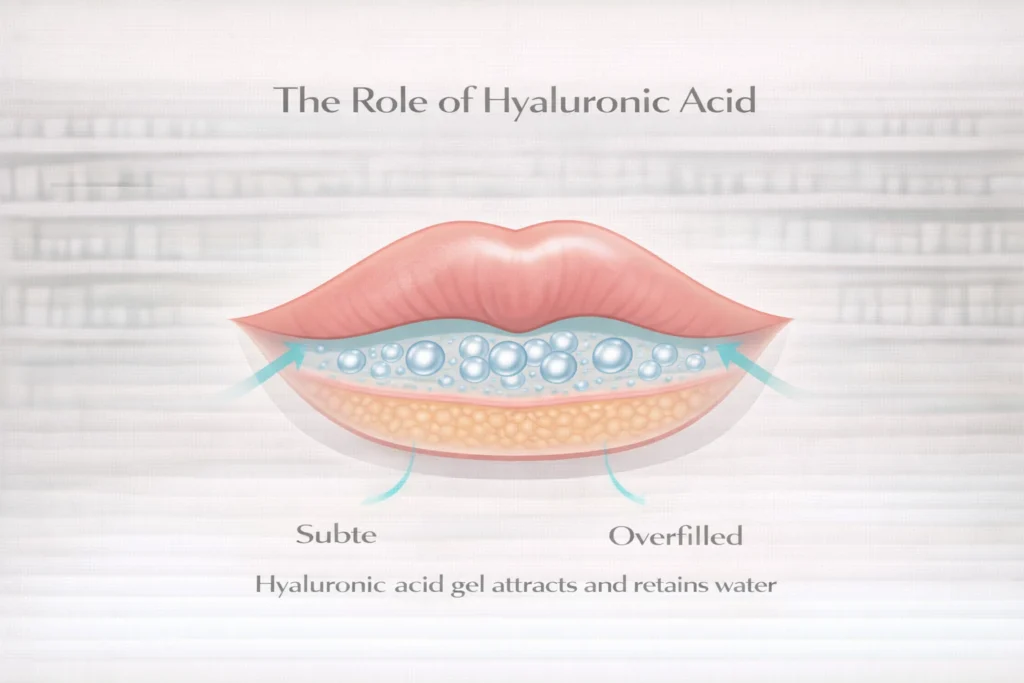
Hyaluronic acid is a naturally occurring substance found in the human body, particularly in the skin, joints, and eyes. Its primary function is to retain water and keep tissues lubricated and hydrated. In the context of lip fillers, synthetic hyaluronic acid is formulated into a gel-like substance.
When injected into the lip tissue, this gel integrates with the surrounding tissue and attracts water molecules. This hydration effect, combined with the physical presence of the gel, creates volume and structure.
Characteristics of Dermal Fillers
Not all hyaluronic acid fillers are the same. They vary in “viscosity” (thickness) and “elasticity” (how much they stretch).
- Thicker gels are generally used to create structure, such as defining the vermilion border (the edge of the lip).
- Thinner, softer gels are often used to add subtle hydration or smooth out fine lines on the surface of the lip without creating significant bulk.
One of the reasons hyaluronic acid fillers are widely used is that they are temporary and reversible. The body naturally metabolises the product over time. Additionally, in the event of a complication or an unwanted aesthetic result, hyaluronic acid can be dissolved using an enzyme called hyaluronidase (a prescription-only medicine).
Note: “Despite their popularity, outcomes can vary significantly depending on individual anatomy, practitioner approach, and treatment planning.”
What Do Lip Fillers Typically Look Like?
There is a common misconception that lip fillers always result in an exaggerated or “pouty” appearance. While this aesthetic is possible and often visible on social media, it represents only one end of the spectrum. The appearance of lip fillers depends entirely on the technique used, the amount of product placed, and the patient’s original anatomy.
👉 Further reading:
- What Will I Look Like with Lip Fillers?
- What Would I Look Like With Lip Fillers? Facial Changes Explained
Natural vs. Enhanced Results
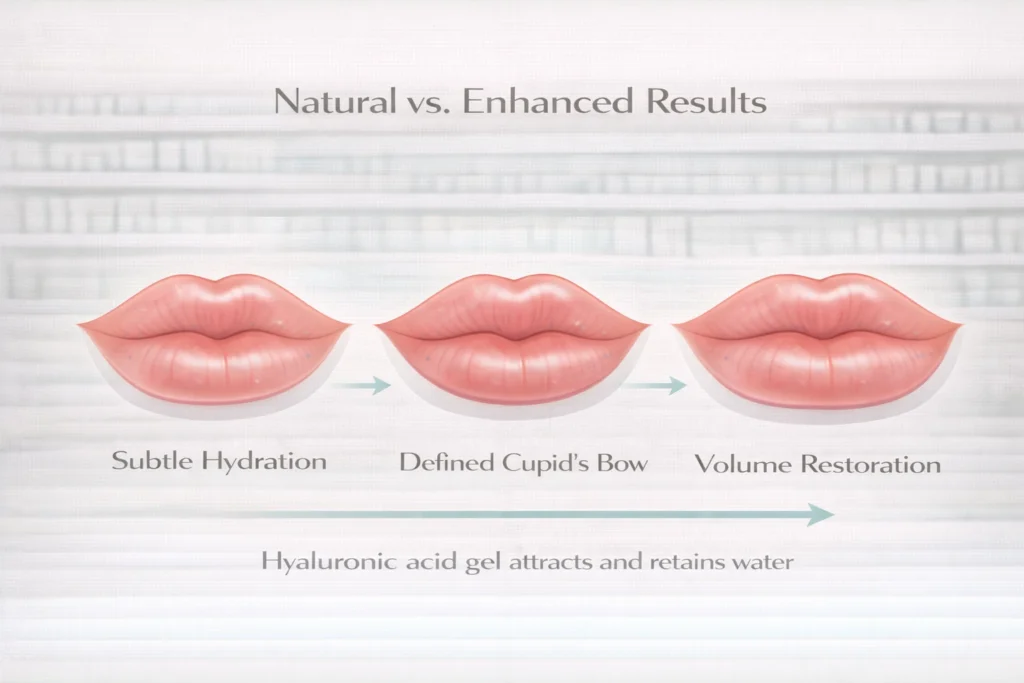
- Subtle Enhancement: Many individuals seek treatment solely to hydrate dry lips or to restore volume lost due to ageing. In these cases, the results are often undetectable to others, manifesting simply as smoother, slightly plumper lips.
- Structural Definition: Fillers can be used to sharpen the Cupid’s bow or define the lip border, which can make the lips appear crisper without necessarily making them project forward significantly.
- Volume Restoration: For those with naturally thinner lips, fillers can provide a noticeable increase in size. However, respecting the natural ratio of the upper to lower lip is crucial for maintaining facial harmony.
Anatomy Considerations
Every set of lips is different. The shape of the teeth, the support provided by the jaw, and the quality of the skin all influence how filler sits in the lips. A qualified practitioner assesses these factors to determine what is achievable.
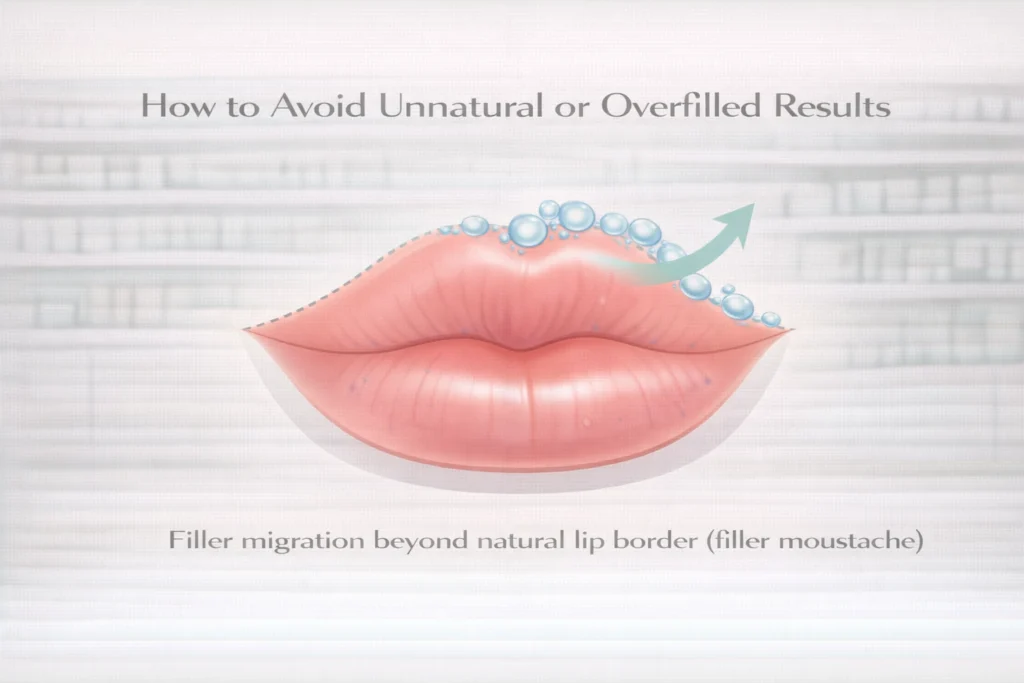
For example, attempting to over-fill lips that lack natural tissue support can lead to the product migrating outside the lip border, creating what is colloquially known as a “filler moustache.”
How to Avoid Unnatural or Overfilled Results
Fear of looking “done” or unnatural is one of the primary concerns for those researching lip fillers. Concerns about maintaining natural facial balance often shape how individuals approach treatment decisions.
Understanding how filler behaves within the lip tissue and how results develop over time can help explain why some outcomes appear subtle while others look more obvious.
Why overfilled results happen
Unnatural results usually occur when too much product is introduced in a single session or when filler is placed beyond the natural lip boundary.
When the tissue is unable to accommodate additional volume comfortably, the product may shift slightly outside the intended area, sometimes creating fullness above the lip border or an uneven profile. This effect is often associated with rapid volume increases rather than gradual enhancement.
Importance of gradual approach
More conservative treatment planning is often linked with more natural-looking outcomes. When larger volumes are introduced too quickly, the lips may appear heavy or disproportionate until the tissue adapts.
For this reason, a slower, staged approach is frequently discussed within UK aesthetic settings, particularly for those seeking subtle changes. Allowing time between treatments can help maintain proportion and reduce the likelihood of overfilling.
Swelling vs final results
It is common for lips to appear fuller than expected immediately after treatment due to swelling and the body’s natural inflammatory response. This early swelling does not usually reflect the final settled appearance, as the lips typically soften and reduce slightly in volume over the following days or weeks.
Misinterpreting this temporary stage can sometimes lead to unnecessary concern or the impression that too much filler has been used.
Role of facial proportions
Lips do not exist in isolation; they interact visually with surrounding features such as the chin, nose, and jawline. Results that appear balanced on one face may look disproportionate on another, depending on overall facial structure.
Subtle enhancement tends to work best when the lips remain in proportion to the rest of the face rather than becoming the dominant feature.
Lip Filler Styles & Techniques (Overview Only)
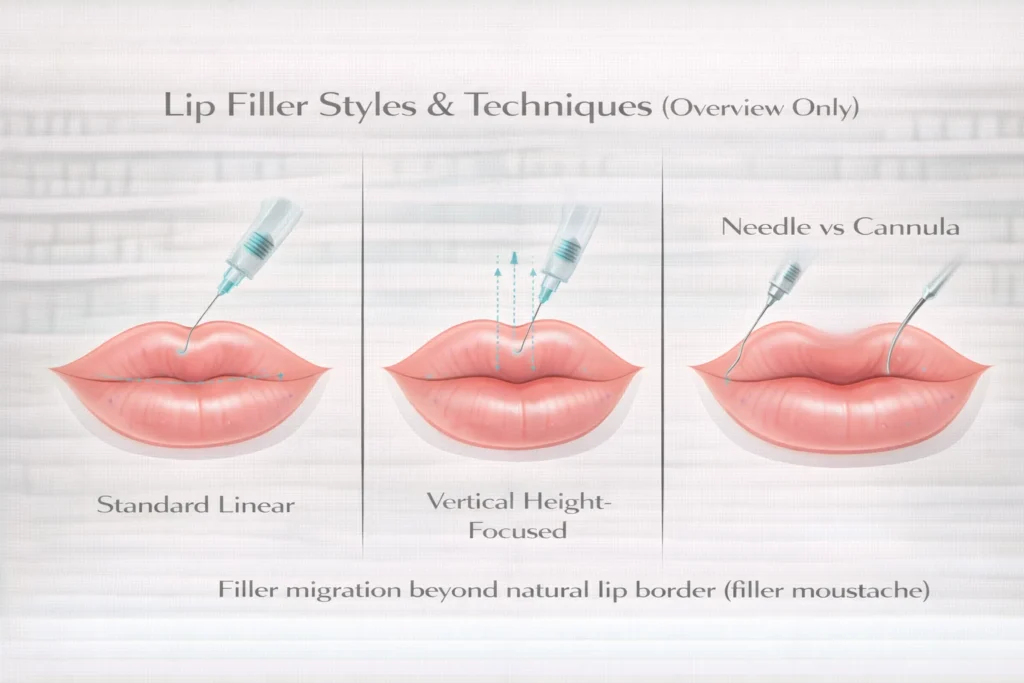
The terminology surrounding lip filler techniques can be confusing, with new “trend names” appearing frequently. However, most techniques rely on a few core principles of injection.
Standard Linear Techniques
This is a classic approach where the practitioner injects the product along the natural lines of the lip. It is often used to distribute volume evenly and define the borders. It is generally effective for maintaining the natural shape of the lip while adding size.
Height-Focused Techniques (e.g., “Russian” Styles)
You may encounter terms like “Russian lips” or “tenting.” These techniques focus on lifting the lip vertically rather than projecting it forward. The aim is often to shorten the distance between the nose and the lip and create a flatter, taller profile.
While popular, these techniques can be more traumatic to the tissue due to the higher number of injection points required and may not suit every lip shape.
👉 Further reading:
Russian lip filler
https://skinsurgerycentre.co.uk/blog/russian-lip-filler/
- Different Styles of Russian Lip Filler You Need to Know
- Russian Lip Filler Technique
- Russian Lips vs Normal Filler: Which Lip Filler Technique is Right for You?
Cannula vs. Needle
Practitioners may use a sharp needle or a blunt-tipped cannula to administer filler.
- Needles allow for precise placement of small amounts of product, useful for defining the Cupid’s bow.
- Cannulas are flexible tubes that may cause less bruising and are considered by some to be safer for adding general volume, as they are less likely to puncture blood vessels.
The choice of technique is typically determined by the practitioner based on the patient’s goals and safety considerations.
Lip Fillers for Thin Lips & First-Time Patients
Individuals with naturally thin lips often have specific concerns about looking “overdone.” When the lip tissue is tight or thin, there is limited space for the filler to occupy.
👉 Further reading:
The Gradual Approach
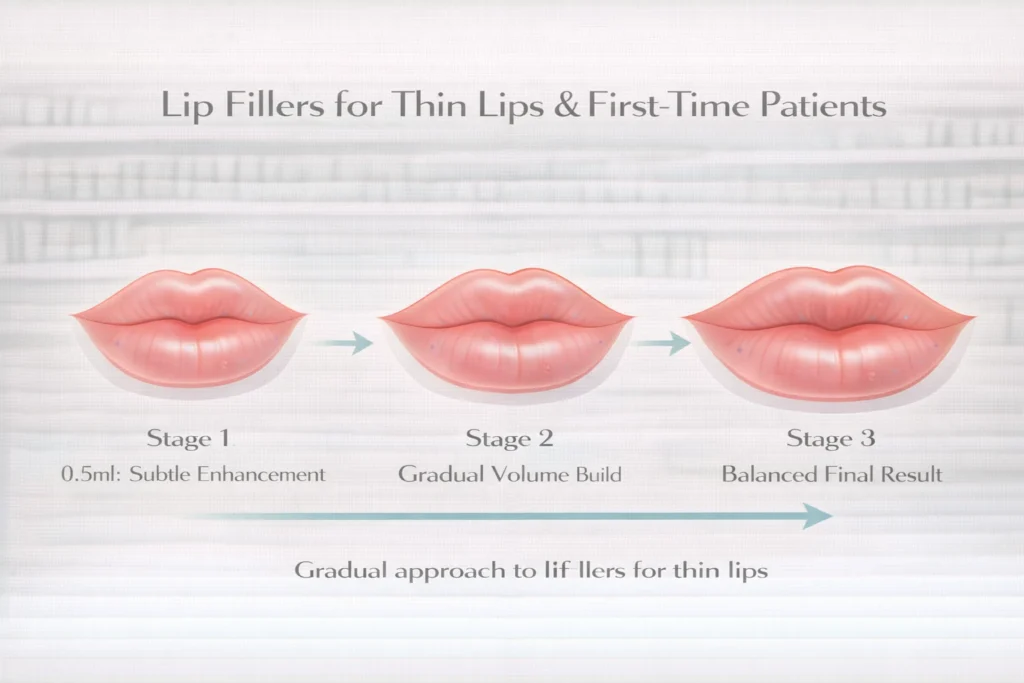
For thin lips, aesthetic professionals often advocate for a “slow and steady” approach. Attempting to inject a large volume of product (e.g., 1ml or more) into very thin lips in a single session can be problematic.
The tissue may not be able to accommodate the sudden expansion, increasing the risk of the filler migrating into the surrounding skin or appearing lumpy.
Building Tolerance
It is common for practitioners to recommend starting with a smaller amount (such as 0.5ml) to hydrate and gently expand the tissue.
Subsequent treatments can be scheduled once the initial swelling has subsided and the filler has integrated. This allows the lip tissue to stretch gradually and safely, resulting in a more natural transition.
Managing Expectations
It is important for patients with thin lips to have realistic expectations. While fillers can enhance size, they cannot completely change the fundamental anatomy or width of the mouth. A professional assessment helps clarify what is achievable without compromising safety.
Lip Filler Treatment Stages (High-Level)
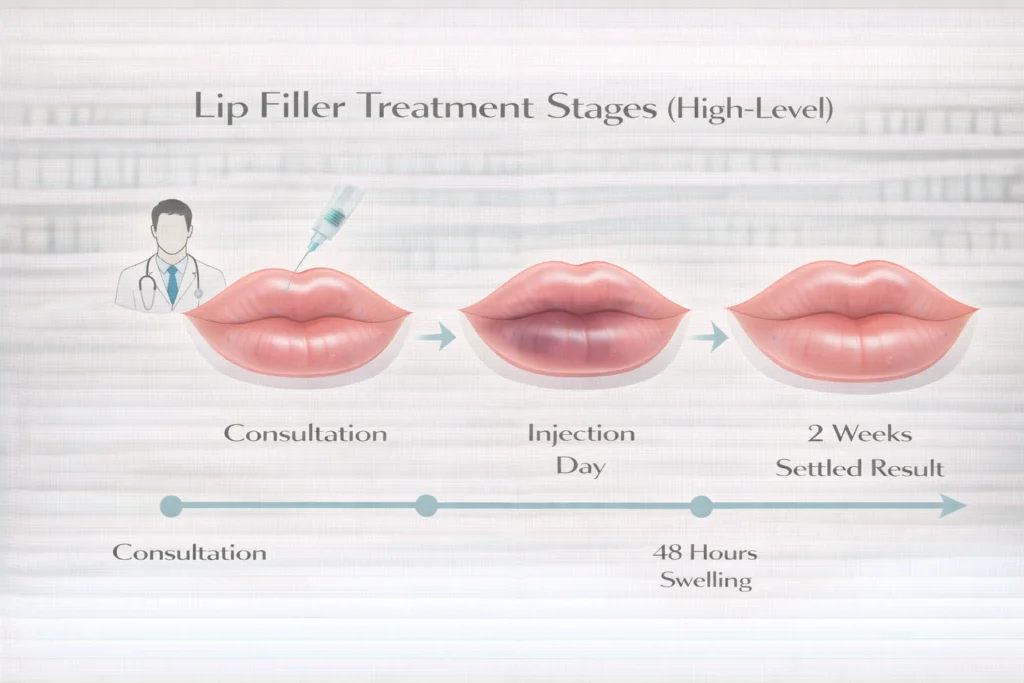
Understanding the timeline of a lip filler treatment can help manage anxiety and expectations regarding the results.
👉 Further reading:
- Stages of Lip Fillers: Swelling Timeline, Healing Phases & Aftercare Guide
- 0.5 ml Lip Filler Swelling Stages & Healing Timeline
- Healing Process 1 Week Lip Filler Swelling Stages & Recovery Timeline
The Consultation
This is the most critical stage. A thorough medical history should be taken to check for contraindications (reasons why treatment should not go ahead), such as active cold sores, pregnancy, or breastfeeding. This is also when the practitioner assesses facial anatomy and discusses risks.
The Procedure
The treatment itself typically takes 15 to 30 minutes. Topical anaesthetic (numbing cream) is usually applied beforehand to minimise discomfort. Many modern dermal fillers also contain lidocaine (a local anaesthetic) to numb the area while the filler is injected.
Immediate Aftermath (0–48 hours)
Immediately after injection, the lips will likely feel tender, numb, and swollen. This is a normal inflammatory response to the trauma of the needle and the hydrophilic (water-attracting) nature of the product. Bruising is also very common in this vascular area.
The Settling Period (2 weeks)
It is widely accepted in the industry that the “final” result is not visible until approximately two weeks post-treatment. During this time:
- Swelling subsides, often asymmetrically (one side may heal faster than the other).
- Bruising fades.
- The filler integrates with the tissue and becomes softer.
- Any initial lumps often smooth out as water balance returns to normal.
Patients are generally advised to avoid major social events immediately following treatment due to the unpredictability of swelling.
Common Reasons Some People Regret Lip Fillers
While many individuals are satisfied with their outcomes, regret can occasionally occur. In many cases, dissatisfaction is linked more closely to expectations and decision-making before treatment rather than the filler itself.
Understanding common sources of regret can help set more realistic expectations during the research phase.
Unrealistic expectations
Disappointment frequently stems from expecting filler to completely change the shape of the mouth or replicate another person’s features. Lip fillers can enhance existing structure but cannot fundamentally alter underlying anatomy.
When expectations are based on heavily edited images or celebrity appearances, the final result may feel different from what was imagined.
Trend-driven decisions
Aesthetic trends move quickly, and styles that appear popular at one moment may feel less desirable later.
Making treatment decisions based primarily on short-term trends can sometimes lead to results that feel out of step with personal preferences over time. Subtle, proportion-focused approaches generally remain more adaptable as aesthetic preferences evolve.
Price-based decisions
Cost can strongly influence where people choose to have treatment. Very low pricing may sometimes reflect differences in experience, product quality, or clinical environment, which can affect both results and aftercare.
Corrective work for poorly placed filler can require additional time and expense, particularly if dissolving and re-treatment become necessary.
Not understanding healing phase
The initial healing period can involve swelling, mild asymmetry, firmness, or bruising. Without a clear understanding of this temporary phase, some individuals may feel concerned that the result is incorrect or excessive, even though the appearance typically softens as healing progresses. Awareness of this settling period often helps reduce unnecessary anxiety during the first one to two weeks.
Note: “In many cases, dissatisfaction is linked more to expectation gaps than to the filler itself.”
What Is Usually Normal vs When to Seek Help?
After lip filler treatment, certain reactions are expected as part of the normal healing process, while others require urgent medical assessment.
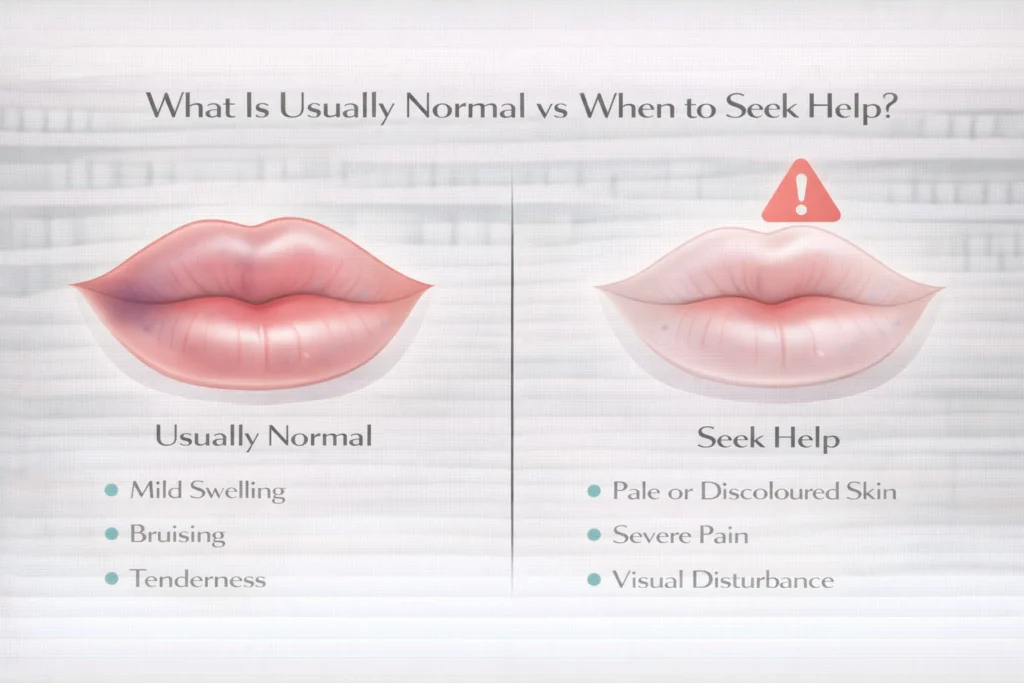
Commonly expected reactions include:
- Temporary swelling
- Mild bruising
- Tenderness or firmness
Seek urgent professional help if you experience:
- Severe or increasing pain
- Pale, grey, or mottled skin changes
- Sudden visual disturbances
Normal Healing vs Warning Signs After Lip Fillers
| Normal healing | Seek professional review |
|---|---|
| Mild swelling first 48 hrs | Severe or worsening pain |
| Light bruising | Pale, grey or mottled skin |
| Tenderness | Increasing redness or heat |
| Firmness improving over 1–2 weeks | Visual disturbance |
| Slight asymmetry early on | Sudden swelling after settling |
Results, Longevity & Maintenance
One of the most common questions regarding lip fillers is how long they last. The answer varies significantly depending on the individual and the product used.
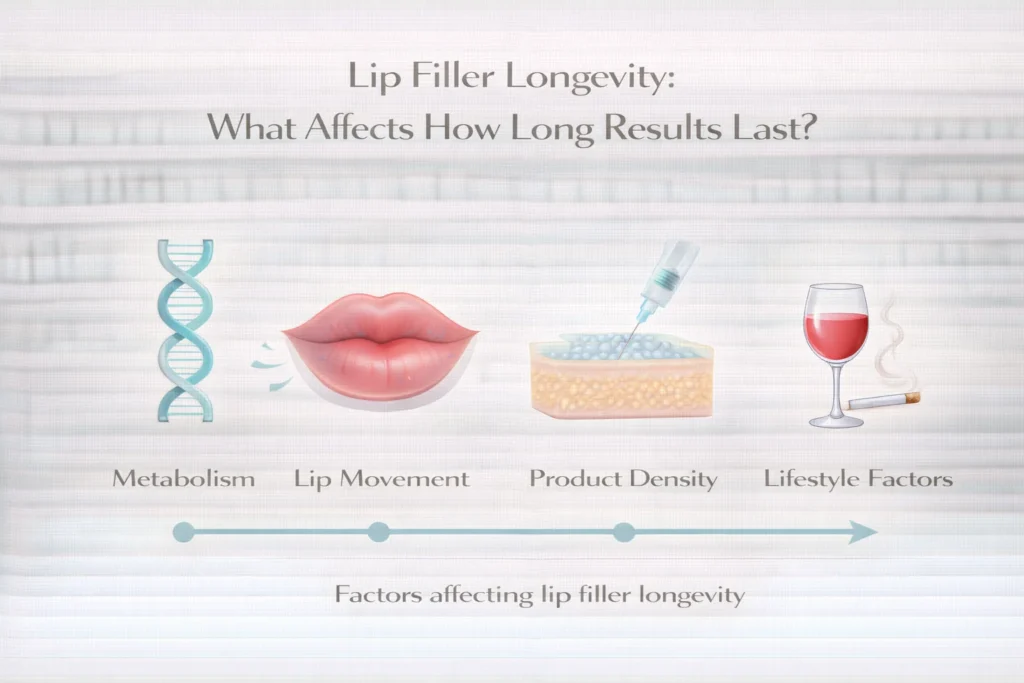
Typical Duration
Generally, hyaluronic acid lip fillers last between 6 and 12 months. However, this is not a guaranteed timeframe.
- Metabolism: Some individuals metabolise hyaluronic acid faster than others. Those with very active metabolisms (often including athletes) may find their filler dissolves more quickly.
- Product Density: Thicker, more cross-linked fillers tend to last longer than thinner, hydration-focused products.
- Movement: The mouth is a highly mobile area. Constant movement from speaking, eating, and smiling gradually breaks down the product.
Maintenance and “Top-Ups”
Maintenance treatments are usually required to sustain the result. However, it is rarely necessary to wait until the filler has completely disappeared before retreating. Conversely, treating too frequently can lead to “overfilling,” where the lips lose their natural definition and projection.
Dissolving Filler
If a patient wishes to return to their natural lips, they can usually wait for the product to break down naturally. In cases where removal is medically necessary (due to complications) or aesthetically desired (due to migration), a practitioner can inject hyaluronidase to dissolve the filler enzymatically.
Note: “Longevity and final appearance can vary widely between individuals, which is why comparing results across different people or clinics can sometimes be misleading.”
👉 Further reading:
- 0.5 ml Lip Fillers Before and After
- 1.1 ml Lip Filler Before and After
- Is 2ml of Lip Filler Right for You?
- 4 ml Lip Fillers Before and After
Lip Filler Longevity: What Affects How Long Results Last?
| Factor | How It Affects Longevity |
|---|---|
| Metabolism | Faster metabolism may break filler down more quickly |
| Product type | Thicker fillers generally last longer |
| Lip movement | Speaking, eating, and smiling gradually break down filler |
| Volume used | Smaller volumes may dissolve sooner |
| Lifestyle factors | Smoking, vaping, and high activity levels may affect duration |
Realistic Lip Filler Cost Expectations in the UK
Cost is a significant factor for many people researching lip fillers, and pricing across the UK can vary considerably. Understanding why costs differ can help place pricing into context and reduce confusion when comparing providers.
Rather than focusing only on the price of a single treatment, it is often helpful to consider what is included within that overall fee.
Why prices vary
The price of treatment generally reflects a combination of factors rather than the filler alone. Costs typically account for practitioner training, insurance, clinical standards, and the type of product being used.
Products with extensive research and safety data are often priced differently from less established alternatives, which can contribute to variations across clinics and regions.
London vs other UK cities
Geographic location often plays a role in overall pricing. Clinics in central London or more affluent areas may have higher operating costs, which can be reflected in treatment fees.
However, higher pricing does not automatically guarantee a better aesthetic outcome, just as lower pricing does not always indicate poor quality. Differences in experience, environment, and aftercare provision may all influence how treatments are priced across the UK.
Experience vs low-cost treatments
In many cases, pricing correlates with the practitioner’s experience and level of training. More experienced practitioners may charge higher fees due to advanced training, ongoing education, and the ability to manage complications if they arise.
Lower-cost treatments are sometimes offered by less experienced providers or within high-volume settings, which may influence the overall consultation time and treatment approach.
Safety over price
When budgeting for lip fillers, it can be useful to view the treatment within a broader safety context rather than as a single cosmetic purchase.
Factors such as aftercare availability, emergency protocols, and practitioner accountability may all influence the overall value of treatment, particularly if unexpected complications occur. Considering these elements alongside price can provide a more balanced perspective when researching options.
Note: “Pricing structures can also vary significantly between clinics, reflecting differences in experience, setting, and aftercare provision rather than product cost alone.”
Safety, Risks & Professional Assessment
While lip fillers are widely available, they are still medical aesthetic procedures, and general safety information can be found in the NHS guidance on cosmetic procedures.

The UK Regulatory Context
Currently, in the UK, it is legal for non-medical professionals to administer dermal fillers. However, the Health and Care Act 2022 has given the government powers to introduce a licensing scheme for non-surgical cosmetic procedures, though the full details and implementation date are still being finalised.
Additionally, the Botulinum Toxin and Cosmetic Fillers (Children) Act 2021 made it a criminal offence to administer lip fillers to anyone under the age of 18 in England, even with parental permission.
Potential Risks and Complications
While millions of treatments are performed safely, complications can occur.
- Common Side Effects: Swelling, bruising, tenderness, and redness are expected and usually temporary.
- Infection: As the skin barrier is breached, bacterial infection is a risk if hygiene standards are not maintained.
- Migration: Filler can move from the intended site, often into the upper lip skin, creating a “duck” appearance.
- Vascular Occlusion: This is a rare but serious complication where filler is accidentally injected into or compresses a blood vessel, blocking blood supply to the tissue. If untreated, this can cause tissue necrosis (tissue death).
The Importance of a Prescriber
The primary treatment for vascular occlusion is hyaluronidase. Hyaluronidase is a Prescription-Only Medicine (POM) in the UK. This means it must be prescribed by a qualified prescriber (such as a doctor, dentist, or independent nurse prescriber).
Note: “Medical prescribers in the UK are regulated by bodies such as the General Medical Council (GMC).”
If a complication occurs, immediate access to this reversal agent is vital. For this reason, many industry bodies — such as the Joint Council for Cosmetic Practitioners and Save Face — recommend seeking treatment from professionals who can prescribe and manage complications promptly.
UK Clinical Standards and Practitioner Responsibility
In the UK, lip fillers are considered medical aesthetic procedures requiring appropriate training, insurance, and clinical accountability.
Practitioners providing dermal filler treatment are expected to follow professional standards relating to patient safety, consent, hygiene, and complication management. Regulatory bodies such as the GMC, NMC, and GDC oversee medically qualified practitioners, while organisations such as Save Face and the Joint Council for Cosmetic Practitioners promote recognised safety standards within the sector.
Seeking treatment in a clinically appropriate environment with access to prescription-only emergency medication is considered best practice.
Choosing a Qualified Lip Filler Practitioner in the UK
Selecting a practitioner is one of the most influential factors affecting both safety and aesthetic outcome.
Given the wide availability of non-surgical cosmetic treatments in the UK, researching practitioner background and clinical standards has become an important part of the decision-making process. The regulatory landscape remains complex, making independent research particularly valuable.

How to Choose a Safe Lip Filler Practitioner in the UK
| What to check | Why it matters |
|---|---|
| Medical qualification or prescriber access | Required for managing complications |
| Experience with lip fillers | Improves aesthetic and safety outcomes |
| Emergency protocols | Essential for rare complications |
| Healed results portfolio | Shows realistic outcomes |
| Proper consultation process | Ensures suitability |
Why practitioner choice affects results
Lip filler treatment involves both technical precision and aesthetic judgement. Outcomes can vary significantly depending on experience, anatomical understanding, and overall treatment approach, even when the same product is used.
A practitioner with a strong understanding of facial structure and proportion is generally better equipped to maintain balance and reduce the likelihood of complications.
UK regulation overview
Regulation of non-surgical cosmetic treatments in the UK continues to evolve. At present, dermal fillers can legally be administered by individuals who are not medically qualified, although many professional bodies and safety organisations encourage treatment within a medically supervised environment.
This evolving regulatory context means that verifying qualifications and professional accountability remains an important part of the research process.
Importance of consultation
A thorough consultation typically forms the foundation of safe treatment planning. This stage often includes discussion of medical history, expectations, potential risks, and realistic outcomes, allowing both practitioner and patient to assess suitability before proceeding.
Situations where treatment is offered immediately without meaningful assessment may warrant additional caution during the research phase.
Questions worth asking
During the research process, many people choose to ask practical questions to better understand how treatment would be approached. Topics often include practitioner training, experience with lip-specific treatments, emergency protocols, and the type of product proposed.
Reviewing healed results rather than immediate post-treatment images can also provide a more accurate representation of typical outcomes over time.
These discussions can clarify expectations and reduce avoidable risks.
Questions may include:
- What specific product is being recommended, and why is it suitable for my lips?
- How much filler is being proposed for the first session, and why?
- How do you assess whether my lip anatomy is suitable for the result I want?
- What complications are possible in my case, and how are they managed?
- Is there access to emergency prescription-only medications if needed?
- Can I see examples of healed results rather than same-day photographs?
- What aftercare steps are most important in the first week?
- How long should I realistically expect results to last?
A responsible practitioner should be comfortable answering these questions clearly and without pressure.
Note: “Approaches and experience levels can vary considerably across the UK aesthetic sector, making independent research an important part of the decision-making process.”
Is Lip Filler Treatment Right for You?
Lip fillers are not suitable for everyone. A responsible practitioner will decline to treat a patient if they believe the procedure is unsafe or not in the patient’s best interest.
Contraindications
Treatment is generally avoided if you:
- Are pregnant or breastfeeding (due to a lack of safety data).
- Have an active infection (such as a cold sore) in the treatment area.
- Have certain autoimmune conditions or severe allergies.
Body Dysmorphia and Mental Health
Aesthetic treatments can positively affect confidence, but they should not be used to address deep-seated psychological concerns. Practitioners are trained to recognise signs of Body Dysmorphic Disorder (BDD), where further cosmetic treatment is unlikely to be beneficial.
When to Speak to a Qualified Professional?
The internet contains a wide range of information of varying reliability. If you are considering lip fillers, the most reliable guidance comes from a face-to-face consultation with a qualified professional.
A consultation allows you to:
- Discuss personal aesthetic goals.
- Review medical history in detail.
- Understand the proposed product and technique.
- Assess healed results rather than immediately post-treatment images.
If you have already had filler treatment and experience severe pain, pale or mottled skin changes, or visual disturbances, urgent medical assessment is required.
Voluntary registers such as Save Face accredited practitioners aim to list providers who meet specific training, insurance, and safety standards.
Frequently Asked Questions
Q: Do lip fillers hurt?
A: Most patients report some discomfort, often described as a sharp scratch or pinching sensation. The use of numbing cream and fillers containing lidocaine helps manage this. Pain tolerance varies between individuals.
Q: Can I drink alcohol after lip fillers?
A: Alcohol is generally avoided for at least 24 hours before and after treatment, as it can increase bruising and swelling.
Q: How soon can I exercise after treatment?
A: Strenuous exercise is usually avoided for 24 to 48 hours, as increased blood pressure can worsen swelling.
Q: How long does swelling usually last after lip fillers?
A: Initial swelling is most noticeable in the first 48 hours and gradually reduces over several days. Minor swelling or firmness may persist for up to two weeks while the filler settles.
Q: Can lip fillers be removed if I don’t like the result?
A: Hyaluronic acid fillers can often be dissolved using hyaluronidase if medically necessary or if the result is undesirable. This requires access to a qualified prescriber.
Q: Are lip fillers suitable for everyone?
A: No. Certain medical conditions, pregnancy, breastfeeding, or psychological considerations may make treatment unsuitable. A consultation helps determine whether treatment is appropriate.
Summary
Lip fillers can be an effective way to adjust lip volume and shape, but they are medical procedures that require careful consideration. Understanding how fillers work, the healing process, and the importance of safety protocols helps individuals make informed decisions.
If you are interested in pursuing treatment, take time to research and select a qualified professional who prioritises safety and patient wellbeing.
Note: “Taking time to understand both the possibilities and limitations of treatment can help ensure decisions are based on realistic expectations rather than online trends or assumptions.”
Educational & Editorial Notes
Educational Notice: This content is provided for general educational purposes only and does not constitute medical advice.
Editorial Note: This article was written to help readers understand lip fillers before consulting a qualified professional.
Last reviewed for clarity and relevance: February 2026